







Introduction:Want to explore the diverse flavors of Kenyan coffee? This article provides an in-depth analysis of three representative Kenyan coffee beans—Karogoto, Atharia, and Hania—from their growing regions and altitude, to variety characteristics, processing methods, and roast profiles. It also offers a unified and practical pour over brewing recommendation to help you find your ideal Kenyan specialty coffee experience based on personal taste preferences.
Kenyan coffee is globally renowned for its bright acidity and rich layered complexity, making it especially well-suited for pour over brewing. Among the many producing regions and processing methods, these three coffees from different micro-regions in central Kenya—Karogoto, Atharia, and Hania—each showcase distinct yet captivating personalities. Whether you prefer a clean tea-like acidity, intense berry notes, or sun-dried fermentation characteristics, these three beans offer entirely different flavor journeys.
Regional Background and Climate Conditions
Kenya’s coffee cultivation is primarily concentrated in volcanic soil regions at altitudes between 1600 and 2100 meters. Thanks to its double rainy season climate, coffee can be harvested twice a year, mainly during the main season from October to December and the secondary season from June to August. The high altitude and mineral-rich soils allow the coffee cherries to ripen slowly, aiding in the accumulation of flavor compounds, resulting in the characteristic bright acidity, intense aroma, and full body.
Karogoto: High-Altitude Selection from the Nyeri Region
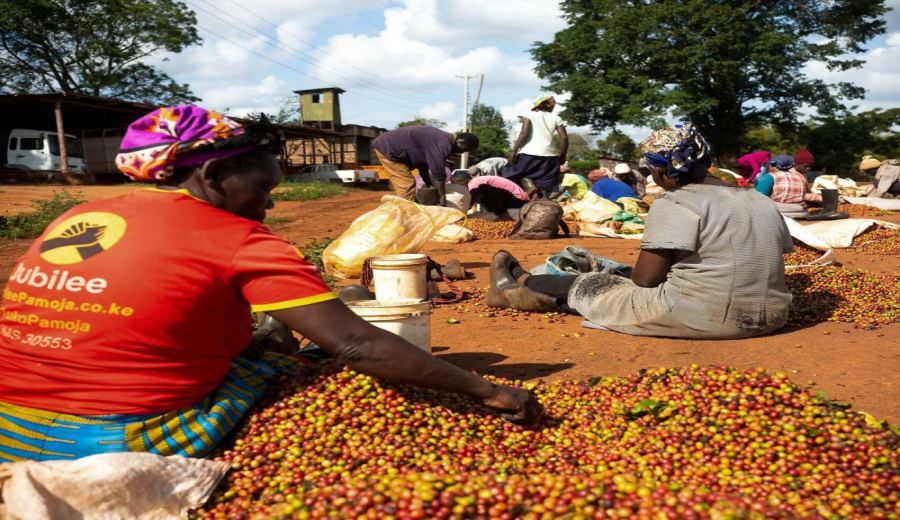
Karogoto comes from Kenya’s central Nyeri region, home to the famous dormant volcano Mount Kenya. Its fertile red soil is a golden zone for producing high-quality coffee. The area is dominated by smallholder cooperatives, with harvesting focused during the main season from October to December and the secondary season from June to August. Karogoto is grown at an altitude of about 1800 meters, placing it in the higher altitude range, which contributes to a tighter bean structure that aids in flavor development.
Atharia and Hania: Diverse Expressions from Thika in Kiambu
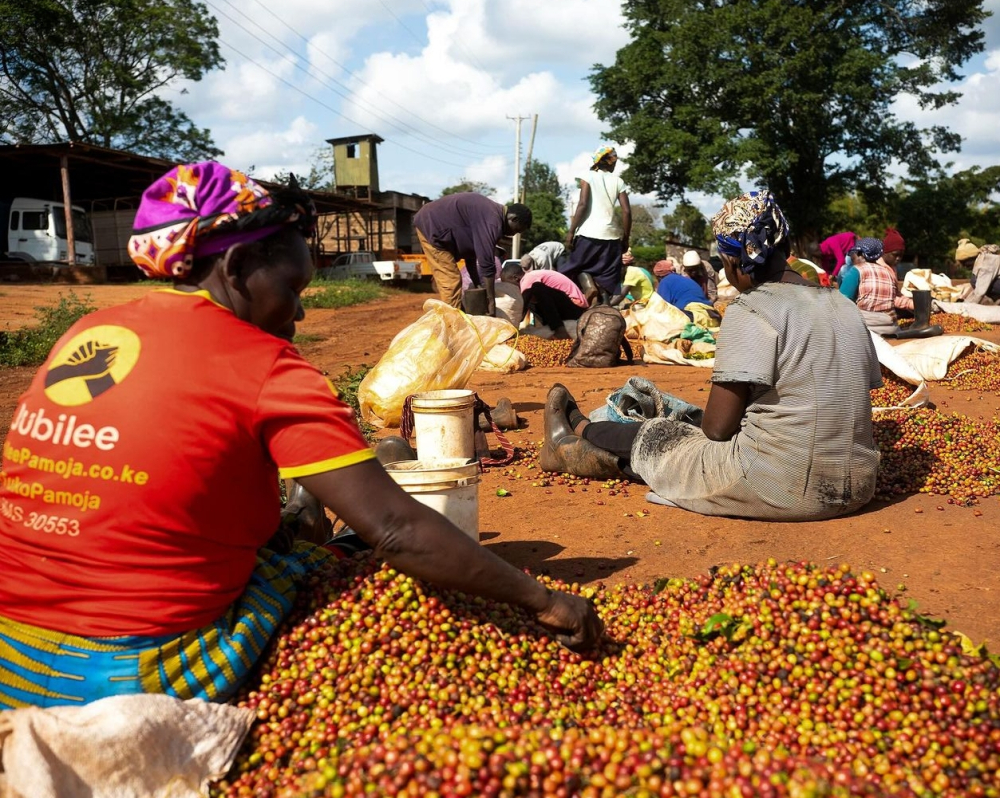
Both Atharia and Hania are produced in the Thika sub-region of Kiambu, at altitudes ranging from 1525 to 1750 meters. Though slightly lower than Karogoto, the soil is rich in organic matter and the climate is stable, still favorable for cultivating distinctly flavored coffee. Thika lies at the foothills of the Aberdare Mountains and is known for its red volcanic soils. While production volume doesn’t match that of large estates, it excels in finesse and diversity. Atharia is grown at an altitude of approximately 1550 to 1750 meters, while Hania is at 1525 meters, making it the lowest-altitude of the three.
Varietal Characteristics: SL28/SL34 vs. French Mission Bourbon
Both Karogoto and Atharia are planted with Kenya’s classic, locally selected varieties—SL28 and SL34. These two varieties were developed by local agricultural research institutions in the 1950s and are known for their copper-colored leaves and sturdy bean shape. They exhibit prominent citrus and dark plum acidity, along with complex and sweet flavor profiles. Among them, SL34 has a richer mouthfeel and stronger weather resistance. Hania, on the other hand, uses the French Mission Bourbon variety, which retains more of the original Bourbon genetics, with flavor tendencies leaning toward mellow, rounded fruit notes and relatively softer acidity.
Processing Method Differences: K72 Washed vs. Refined Natural
Karogoto and Atharia both use Kenya’s renowned K72 washed process, which involves three cycles of 24-hour fermentation and washing, totaling 72 hours, enhancing clarity and acidity while preserving rich fruit aromas. This method requires precise temperature control and is carried out through prolonged fermentation in a low-temperature environment, ultimately delivering a bright, clean, and layered taste. Hania opts for refined natural processing, allowing the Bourbon variety’s already rich acidity and fruity notes to integrate further. Through 2 to 4 weeks of sun exposure, it develops intense caramel, dried fruit, and sweet aromas, resulting in a more concentrated and wildly expressive flavor.
Roast Curve and Parameter Settings
Both Karogoto and Atharia undergo K72 double-washed processing. Karogoto has a first crack development time of 2 minutes, with a drop temperature controlled at 191°C, emphasizing a balanced development of acidity and aroma. Atharia extends the post-first crack development time to 2 minutes and 10 seconds, with a drop temperature of 191.6°C, achieving a rounder mouthfeel and brighter acid-sweet balance. Hania, being a natural process bean and grown at lower altitude, is roasted using an African raised bed method. First crack begins around 8 minutes and 15 seconds, with a lower charge temperature (186°C), and a final drop temperature of 194°C to ensure sufficient caramelization and flavor concentration.
Cupping Flavor Profile
Karogoto delivers a bright, tomato-like entry with notable berry and dark plum acidity. The mid-to-late stages reveal tea-like qualities and caramel aromas, overall clean and refreshing—ideal for those who enjoy bright acidity and delicate texture.Athariafeatures a wet aroma of ripe tomato and floral notes, with a bright acidity upon entry, medium body, and clear sweetness with a juice-like character in the mid-palate. The finish offers a lingering aftertaste of berries and green tea.Haniaopens with the distinctive fermented aroma of natural processing. When sipped, one can perceive rich caramel, vanilla, and a medley of fruit tones, with a long finish of jackfruit and coffee blossom. The overall flavor is bold and layered, making it an excellent choice for those seeking complex flavor experiences.
Pour Over Brewing Recommendations (Universal)
It is recommended to use 30 grams of water for a 30-second bloom. The first pour should be with a gentle stream until reaching 120 grams, then pause. The second pour increases the water volume to 225 grams, with a total brew time of about 2 minutes. These parameters effectively highlight the unique flavor characteristics of all three beans, especially when using a medium-fine grind to balance acidity and sweetness.
In summary, if you prefer a clean, tea-like acidity,Karogotois the top choice; if you enjoy a tomato-forward profile with a distinct acid-sweet balance,Athariawill be more to your taste; if you crave a rich, fermentation-driven natural flavor,Haniawill surely satisfy your desire to explore the depths of Kenyan coffee. Through the comparison of these three classic beans, you’ll gain a deeper understanding of the diverse faces of Kenyan coffee and be able to find the one that best suits your palate.
The above content is compiled by CoffeeHunters, a coffee news website.


