







Introduction:Indonesia's Sumatra Golden Mandheling is renowned for its rich woody tones and unique spicy finish. The premium-grade Mandheling from this region stands out as a true representative. This article delves into the differences between Sumatra’s two major producing areas — Aceh and Lintong — explores how the wet-hulling process contributes to its intense flavors, and provides practical KONO filter pour-over settings, including water temperature, grind size, and a three-stage pouring technique. This guide helps coffee enthusiasts replicate the bold, layered experience of Golden Mandheling at home.
Golden Mandheling is considered one of the most iconic specialty coffees from Indonesia’s Sumatra. With its captivating flavor profile of black chocolate, hazelnut, caramel, and delicate herbal spices, coupled with high cleanliness and clear sweetness, it is widely loved by coffee lovers. This article will detail the main growing regions of Mandheling, compare the terroir characteristics of Aceh and Lintong, analyze PWN’s rigorous hand-sorting process, and deeply explore how the wet-hulling method critically influences flavor — especially in creating its woody spice notes and bold bitter tones. Additionally, based on actual café experience, we provide a complete pour-over setup, including using a KONO filter, 87°C water temperature, and a three-stage pour, enabling you to easily brew a smooth, layered Golden Mandheling at home.
The sold Mandheling coffee is known for its pronounced bold bitterness and rich finish, particularly the Golden Mandheling, which often features layers of black chocolate, roasted hazelnut, and caramel, with subtle hints of herbal spices in the aftertaste. This coffee bean is usually displayed in the upper right corner of the bean menu, as it has undergone multiple rounds of manual selection, not only exhibiting excellent cleanliness but also offering an exceptionally clear and precious sweetness.
As the birthplace of Mandheling, Indonesia’s Sumatra mainly cultivates coffee at higher altitudes in Aceh and North Sumatra Provinces. Although the entire island is divided into eight provinces, the only regions suitable for growing Arabica at high elevations are these two. The area has a tropical rainforest climate with year-round mountain fog, providing ideal growing conditions for coffee trees. The coffee harvest season runs from September each year to April the following year, when farmers can be seen busily picking fruit in the mountains. Traditionally, Lintong Mandheling is mainly cultivated by the Mandailing and Batak ethnic groups, while the later-emerging Lake Tawar Mandheling is predominantly grown by the Gayo people. These communities enrich the diverse terroirs of Sumatran coffee.
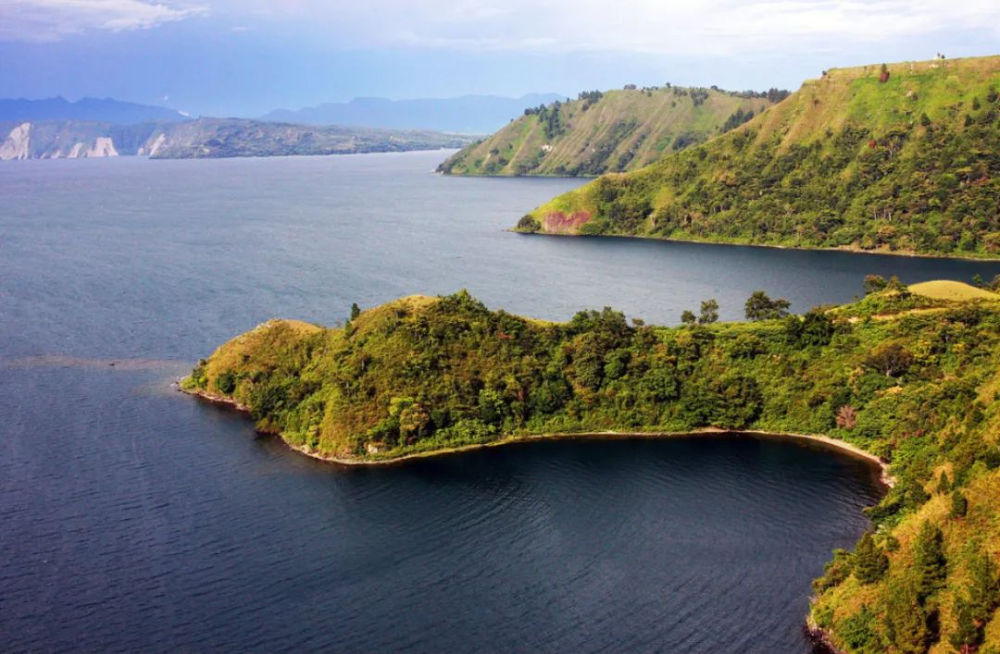
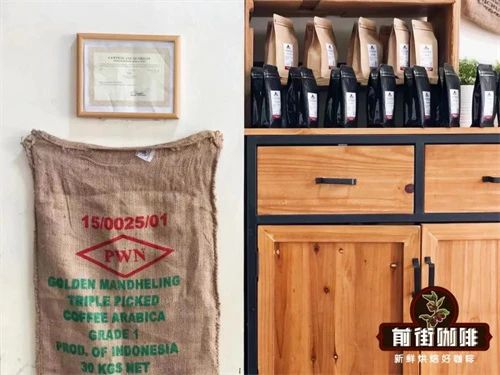
Mandheling production is centered around two volcanic lakes in Sumatra — Lake Tawar and Lake Toba. Among them, the Gayo Mountains around Lake Tawar benefit from a favorable organic farming environment and a long planting history. The coffee produced here excels in both quality and yield, garnering attention from many international green bean traders, especially one well-known coffee company (referred to as PWN). This company has long focused on sourcing high-quality Mandheling green beans. After arrival, the beans undergo machine sorting and three rounds of manual selection, with only plump, flawless beans chosen to ensure every batch meets specialty grade standards. Golden Mandheling is its most representative flagship product. Notably, the company registered the English trademark "Golden Mandheling" early on to protect the supply quality of Golden Mandheling. In other words, only the Golden Mandheling produced by this company can be considered the authentic “Golden Mandheling.” What is sold here is the genuine product from this company, processed using Indonesia’s unique wet-hulling method.
The uniquely bold flavor profile of Indonesian Mandheling is closely tied to the wet-hulling method used. Due to year-round humidity levels consistently between 70–90%, frequent typhoon attacks, and annual rainfall exceeding 2000mm, methods like prolonged sun drying common in Africa are nearly unfeasible here. Compared to traditional washed processing — which preserves more acidity and clarity but is time-consuming and labor-intensive — an unsuitable approach for Indonesia’s volume-oriented market, local coffee farmers developed a unique semi-washed method: wet-hulling.
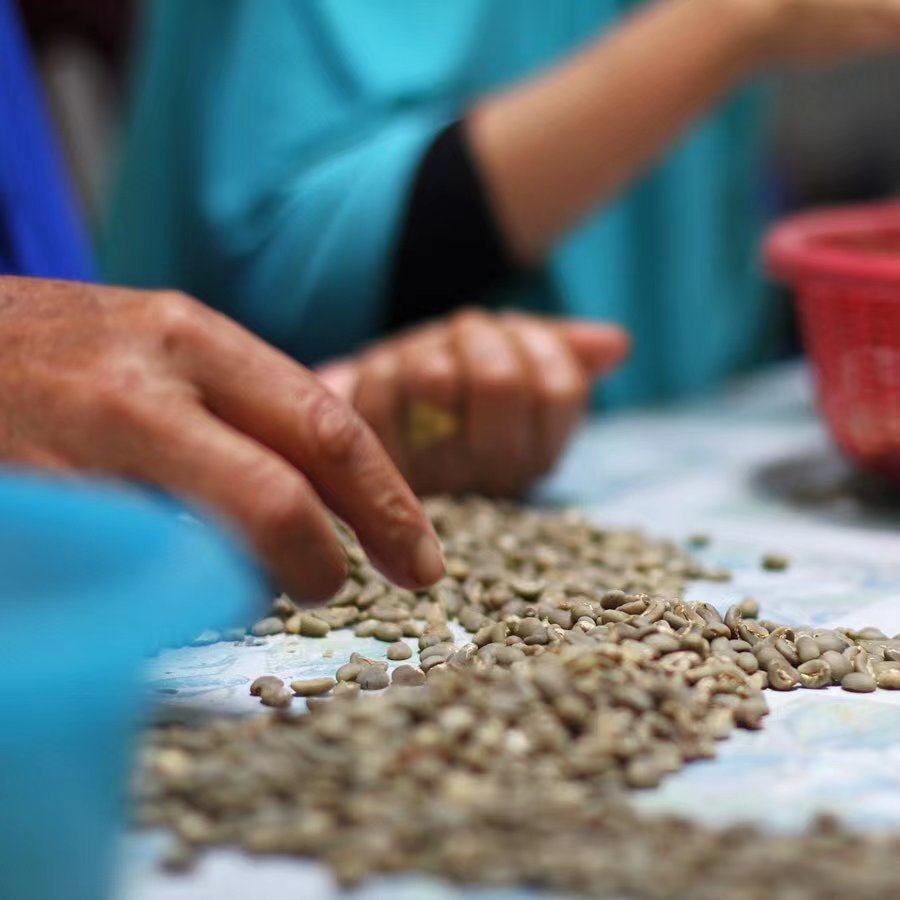 The basic process is as follows: after removing the skin and pulp of the coffee cherry, it undergoes brief fermentation for several hours, during which some mucilage still clings to the parchment layer and must be brushed off. Next, the parchment-covered beans are placed outdoors for initial drying, with the goal of reducing moisture content to 30–40% — a process that takes about two to three days. Before fully drying, the green beans are sent to buyers, who then put the semi-dried parchment beans directly into a hulling machine to remove the inner bean. Due to the high friction during hulling, the tightly adhered silver skin is forcibly peeled away, often accompanied by the discharge of white or green mucilage. Under the dual influence of prolonged mucilage soaking and a humid environment, the green beans gradually soften, whiten, or even swell, taking on a gray-green appearance. At this stage, the beans are highly prone to damage from friction and compression, particularly forming so-called "elephant ear" defects at the ends. Since the silver skin is removed early, the remaining “naked beans” dry faster and are directly exposed to high humidity air, leading to active microbial growth. This is the primary reason why Indonesian coffee generally possesses unique woody, spicy, and herbal notes — what is referred to as its “regional character.”
For coffee lovers who prefer bold flavors, if you haven’t tried wet-hulled Mandheling, it’s recommended to start with Lintong Mandheling as a daily drinker in small packaging. It offers a classic Mandheling style experience and serves as an accessible entry point for home pour-over practice.
As for the best pour-over method for this Golden Mandheling coffee, we use the most popular bean from our shop as an example and provide a practical reference. For bold-style Indonesian Mandheling, Brazilian Queen Estate, or Jamaican Blue Mountain beans, baristas at this café typically opt for the KONO filter. Compared to the v60, the KONO filter has a smoother curve design that allows the filter paper to adhere tightly to the cup wall after wetting. Additionally, its flow-guiding ribs occupy only a quarter of the cup height, significantly restricting upward airflow and forcing water to flow slowly along the bottom toward the server. This design extends the contact time between coffee grounds and hot water, creating an immersion-like extraction effect that highlights rounded, bold, and flavor-concentrated characteristics.
Because medium-dark roasting significantly alters the internal structure of coffee beans, making their tissue looser and greatly increasing water absorption after grinding, improper brewing parameters can easily lead to over-extraction and excessive bitterness. To balance aroma release and control bitterness, it is recommended to slightly lower the water temperature and use a coarser grind to reduce the release of large bitter molecules. In practice, the café uses an ek43s grinder, setting the grind size to 10, with water temperature strictly controlled between 87–88 degrees Celsius.
 Filter: KONO
Water Temperature: 87°C
Coffee Dose: 15g
Coffee-to-Water Ratio: 1:15
Grind Size: 70% passing through a Chinese standard No. 20 sieve
Pouring Method: Classic three-stage pour
- First Stage: Pour 30g of water for a 30-second bloom, starting the timer. Use a small stream, circling from the center outward to ensure even saturation of the entire coffee bed.
- Second Stage: After 30 seconds, switch to a slightly larger stream and steadily pour 95g of water. The goal is to uniformly lift the coffee bed. Keep the water column vertical and even. This stage should reach a cumulative pour of 125g by around the 55-second mark.
- Third Stage: When the liquid level drops to about half, switch to a small stream and pour the final 100g of water in small circles. Control the agitation range to avoid disrupting the coffee bed, which could lead to under-extraction. Total water poured is 225g, with dripping completed in approximately 2 minutes. Finally, remove the filter and gently swirl the server to enjoy.
With this pour-over setup, you’ll fully highlight the Golden Mandheling’s rich black chocolate aroma, along with the excellent fusion of roasted hazelnut, caramel, and mildly sweet melon notes. Herbal spice tones are prominent on the palate, with a bold yet clean mouthfeel, a long-lasting aftertaste, and distinct layering — making it an excellent choice to experience the charm of Sumatra’s wet-hulled coffee.
The above content is compiled by CoffeeHunters, a coffee news website.


