








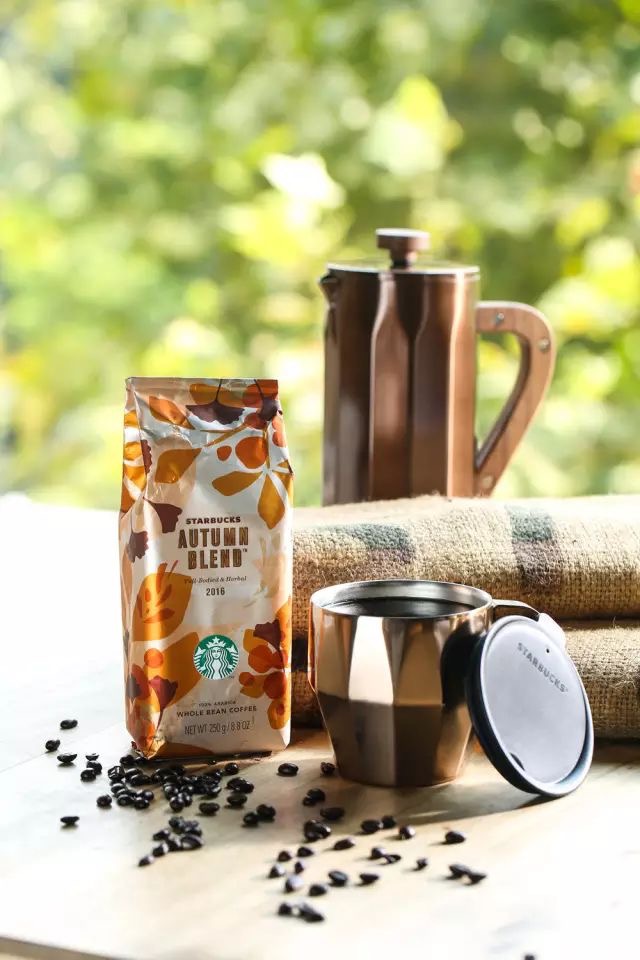
Introduction:Starbucks’ Autumn Blend coffee beans make their debut in a maple orange package, combining characteristics from two major producing regions—Sumatra and Guatemala—to deliver a unique flavor profile that is rich, sweet, and infused with herbal notes. This article delves into the regional backgrounds and flavor profiles of this limited-edition autumn blend, and provides practical pour over tips, including Kono filter cup step-brewing parameters and steps, to help coffee enthusiasts fully showcase its layered complexity and robust mouthfeel.
As autumn deepens, Starbucks’ annual Autumn Blend coffee beans have become a seasonal highlight eagerly anticipated by many coffee lovers. The maple orange-themed packaging design echoes the atmosphere of falling autumn leaves. Not only is the appearance soothing, but the beans inside also blend offerings from two renowned producing regions—Sumatra in Indonesia and Antigua in Guatemala—to create a blend that is bold, sweet, smooth, and naturally herbaceous. It pairs wonderfully with Thanksgiving desserts or home-style dishes.
Since its launch in 2008, this Autumn Blend has been inspired by the Thanksgiving season, aiming to allow drinkers to feel the gifts of nature while experiencing the warm ambiance of autumn. Its blending strategy focuses on Sumatra and Guatemala: the former is known for its intense and full-bodied profile, while the latter contributes soft fruit acidity and a bright finish, together creating a richly layered cup.

Let’s start with the Sumatra region. As an archipelagic nation, Indonesia’s diverse climates and terrains across its islands give rise to a wide variety of coffee flavors, among which Sumatra is the country’s main producer of Arabica beans. The most famous local offering, Mandheling coffee—not a regional name but a general term for Arabica beans produced in Sumatra—derives its name from the Mandheling ethnic group native to the area. Key producing areas include northern Aceh and central-southern Lintong. The former is represented by “Golden Mandheling,” while the latter is known for “Lintong Mandheling.”
PWN Golden Mandheling is a high-grade G1 bean, hand-picked and sorted at least three times post-harvest, with fewer than 3 defects per 300g sample. The beans must be size 18 or larger, and only dark green flat beans are certified by PWN. Many products on the market bearing this name have not passed official verification. In terms of flavor, Mandheling from the Lintong region features intense herbal aromas, black chocolate, and caramel as its core, with a pronounced aftertaste. PWN Golden Mandheling, on the other hand, presents a cleaner and more mellow profile, with intertwined notes of nuts and caramel, a long-lasting finish, and excellent balance.
The other key component of the blend comes from the Antigua region of Guatemala. This valley, located in a volcanic zone, benefits from fertile volcanic soil and unique pumice stone structures, along with low humidity, abundant sunshine, and significant day-night temperature variations, all of which nurture uniquely flavored coffee. The active volcanoes in the area provide natural nutrients, while the porous nature of pumice helps retain moisture to compensate for insufficient rainfall. Shade-grown cultivation further enhances the complexity of the fruit flavors.
A representative coffee from the Antigua region is the “Antigua.Flor de Cafe,” meticulously selected and cultivated by the La Minita Estate. It showcases a bright, “goddess-like” character. Its flavor profile is highlighted by pleasant floral notes, soft acidity, and a chocolatey-warm finish. The overall mouthfeel is clean and refreshing, forming a perfect balance with the intensity of Sumatra.
For these three bold and full-bodied coffee beans, it is recommended to use a Kono filter cup for pour over extraction. Compared to the commonly used V60, the Kono filter cup’s ribs extend only to one-third of the cup wall. Once the filter paper is attached, air circulation is restricted, slowing down the water flow and creating an immersion effect, which helps fully release the flavor compounds.
Suggested parameters: medium-coarse grind (similar to coarse sugar, 70–75% through a standard #20 sieve), water temperature 88°C, and a coffee-to-water ratio of 1:15. The brewing method employs step brewing—start timing, then pour 30g of water for a 30-second bloom; followed by small, circular pours to reach a total of 125g; once the bed moisture drops by half, continue with small, circular pours up to 225g. Total brew time is about 2 minutes and 10 seconds. This process effectively balances the bold base with delicate layers, fully showcasing the herbal, nutty, and chocolatey aromas of the autumn blend.
The above content is compiled by CoffeeHunters, a coffee news website.


