







Introduction:As one of the most classic and easy-to-use coffee brewing tools, the French press is beloved by coffee enthusiasts around the world. Not only is it simple to operate, but it also faithfully presents the original flavors of coffee beans, making it especially suitable for those who seek a rich mouthfeel and creamy layers. This article delves into the ideal roast levels, brewing process, and key parameters for using a French press, helping you master a Starbucks-style home brewing technique. You’ll also learn how to adjust your bean selection and coffee-to-water ratio to bring out the desired aroma and complexity in your cup.
The French press, also known as a French filter press, is a coffee brewing tool originating from France. It features a simple yet highly expressive structure, composed of a metal filter and a heat-resistant glass carafe. Its intuitive operation makes it suitable not only for beginners but also favored by seasoned coffee aficionados. This brewing method preserves coffee oils to the greatest extent, delivering a rich and full-bodied taste, which is why it is often hailed as the go-to tool for "lazy coffee" lovers.
However, although the French press is easy to use, it has clear preferences when it comes to coffee bean selection.Medium to dark roaststend to highlight the bean’s oiliness and bold flavors—such as those with notes of chocolate, caramel, or cream—whilemedium roastsoffer relatively balanced acidity, making them better suited for showcasing delicate flavors such as tea-like qualities and fermentation notes. Additionally, the French press uses a metal filter with relatively large holes that effectively retain coffee oils but cannot completely filter out fine particles like paper filters can. Therefore, selecting high-quality coffee beans is especially important.
Coffee beans on the market are generally categorized into light, medium, and dark roasts, and the French press is particularly well-suited for medium to dark roast beans. These beans, due to their longer roasting time, have lower acidity and more pronounced bitterness, which pairs perfectly with the immersion-style extraction of the French press, unlocking rich caramelized flavors. Moreover, because the French press employs full immersion and press filtration, it preserves the delicate aromas in the coffee’s aftertaste, such as tea-like notes and fermentation undertones. For users who prefer smooth, complex flavor profiles, it is an extremely appealing choice.
In practical use, it is recommended to usea coffee-to-water ratio of about 1:15 to 1:16, along with a medium-coarse grind, similar to the grind level commonly found in pre-ground medium coffee. This grind size ensures smooth water flow without compromising extraction efficiency. The recommended brewing time isfour minutes, during which you may includea 30-second bloomto activate the coffee grounds and release more aromatic compounds. These parameters are not only commonly used by professional shops but are also widely applicable for home brewing, helping you consistently produce a cup of coffee with balanced flavors.
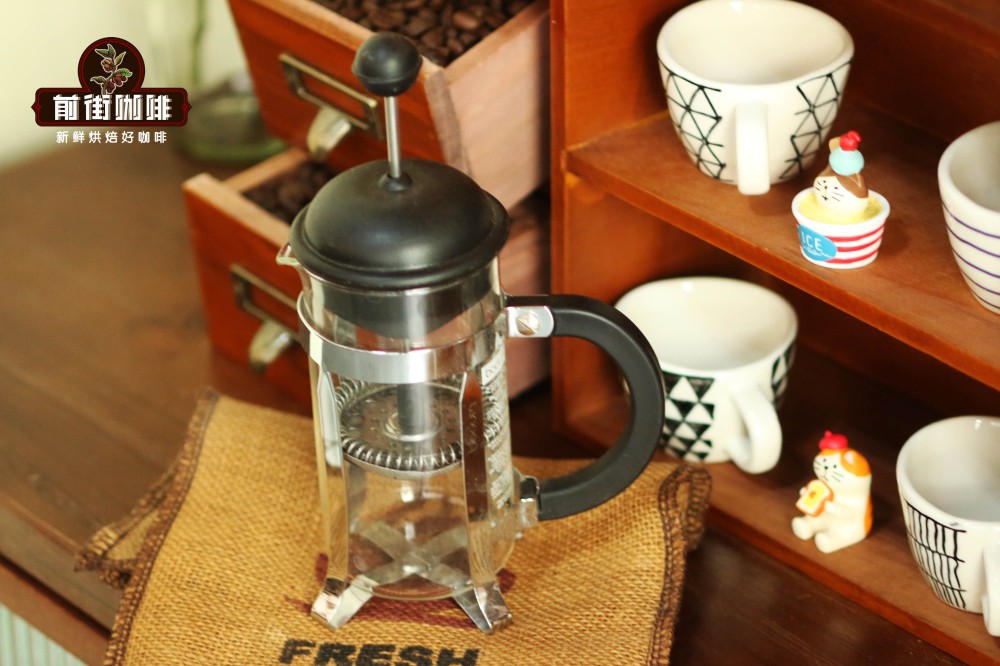
In terms of the specific brewing process, start by heating water to approximately 92°C to 96°C, which is the ideal extraction temperature for most dark and medium-dark roast beans. Next, place the preheated French press on an electronic scale and pour an appropriate amount of hot water from the center, then start the timer. After the initial pour of about 120 grams of hot water, it is recommended to gently stir the coffee bed using a wooden spoon or chopstick in a “rowing” motion. This helps evenly saturate the coffee grounds and encourages the bed to expand. This step typically lasts about 30 seconds, which is what we call the bloom stage.
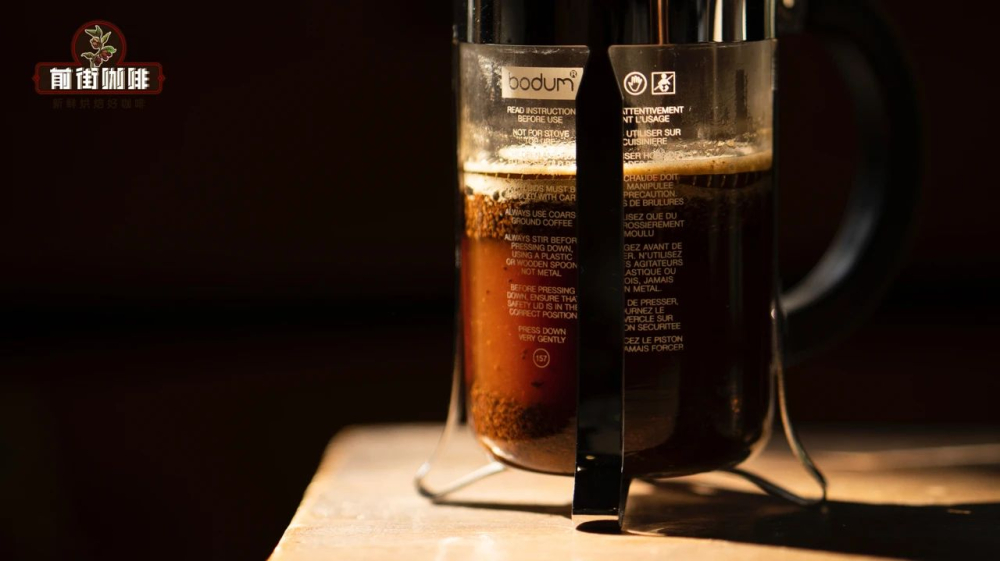
After the bloom, continue pouring the remaining hot water until you reach the target total volume, then immediately cover the press with the lid—but do not press the filter down yet. Allow the coffee to steepfor four minutes, giving the grounds ample time to fully extract their flavors. Once the time is up, slowly and steadily press down the filter. Apply a force of about7 to 9 kilograms. If the resistance feels too light, it may indicate that the grind is too coarse; if it feels too heavy, the grind might be too fine—either can affect the final extraction. After pressing, pour the coffee immediately into your cup to avoid over-extraction caused by leaving the grounds in contact with the liquid, which could negatively impact the taste.
Finally, pour the coffee into a pre-warmed cup and enjoy. It is recommended to drink it within20 minutesafter brewing to enjoy the best flavor expression. If you prefer fruity acidity and tea-like characteristics, you might choose a medium roast bean such as strawberry sugar; if you enjoy bold, chocolatey, and creamy profiles, medium to dark roast beans like Golden Mandheling would be more suitable. Mastering these elements allows you to easily brew French press coffee at home that rivals café-quality.
The above content is compiled by CoffeeHunters, a coffee news website.


