







Introduction:Mandheling coffee is renowned for its rich and bold characteristics, but differences in origin and grade can lead to vastly distinct flavor experiences. This article provides an in-depth comparison of two high-quality Mandheling coffees from the Gayo Mountains of Sumatra—PWN Golden Mandheling and Gayo Golden Mandheling. It delves into their unique traits through aspects such as regional environment, variety selection, processing methods, roasting profiles, and pour over parameters. Detailed flavor descriptions and practical brewing recommendations are also included to help you find the Mandheling that best suits your taste.
Mandheling coffee has long been celebrated for its bold and full-bodied flavor, yet in reality, Mandhelings from different regions and selection grades can vary significantly in taste. During a blind tasting of seven Mandheling coffees, baristas were quickest to identify one particular offering: a rigorously selected Golden Mandheling from the Gayo Mountains of North Sumatra, Indonesia. This coffee not only delivered clear flavors but also exhibited exceptional purity and complexity. This article will focus on two highly regarded Golden Mandhelings—PWN Golden Mandheling and Gayo Golden Mandheling—and comprehensively compare their differences across origin background, variety traits, processing methods, roasting strategies, and pour over extraction. Detailed flavor profiles and practical pour over parameters are provided to help you better understand how to choose and brew your ideal Mandheling.
Both of these Golden Mandhelings come from the Aceh region in northern Sumatra, specifically around the Gayo Mountains near Lake Tawar, within a high-altitude coffee-growing area. The coffee farmers here mostly operate small estates, commonly employing shaded cultivation and using the traditional wet-hulled processing method. Due to strict selection criteria, these beans generally have a cleaner taste and brighter sweetness, outperforming Mandhelings from other Sumatran regions.
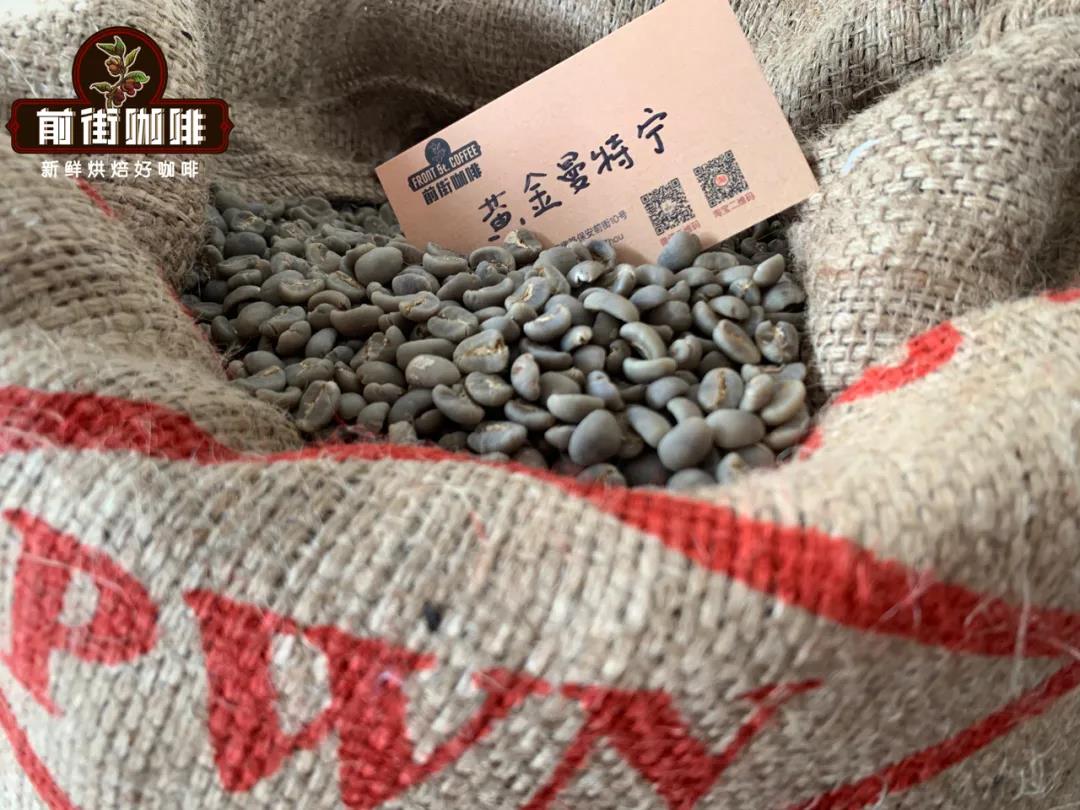
Although both originate from the Gayo Mountain region and use the wet-hulled process, PWN Golden Mandheling and Gayo Golden Mandheling differ significantly in variety and selection processes. Among them, PWN Golden Mandheling can be considered the “authentic” representative of Golden Mandheling. The “PWN” in its name stands for PWN Company, the officially certified supplier of Golden Mandheling by the Indonesian government. The packaging of this coffee clearly displays the PWN logo to distinguish it from other large-bean selections on the market that lack PWN certification.
PWN Golden Mandheling undergoes extremely rigorous selection, requiring four steps in total: three rounds of manual sorting plus one machine screening to ensure every bean meets very high standards. The variety used is Ateng, a hybrid of Timor and Arabica, which offers purer flavors than the original Timor. In addition, the beans are sized at 18 mesh or above, with no more than three defects in a 300g green sample, qualifying as top-grade G1. The beans appear dark green, with uniform shape and flat beans. After strict selection, they are nearly free of the earthy or off notes often found in typical Mandhelings, resulting in a cleaner, brighter cup with more pronounced sweetness.
To confirm whether it is genuine PWN Golden Mandheling, it is recommended to ask the seller for the PWN green bean sack or the accompanying certification documents. It is understood that PWN Golden Mandheling batches imported by the industry also come with relevant certificates, which were provided along with the November shipment this year, ensuring reliable sourcing.
In comparison, Gayo Golden Mandheling also undergoes multiple rounds of selection, though with slightly lower standards. This coffee is manually sorted three times and is of the Timor variety (also known as timtim), a hybrid of Arabica and Robusta. While its flavors are more refined than pure Robusta, it still retains some of the bold characteristics unique to Robusta. Even at G1 grade, its cleanliness and sweet clarity do not match those of PWN Golden Mandheling.
In terms of processing, both coffees use the traditional Indonesian wet-hulled method. This method involves two stages: first, a wooden pulper removes the skin and pulp, followed by approximately three hours of fermentation and sun drying until the moisture content is reduced to 30–50% in a semi-dry state; then the mucilage and parchment layers are removed, and drying continues for another 2–4 days until the moisture level drops to 12–13%. Although many Indonesian farms now have the capability for washed processing, the wet-hulled method remains the hallmark of Mandheling coffee due to its unique flavor profile, and is a key reason for its highly recognizable taste.
For roasting, both coffees were subjected to a medium-dark roast strategy to highlight their boldness and aromatic qualities. The roast record for PWN Golden Mandheling is as follows: using a Yangjia 800N roaster, with a charge of 480g, drum temperature starting at 200°C, and fan setting at 3. About 1 minute in, the heat was reduced to 160°C, keeping the fan unchanged until 5:40 when the beans turned yellow and grassy notes disappeared, with the temperature at about 148°C, indicating dehydration completion. Then the heat was adjusted to 140°C and the fan increased to 4; by 9:40, the beans showed wrinkles and black specks, coffee aromas gradually replaced the bread-like smell, and attention must be paid to the sound of first crack. First crack started at 9:54, then the heat was lowered to 60°C and the fan opened to 5, with the final drop at 204.5°C.
The roast conditions for Gayo Golden Mandheling are slightly different: also using a Yangjia 800N, 480g charge, start temperature 200°C, fan 3, with heat reduced to 160°C after 1 minute and fan unchanged. By 5:18, the beans turned yellow, grassiness disappeared, temperature reached 148°C, and dehydration was complete. Heat was then adjusted to 140°C and fan to 4; by 8:00, the beans began showing wrinkles and black specks, with clear coffee aromas, indicating that first crack was imminent. First crack began at 9:00, heat was immediately reduced to 80°C and fan set to 5, with the final drop at 202°C.
During the pour over test, to highlight the bold, clean, and aromatic qualities of these two coffees, a KONO filter cone was used (its design is similar to a cloth dripper, enhancing body and richness). Grind size was set to medium-coarse for pour over, based on a 20-number standard sieve with 70% passing rate, paired with a 1:13 coffee-to-water ratio (20g dose), and water temperature controlled at 87°C to balance flavor release and body.
The pour over steps are as follows: first, slowly pour the coffee grounds into the filter cone, keeping the bed as level as possible and avoiding shaking (to prevent disrupting the bloom). The first stage involves a small circular pour of 40g of water at the center for blooming for 30 seconds, during which the coffee bed will gradually expand into a “burger” shape. The second stage consists of pouring 120g of water in a circular motion from the center outward, keeping close to the coffee bed and moving gently to avoid excessive agitation. The final stage adds 100g of water, and extraction ends once all the liquid has dripped through the cone, with total brew time around 2 minutes.
PWN Golden Mandheling delivers an outstanding flavor profile, featuring sweet herbs, cinnamon-like spices, and orange peel-like citrus aromas. It is bold with notable sweetness, and the finish exhibits layers of cream, walnuts, and chocolate. The acidity is soft and restrained, and the aroma also carries hints of melon. As the temperature drops, the herbal and spicy notes become even more pronounced. Overall, the flavor is rich and layered.
Gayo Golden Mandheling showcases gentle notes of spice and herbs, with mild acidity and a finish that includes cocoa and nutty aromas. It has a pronounced sweetness and high overall body, making it suitable for drinkers who enjoy a full-bodied and warm cup.
The above content is compiled by CoffeeHunters, a coffee news website.


