







Introduction:Jamaican Blue Mountain coffee has long been hailed as the pinnacle of the coffee world, with Blue Mountain No. 1 being particularly rare and expensive. This article delves into the growing conditions of Jamaican Blue Mountain coffee, the CIB certification system, its rigorous grading and washed processing procedures, as well as the market pricing and pour over recommendations for Blue Mountain No. 1. It helps you better understand the value and brewing methods of this top-tier coffee.
Blue Mountain coffee has always been regarded as the crowning achievement of specialty coffee. Even today, authentic Blue Mountain No. 1 from the official Jamaican growing regions remains highly priced. But what exactly constitutes real Blue Mountain coffee? And why can it command such high prices? Taking Jamaican Blue Mountain No. 1 as an example, this article will take you on a comprehensive journey—from the growing environment, official CIB grading, washed processing techniques, to the details of barrel packaging—to fully analyze where its value lies. It also provides practical pour over parameters and brewing suggestions, so you can understand Blue Mountain better and brew it to bring out the best flavors.
In the era when specialty coffee had not yet flourished, Jamaican Blue Mountain was almost synonymous with top-tier coffee. Due to its extremely limited production and high global recognition, a cup of Blue Mountain coffee once cost as much as a hundred yuan, making it far from an everyday choice for most consumers. So, why is Blue Mountain coffee so expensive? To answer this question, we must first understand what true "Jamaican Blue Mountain" really is.
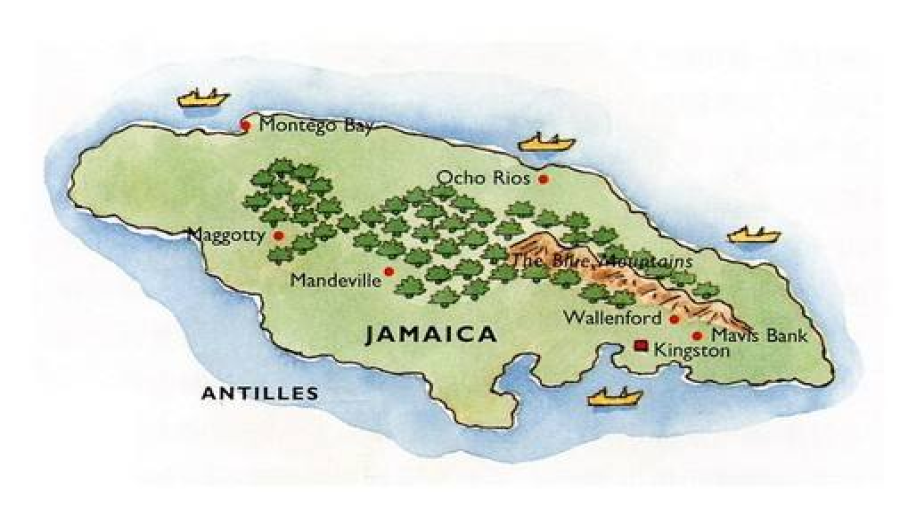
Authentic Jamaican Blue Mountain coffee refers to Typica variety coffee grown at altitudes between 910 and 1700 meters in the Blue Mountains, certified by the Jamaica Coffee Industry Board (CIB). The Blue Mountains feature rugged terrain and a tropical rainforest climate, with annual rainfall reaching 1800 to 2000 millimeters. Coupled with fertile volcanic soil, this creates a unique flavor potential in the coffee cherries. Locals often intercrop coffee trees with fruit trees such as bananas and avocados, which not only helps maintain ecological balance but also provides partial shade and nutrients for the coffee trees. Especially at higher altitudes, where clouds often shroud the area, they offer natural shading for the coffee trees, reducing the impact of direct sunlight on the cherries.
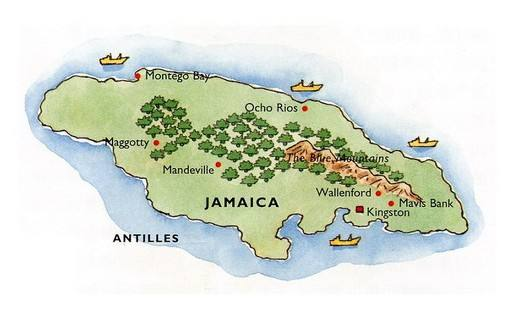
To ensure the quality of Blue Mountain coffee, the Jamaican government has established a strict grading system. Only Typica variety coffee that meets CIB certification and is grown within the designated altitude range can be called "Jamaican Blue Mountain coffee." The certified growing area covers only about 6,000 hectares, less than one-third of the entire Blue Mountain region, and only about 15% of Jamaica’s total coffee production can be labeled as Blue Mountain coffee. Moreover, due to the steep terrain at high altitudes, harvesting is difficult and is usually carried out by local female pickers familiar with the land, who carefully select coffee cherries at optimal ripeness to ensure the highest quality of the final beans.
To achieve more stable and consistent flavors in Blue Mountain coffee, local farms commonly use the washed processing method. This method effectively removes defective beans and enhances the overall purity of the flavor profile. Taking the commonly available Jamaican Blue Mountain No. 1 as an example, many premium batches come from the Clifton Estate. During processing, the harvested coffee cherries are first placed in water tanks for flotation to remove unripe or overripe fruits. Then, the pulp and flesh are removed, followed by approximately one night of fermentation, during which acidic substances help loosen the mucilage layer. The parchment beans are then dried in the sun until they reach the standard moisture content, after which they undergo packaging and quality inspection. Washed processing gives Blue Mountain coffee a clearer aroma and more stable, consistent flavors.
The dried Blue Mountain green beans are graded based on multiple criteria, including bean size, exterior color, moisture content, and cupping performance after roasting. Jamaican Blue Mountain coffee is classified into four grades: NO.1, NO.2, NO.3, and Peaberry. Among them, NO.1 is the highest grade, also known as "Blue Mountain No. 1" in the market. To be rated as NO.1, the green beans must have a screen size of 17 to 18, a defect rate below 3%, and the beans must be plump and uniform, demonstrating rich, aromatic, sweet, and well-balanced acidity flavor characteristics. Screening such high-quality beans requires extensive manual sorting, which is also one of the key reasons for the high price of Blue Mountain No. 1.
Authentic Blue Mountain No. 1 coffee is typically packaged in wooden barrels, which is a significant difference from the burlap sacks commonly used in other regions. The official wooden barrels used in Jamaica are made of oak, which offers good humidity regulation—absorbing and releasing moisture to help maintain stable moisture content in the beans, thereby ensuring more consistent roasting performance. The barrels also block odors and prevent aroma loss, helping preserve the coffee’s original flavors. The common specifications for Jamaican coffee barrels include 70 kilograms, 30 kilograms, and 15 kilograms.
By examining the wooden barrels, one can learn a lot about the Blue Mountain coffee. For example, the barrel lid usually features the CIB certification mark, while the body of the barrel indicates information about the exporter and importer, such as the tropical rainforest tree frog logo. Additionally, each officially imported batch of Blue Mountain No. 1 coffee is typically accompanied by a quality certificate issued by the Jamaica Coffee Board, an authorized sales certificate from the producer, and a certificate of origin, ensuring authenticity and traceability.
When you open the barrel, you’ll find that the Blue Mountain No. 1 green beans are plump, uniformly sized, and have a shiny bluish-green color, which are typical characteristics of high-quality green beans. After roasting and cupping, the dry aroma often carries notes of nuts, melon, and chocolate; while during pouring, you can perceive layered aromas of oolong tea, caramel, honey, and dark chocolate. Upon tasting, the dominant flavors include rich dark chocolate, roasted hazelnuts, cream, and black sugar, with an overall full-bodied mouthfeel, lingering aroma, and a clear, clean flavor profile.
In the market, Jamaican Blue Mountain No. 1 coffee is relatively expensive, typically sold at around 158 RMB per 100 grams. For those who wish to try a single cup of pour over Blue Mountain No. 1, some cafes also offer it for around 60 RMB per cup, making it suitable for consumers who want to experience its flavor without purchasing a large quantity of beans.
For pour over enthusiasts, how to brew Blue Mountain No. 1 to bring out its best flavors is a key consideration. Since Blue Mountain No. 1 is usually roasted slightly darker, with relatively loose beans and high water absorption, improper handling can easily lead to over-extraction. Therefore, it is recommended to use a slightly coarser grind size (about 75% passing through a 20-mesh standard sieve) and control the water temperature at around 88°C to reduce the risk of over-extraction. In addition, to enhance the body, it is suggested to choose a slower-flowing filter, such as the KONO filter, which helps extend the extraction time and soften the mouthfeel.
Recommended pour over parameters are as follows: use 15 grams of coffee grounds, set the coffee-to-water ratio at 1:15, and employ a three-stage pouring method. First, place the preheated filter into the server, add the ground coffee, and pour 30 grams of hot water for blooming for about 30 seconds, using a small stream of water in circular motions from the center outward. Next, pour up to 125 grams in the second stage, slightly raising the pouring height to maintain a steady flow and gently lifting the coffee bed. Finally, when the liquid level drops to about half, proceed with the third pour to reach a total of 225 grams, and wait for all the coffee to drip through, with the whole process taking about two minutes. Finally, gently swirl the coffee in the server before enjoying a well-rounded, layered pour over cup of Blue Mountain No. 1.
During the brewing process, you’ll be greeted by rich aromas of roasted nuts and caramel, and upon tasting, you’ll experience the interplay of dark chocolate and nutty sweetness, with a full-bodied mouthfeel and a long-lasting finish. It’s a premium coffee experience worthy of savoring.
The above content is compiled by CoffeeHunters, a coffee news website.


