







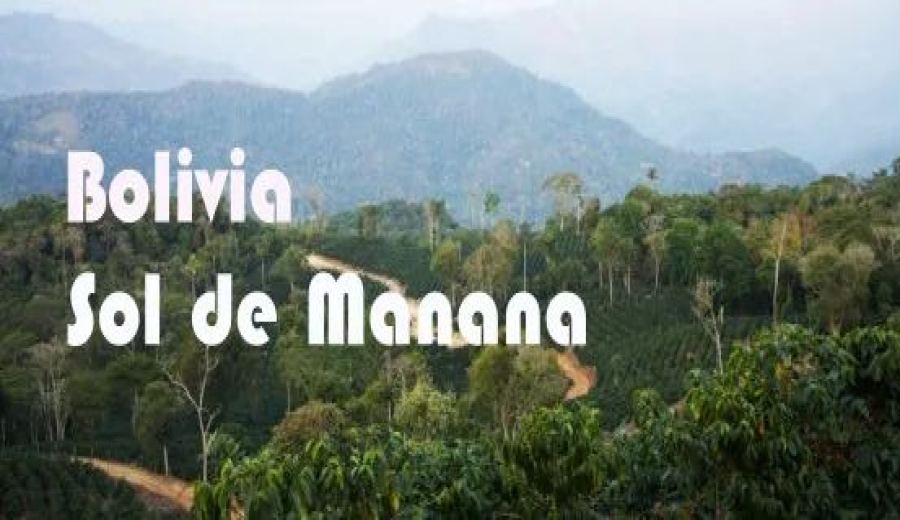
Introduction:Delve into the washed Caturra coffee cultivated under Bolivia’s “Sun of Tomorrow” program—from the challenges of the producing region to quality innovation—and learn how this specialty coffee has been revitalized amid adversity. This article takes you through its unique flavor profile, regional background, as well as recommended brewing parameters and single-origin selections, offering coffee enthusiasts a journey that combines knowledge with palate pleasure.
During recent cuppings, we tasted two washed Caturra coffees from Bolivia under the “Sun of Tomorrow” program. As a landlocked country in South America that has long faced multiple challenges, Bolivia is still able to nurture specialty coffees with distinct personalities. This article will guide you through the twists and turns of the country’s coffee industry, introduce how the Rodríguez family turned the tide through the Sun of Tomorrow program, and share practical single-origin coffee recommendations and brewing references. Whether you’re a seasoned coffee enthusiast or a curious beginner, you can experience the resilience and complexity that this land imparts to its coffee.
The story of Bolivian coffee began in the 1880s, when cultivation was mainly concentrated on large estates in the northern part of La Paz. However, due to political, economic, and market factors, the coffee industry struggled to develop steadily over the long term. In 1991, the government attempted to encourage indigenous participation in coffee farming through policy incentives, but at the time, quality was not a primary focus, which limited overall progress.
It’s worth noting that Bolivia possesses altitude and microclimatic conditions suitable for coffee cultivation and should have had the potential to become a major coffee-exporting nation. Yet, the natural advantages of its growing environment have long been offset by social, economic, and pest-related issues. Especially over the past two decades, output has declined steadily, dimming the luster of what could have been a shining coffee region.
The so-called “Sun of Tomorrow” program was born against this backdrop. Initiated by the Rodríguez family—one of the key drivers of Bolivia’s specialty coffee—it aims to help smallholder farmers improve coffee quality through technical support, resource integration, and market connections, thereby increasing their income and motivation to produce.
What are the reasons behind the decline of Bolivia’s coffee industry? One of the foremost challenges is competition from the coca industry. Since coca plants can be harvested more frequently, require less labor, and yield relatively higher profits, many farmers chose to switch to coca cultivation. But in the long run, coca not only degrades soil structure but also causes profound harm to ecosystems and local communities. In addition, excessive pesticide use and illegal deforestation have led to land degradation and soil erosion, further undermining the viability of coffee farming.
Another major blow came from the large-scale coffee leaf rust outbreak in 2013. This fungus, which attacks coffee leaves, severely impairs the plant’s ability to photosynthesize, leading to drastic yield reductions. According to statistics, Bolivia lost nearly half of its coffee harvest that year alone. This, in turn, caused the country’s total coffee output to plummet by about 70% over the following decade, causing it to drop out of the ranks of major coffee-exporting nations.
Faced with such a grim situation, the Rodríguez family decisively invested resources and expertise to launch the Sun of Tomorrow program, dedicated to rebuilding the specialty coffee production chain. Starting with foundational aspects such as variety selection, planting, and harvesting, the program provides farmers with comprehensive technical guidance and establishes large processing facilities to assist smallholders in completing post-harvest processes like washing. Moreover, the program also covers sales and export support, creating a complete value chain from field to cup.
The Rodríguez family’s team regularly visits participating farmers each month, offering customized agricultural advice tailored to each farm’s specific conditions—even a simple adjustment can lead to significant improvements in coffee quality. At the same time, they continuously advocate the philosophy of “quality over quantity,” emphasizing sustainable resource use and balancing yield. Additionally, the program collaborates year-round with top agronomic experts to conduct training sessions and workshops, facilitating experience sharing and problem-solving among farmers, thereby further enhancing overall technical proficiency.
The results first became evident in 2017. That year, the program not only successfully increased yield per hectare to approximately 20 bags but also expanded its membership from an initial 10 to 50 farmers. This not only represents an increase in farmer income but also symbolizes the gradual recovery of Bolivia’s specialty coffee industry. Despite the substantial capital, time, and manpower required by the Sun of Tomorrow program, the Rodríguez family remains convinced that this land holds undeniable potential and continues to be committed to preserving and developing this unique coffee heritage.
If you’d like to personally experience this coffee full of stories, try the Sun of Tomorrow program washed Caturra recommended by a certain coffee brand. This bean showcases bright citrus notes, paired with warm brown sugar aromas and a soft almond finish. Its acidity is crisp and layered, with a smooth and balanced mouthfeel—making it an excellent specialty-grade choice for pour over brewing. It is recommended to use a medium-light roast and pair it with a pour over dripper such as the V60 or Kalita Wave. A brew ratio of 1:15 to 1:16 and water temperature controlled at 90–92°C will better highlight its delicate fruity acidity and sweet flavor characteristics.
The above content is compiled by CoffeeHunters, a coffee news website.


