








Introduction:Want to understand the ins and outs of Arabica coffee beans? This article traces their origins, botanical characteristics, ideal growing conditions, and the flavor profiles and classic regions of major varieties such as Typica, Bourbon, Geisha, and Caturra, taking you deep into the world of this mainstream commercial coffee variety. Whether you're a beginner or an advanced enthusiast, you'll find practical guidance on bean selection and tasting here.
Among the many coffee varieties, Arabica is undoubtedly the most popular. With its richly layered aromas and diverse, captivating flavors, it is not only the backbone of specialty coffee but also the top choice in global consumer markets. This article will comprehensively explore the past and present of Arabica, covering its botanical features, suitable growing environments, and well-known varieties including Typica, Bourbon, Geisha, Caturra, SL28, and SL34, introducing you to the charm of this classic coffee bean from its roots.
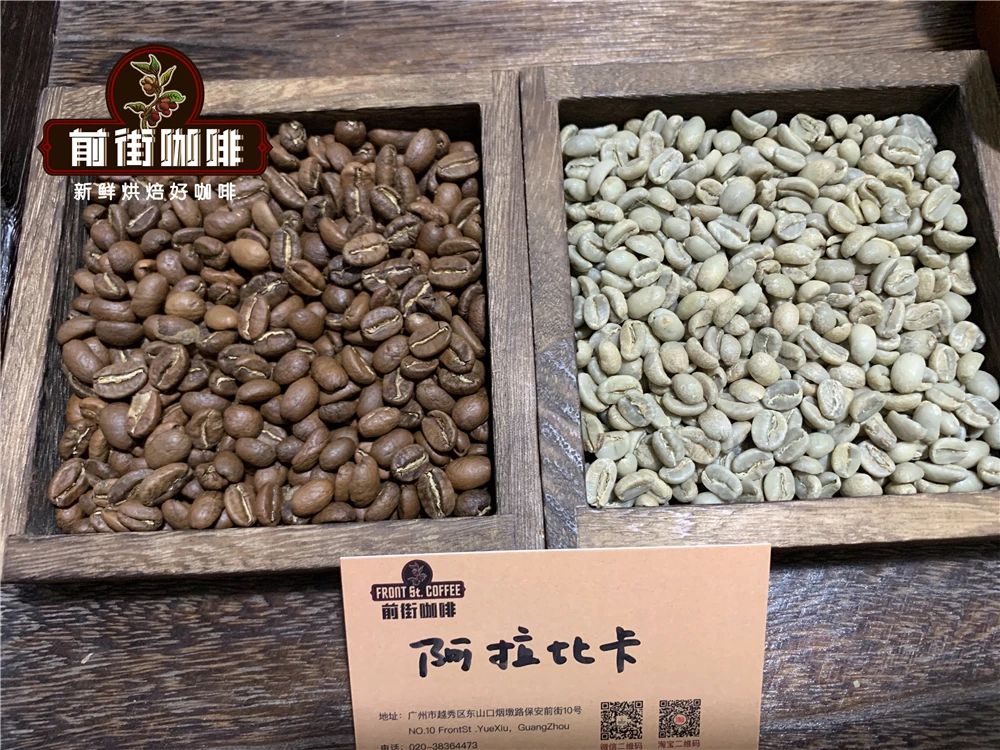
Currently, commercial coffee beans on the market can be roughly divided into two major categories: Arabica and Robusta. Among them, Arabica is widely praised for its delicate and varied flavors and pleasant aromas. These coffee beans originated from the highlands of Ethiopia in Africa and were initially used as medicinal plants. It wasn’t until later, when people discovered the method of brewing roasted beans, that they gradually evolved into the everyday beverage we now enjoy. Well-known specialty coffees from regions such as Jamaica Blue Mountain, Panama Geisha, and Ethiopia Yirgacheffe all belong to the Arabica variety.
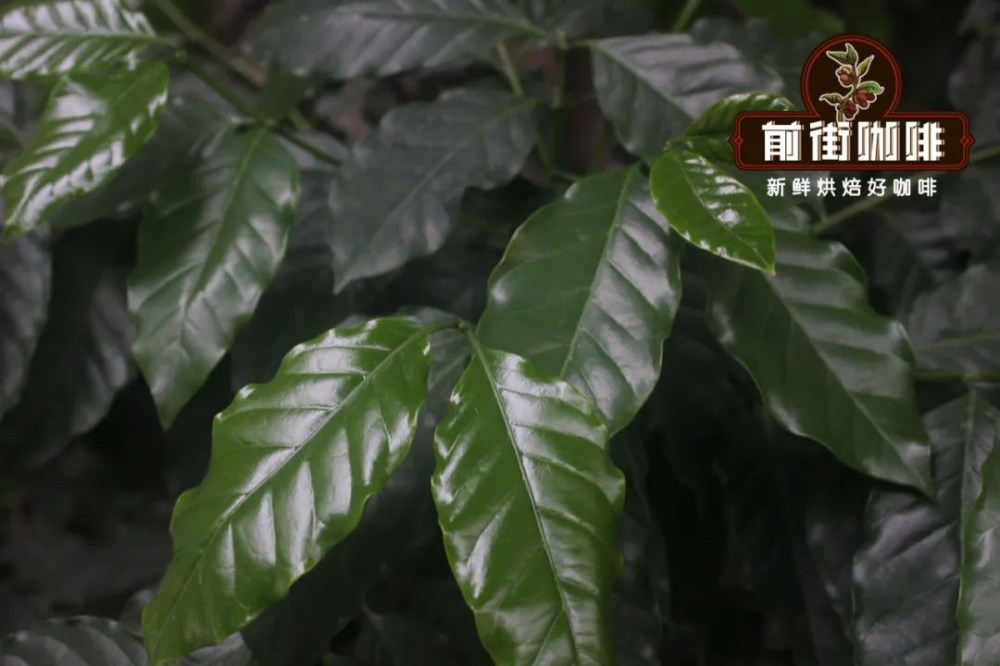
In terms of plant appearance, Arabica is a medium-sized shrub with dark green, oval-shaped leaves, and its coffee cherries are also oval, typically containing two slightly flattened seeds per fruit. The raw beans have a plump appearance, with an elongated oval shape on the front side, featuring a long, distinctly S-shaped center crack, while the back side has relatively smooth curves. Two Arabica coffee trees next to a certain store are great examples for observing their growth state.
Chemically, Arabica has a lower caffeine content, ranging between 0.9% and 1.2%; its fat content is about 60% higher than that of Robusta, and its sugar content is double. As a result, Arabica tastes noticeably sweet, with a soft mouthfeel and a hint of fresh fruit acidity. However, due to its relatively low chlorogenic acid content (approximately 5.5% to 8%), it has weaker resistance to pests and is more sensitive to climate change, which is why it is usually grown at high altitudes. Not only does this result in lower yields, but the maturation cycle is also longer.
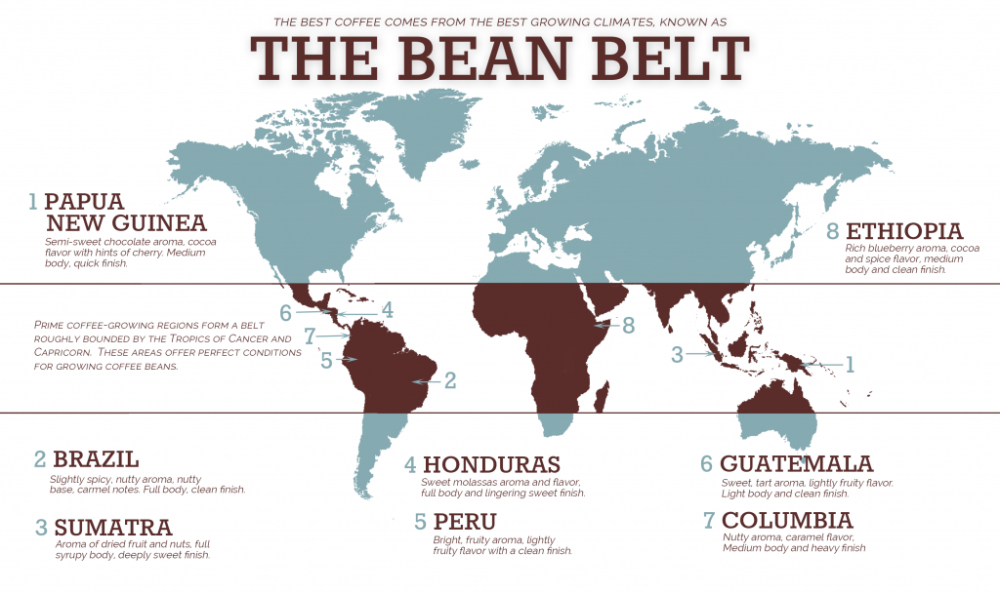
Arabica prefers warm, humid tropical climates, and the main global growing regions are concentrated near the equator, approximately between 25° north and south latitude—commonly referred to as the "coffee belt." Regions such as Brazil and Colombia in Central and South America, Ethiopia and Kenya in Africa, and Sumatra and Yunnan in Asia are all famous Arabica-producing areas. The unique microclimates of these regions contribute to the diverse flavor profiles of Arabica.
However, Arabica has strict requirements for its growing environment, particularly in terms of altitude and soil conditions. The ideal planting elevation is between 800 and 2200 meters, where the large day-night temperature difference at high altitudes helps delay fruit ripening, allowing flavor compounds to accumulate fully and thereby enhancing aroma complexity. In addition, stable rainfall, moderate sunlight, well-drained and fertile loose soil are also essential for the healthy growth of Arabica. These factors make its cultivation somewhat challenging, and also raise the cost of planting and management.
When it comes to the origin varieties of Arabica, Typica and Bourbon are the two most representative ancient lineages and also the ancestors of most Arabica varieties today.
Typica is one of the most original coffee varieties from Ethiopia, discovered around the 15th to 16th centuries. Its top leaves are bronze-colored, and the beans are slender or pointed in shape. Typica is known for its elegant acidity, but the plant itself is quite fragile, susceptible to leaf rust disease, and has low yields, which is why it has gradually been replaced by other more disease-resistant varieties. The famous Jamaica Blue Mountain coffee is grown using the Typica variety. The island’s unique maritime microclimate allowed Typica to develop better disease resistance, especially against coffee berry disease. A certain shop uses medium-dark roasting to highlight the chocolate and nutty aromas of Blue Mountain Typica, while preserving its soft acidity and natural sweetness, achieving a balanced flavor profile.
Bourbon is a natural mutation of Typica, with bean shapes changing from slender to rounder. This variety was first discovered on the island of Bourbon (now Réunion) off the eastern coast of Africa, hence its name. In 1715, the French transplanted round-seeded beans from Yemen’s Mocha to the island, and it was later introduced to Brazil in 1727. Compared to Typica, Bourbon can be planted more densely, yielding 20% to 30% more coffee per unit area.
Brazilian coffee is generally characterized by low acidity and a rich, full-bodied aroma, with a smooth mouthfeel and a comfortable aftertaste. A certain shop selects a Brazilian semi-washed Red Bourbon, which features a nutty and chocolatey profile paired with moderate caramel sweetness, resulting in a very balanced overall cup. This bean is also part of the shop’s "everyday bean" series, making it an ideal entry point for understanding the foundational flavor profiles of various producing regions.
In addition to the two major varieties mentioned above, there are several other notable Arabica types.
Geisha is a star variety in the specialty coffee scene in recent years, originally from Ethiopia and later shining brightly in Panama. Geisha is a mutation of Typica, with thinner leaves, lower photosynthetic efficiency, and more fragile root systems, leading to extremely low yields and a high dependency on high-altitude growing environments. Currently, those grown in Panama, Guatemala, and Colombia are the most highly regarded. A certain brand’s Emerald Estate Geisha series, including Red Label, Green Label, and Volcanic Rock versions, often features prominent notes of rose, citrus, berries, and honey, and is beloved by pour-over enthusiasts.
Caturra is a natural mutation of Bourbon, discovered in Brazil in 1937. Compared to Bourbon, Caturra plants are shorter, and although their disease resistance is average, their suitability for dense planting results in higher yields. Caturra is widely planted in Central America, known for its bright acidity and fruity characteristics. After medium-dark roasting, it often presents sweet notes of chocolate and nuts, and is a frequent contender in many coffee competitions. A certain shop recommends the washed Caturra from Huila, Colombia, which offers high cleanliness and delivers aromas of nuts, dark chocolate, and caramel, making it ideal for experiencing the unique personality of this variety.
Additionally, there are two classic varieties from Kenya: SL28 and SL34. These two varieties were selectively bred by the British Scott Laboratories between 1935 and 1939, aiming to identify traits related to yield, disease resistance, drought tolerance, and flavor potential. SL28 belongs to the Bourbon genetic group, with short, round, and thick beans, and is known for its bright acidity and outstanding sweetness. SL34, on the other hand, is part of the Typica genetic group, with slightly flatter beans, and features a balanced acidity and sweetness with a caramel aftertaste. A certain shop’s Kenyan Assaria coffee beans are a blend of these two varieties, processed through a 72-hour washed method, showcasing a rich layering of fruit acids such as plum, brown sugar, black plum, and cherry tomato.

The above content is compiled by CoffeeHunters, a coffee news website.


