







Introduction:Want to understand coffee bean varieties but overwhelmed by technical jargon? This article starts from botanical classifications to introduce you to the core differences between the world’s two most common coffee species—Arabica and Robusta—and takes an in-depth look at the history and unique flavor profiles of classic cultivars such as Geisha, Typica, and Bourbon. Whether you’re a beginner new to pour over or an enthusiast aiming to refine your bean selection knowledge, you’ll find practical guidance on purchasing and brewing.
The world of coffee is vibrant and diverse, with a staggering array of varieties, but the two most mainstream types are undoubtedly Arabica and Robusta. The former is famed for its delicate flavors and lower caffeine content, appealing to drinkers who seek layered taste experiences; the latter, on the other hand, boasts strong disease resistance and high caffeine levels, playing a pivotal role in commercial blends. This article will explore the differences between the two from their botanical roots, and introduce you to the development and flavor profiles of classic Arabica cultivars such as Geisha, Typica, and Bourbon.
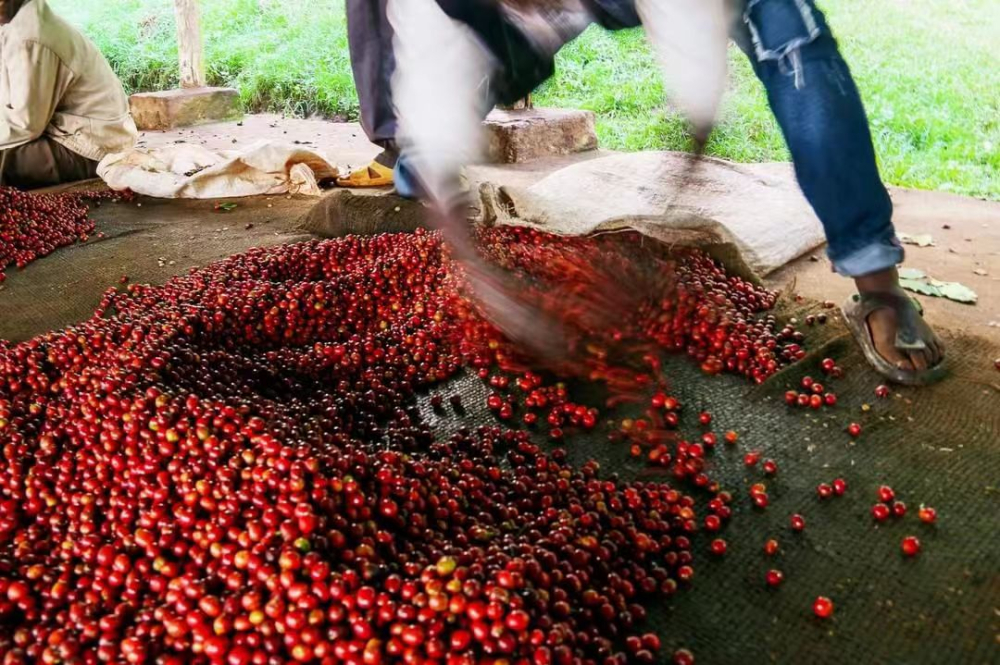
It’s said that the first coffee trees discovered by humans grew in Ethiopia, Africa. As trade and conflicts spread, these magical little red fruits gradually entered global life, nurturing a rich coffee culture. Understanding the differences among coffee varieties is the first step on your flavor journey.
Arabica (Coffee Arabica)is the dominant force in the global coffee market, accounting for approximatelythree-quartersof total production. This coffee tree is extremely particular about its growing environment, preferringaltitudes above 900 metersin highland regions with cool and stable climates. The higher the altitude, the greener or lighter green the raw beans tend to be, with oval shapes and elegantly curved grooves. Roasted Arabica beans contain only1.1%-1.7%[caffeine content], delivering rich flavor layers, making them suitable for everyday enjoyment.
Interestingly, the name “Arabica” might mislead you into thinking it originated in the Arabian Peninsula. In fact, its true homeland is Ethiopia. It came to be called “Arabica” because, before the Age of Exploration, the Arabian Peninsula, as a trade hub connecting Asia, Europe, and Africa, spread this coffee worldwide. Much like how “Arabic numerals” actually originated in ancient India but were mistakenly named due to their route of dissemination. In 1753, botanist Linnaeus misjudged its place of origin and assigned it the scientific nameCoffea arabica L.[Linnaean classification], until genetic research in 2002 confirmed that Ethiopia is indeed the genetic treasure trove of Arabica.
The birthplace of Arabica is eastern Africa, Ethiopia. Before the 15th century, coffee cultivation and trade were almost entirely monopolized by the Arab world, which is why Europeans called it “Arabian coffee.” Early global commodity coffee was almost exclusively Arabica. It wasn’t until the late 19th century, when large-scale diseases broke out, that growers began searching for disease-resistant alternatives. Even so, Arabica remains the market leader, primarily grown in Latin America, Indonesia, and Pacific islands. Among them, Brazil, with its favorable geography and climate, has become the world’s largest Arabica producer, accounting for more thanone-thirdof global output.
Robusta (Robusta)originated in the Congo region of West Africa. Although often compared directly with Arabica, the two are not parallel in botanical classification—Robusta belongs to theCanephora species (Congo species), just as Typica belongs to the Arabica species. Since only Robusta within the Canephora species has been successfully commercialized, the name gradually became synonymous with this cultivar.
Robusta exhibits astonishing adaptability, capable of thriving inlower altitudes and high-temperature environments, and boasts far greater resistance to harsh weather than Arabica. It is widely cultivated in Vietnam, Brazil, India, and also in small amounts in Hainan, China. Its caffeine content reaches as high as2.7%-4%[caffeine level], about double that of Arabica. This natural insecticide allows Robusta to effectively resist insect attacks.
In addition, Robusta has only22 chromosomes(Arabica has 44), is cross-pollinated, and has a relatively simple genome but stronger disease resistance. These traits make it a foundational variety for many commercial blends.
When discussing the Arabica family, we can’t overlook several classic cultivars:Geisha, Typica, and Bourbon. First is the world-renownedPanama Geisha from Hacienda La Esmeralda. This variety was first discovered in 1931 in the Gesha Forest of Ethiopia, then traveled through Kenya, Uganda, and Tanzania, finally arriving in Costa Rica in 1953 and introduced to Panama from there. Initially, Geisha was used only as a windbreak until the owner of Hacienda La Esmeralda discovered its extraordinary flavor, entered it in the Panama Coffee Competition, and won the championship—ushering in the legendary journey of Geisha.
The processing method significantly impacts Geisha’s flavor. Take the washed Geisha from Hacienda La Esmeralda’s Green Label as an example: it features bright acidity with fresh lemon and citrus notes, while the natural-processed version highlights sweetness, reminiscent of passionfruit aromas. This contrast underscores the influence of processing methods on a coffee’s final flavor profile—washed processes yield clean and crisp flavors, while natural ones enhance sweetness and fruity notes.
Next is the historicTypica (Typica), one of the oldest Arabica cultivars in the world. The Dutch once introduced Typica to Java Island in Indonesia, and later the French spread it to the Caribbean and Central and South America. Due to its low yield and susceptibility to leaf rust, it is no longer commonly grown alone in most regions today. However, Typica still delivers outstanding flavor performance, with rich sweetness and diverse flavor profiles depending on the producing environment.
For example, Mandheling from Sumatra, Indonesia, benefits from the region’s hot and rainy climate and uses the uniquewet-hulling process, resulting in intense herbal and medicinal aromas, a full-bodied mouthfeel, and a sweet aftertaste. Meanwhile, Typica from Jamaica Blue Mountain presents a completely different character—lower body, well-balanced acidity and sweetness, and is hailed as one of the world’s top coffees.
Bourbon (Bourbon)is a mutation of Typica, named after its initial cultivation on Réunion Island (formerly known as Bourbon Island). Its top young leaves are green, hence it’s also called “green-tipped coffee.” Bourbon yields higher than Typica but requires shaded environments. Its fruit is short, dense, and has high flesh density, resulting in superior sweetness.
As one of the world’s largest coffee exporting countries, Brazil grows a significant number of Bourbon variants, such as Caturra and Pacas. A typicalBrazilian Red Bourbon, when brewed, exhibits classic nutty and chocolatey tones, accompanied by rich peanut and creamy aromas. In contrast,Yellow Bourbongrown at high altitudes, when processed via sun-drying, showcases bright acidity and sugarcane sweetness, with a lingering finish of dark chocolate—Brazilian Queen Estate Yellow Bourbon is a prime example.
Additionally, Kenya’s renowned varietiesSL-28 and SL-34, originating respectively from Bourbon and Typica, produce intense berry acidity and fermentation wine-like notes, presenting an intriguing contrast to the lemon-citrus profiles of Ethiopian coffees and other African regions.
These are just the tip of the iceberg when it comes to coffee varieties. With advancements in breeding technology, more disease-resistant and high-yield hybrid varieties continue to emerge, further enriching the flavor spectrum of coffee. Gaining a deeper understanding of these cultivars’ characteristics will help you discover the coffee experience that best suits your personal taste.
The above content is compiled by CoffeeHunters, a coffee news website.


