







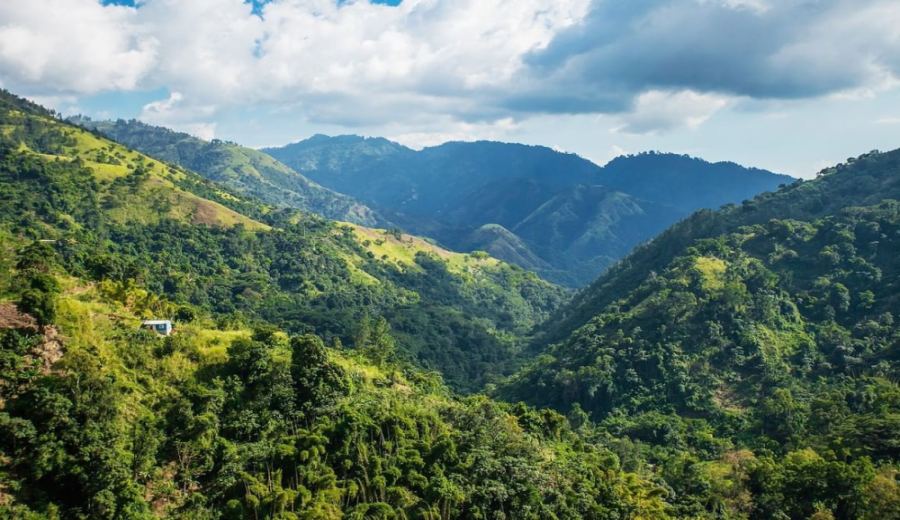
Introduction:Jamaican Blue Mountain coffee is renowned as one of the world’s top-tier coffees, with an extremely limited annual production—over ninety percent of which is imported by the Japanese market. This article provides an in-depth analysis of the growing environment, the three-tier grading system, the traditional wooden barrel packaging, as well as the stringent standards for harvesting and roasting. It also offers professional pour over parameters and practical advice to help you identify authenticity and experience its unique flavor.
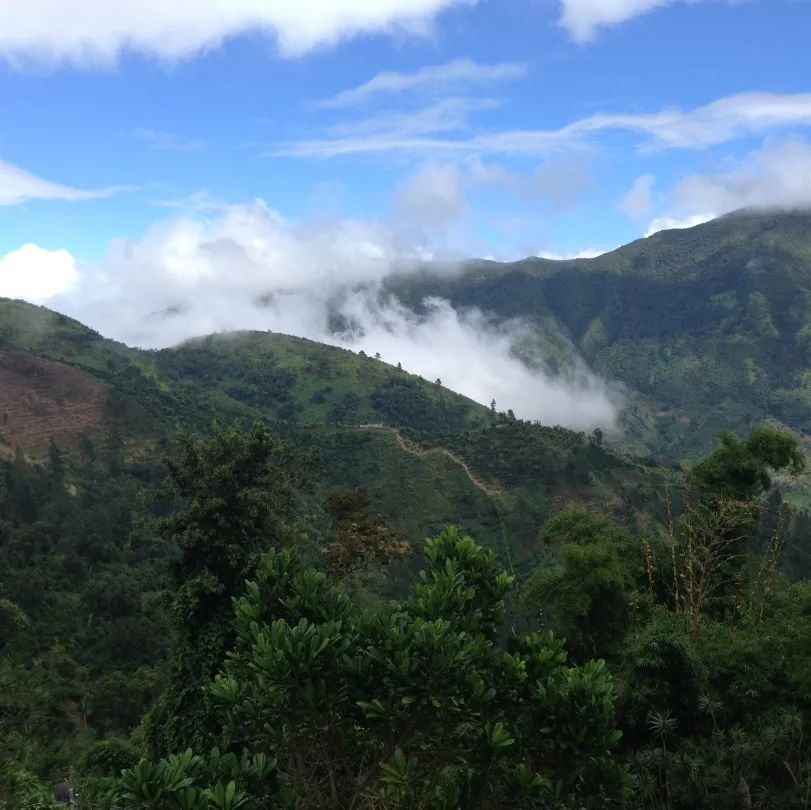
Jamaican Blue Mountain coffee is grown in the Blue Mountains of eastern Jamaica, an island nation in the Caribbean, and is globally recognized as one of the finest coffee varieties. The region boasts fertile volcanic soil, a cool high-altitude climate, and a year-round environment of frequent fog and rain—with annual precipitation of about 1980 millimeters and an average temperature stable at around 27°C. These conditions contribute to the unique aroma and taste of Blue Mountain coffee. However, its annual output is only about 40,000 bags (each bag weighing 60 kilograms), of which up to ninety percent is purchased by the Japanese market, with the small remaining quantity distributed to other parts of the world—making it exceptionally rare.
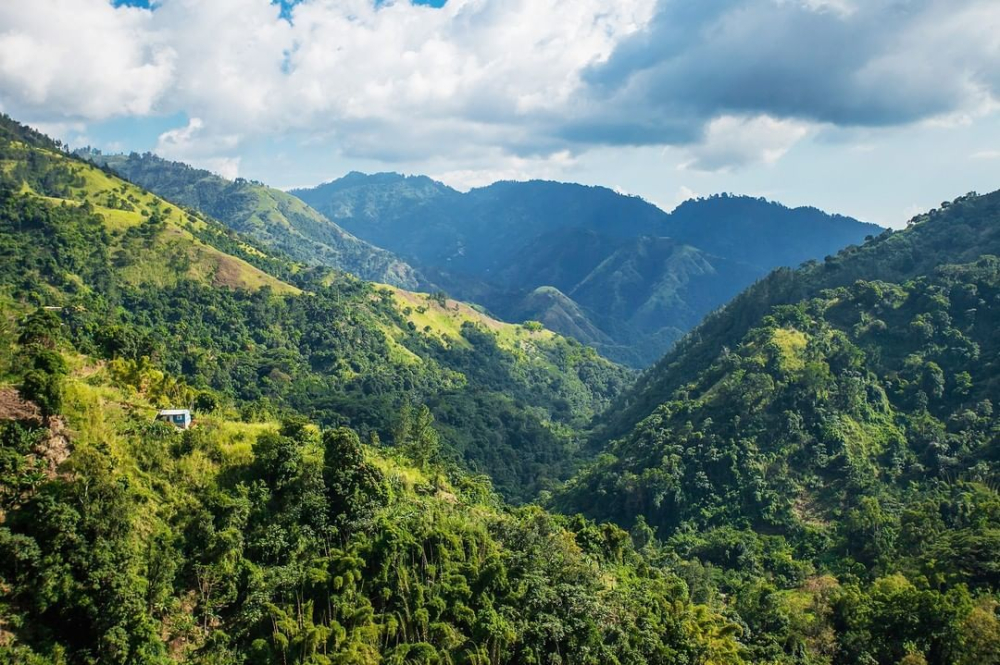
The purity of flavor in Blue Mountain coffee is key to its cultivation environment and meticulous manual processing. Coffee trees are primarily planted on steep mountain slopes, and harvesting relies entirely on skilled female workers who handpick coffee cherries at the optimal ripeness. The harvested cherries must undergo depulping, fermentation (approximately 12 to 18 hours), washing, and screening on the same day, followed by drying on cement floors or thick mats until the moisture content reaches 12%–14%. Finally, they are stored in specialized warehouses, awaiting the right time for roasting and grinding. Every step requires strict quality control to ensure the final flavor is pure and balanced.
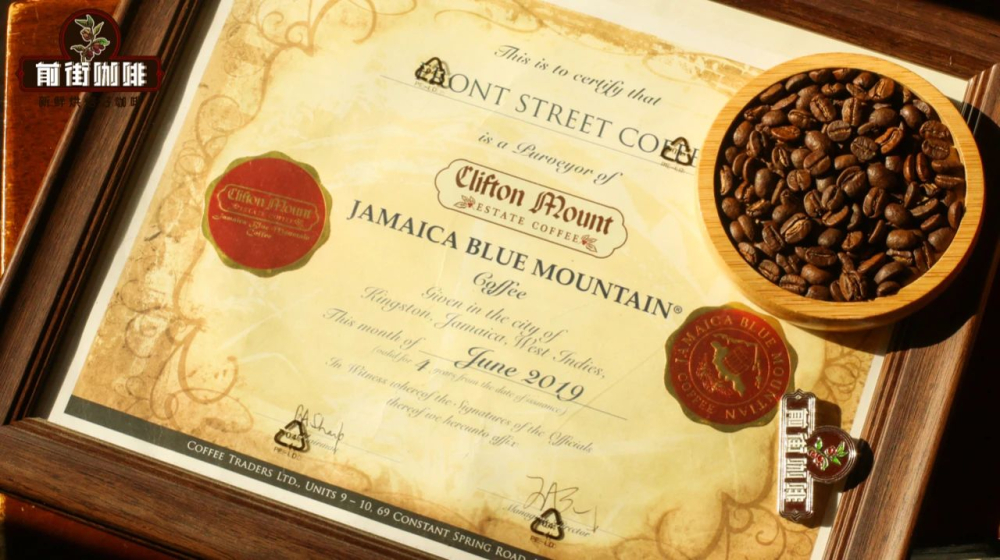
The history of Blue Mountain coffee dates back to the early 18th century. In 1717, King Louis XV of France ordered the planting of coffee in Jamaica. By the 1720s, then-Governor Sir Nicholas Lawes introduced Arabica seeds from Martinique, marking the beginning of local coffee cultivation. Today, the main producing regions of Blue Mountain coffee include Saint Andrew, Portland, and Saint Thomas, with Saint Andrew being one of the earliest areas to adopt cultivation. In 1950, the Jamaican government established the “Jamaica Coffee Industry Board” to set quality standards, oversee production, and issue unique official stamps for exported coffee, ensuring the authenticity of the product’s origin.
Blue Mountain coffee is divided into three main categories based on origin and quality: Blue Mountain coffee, High Mountain Supreme coffee, and Jamaican coffee. Among these, Blue Mountain and High Mountain Supreme are each further subdivided into two grades. Overall, the ranking from highest to lowest quality is: Blue Mountain No. 1, Blue Mountain No. 2, High Mountain Supreme No. 1, High Mountain Supreme No. 2, and regular Jamaican coffee. Blue Mountain No. 1 and No. 2 are considered top-tier offerings—not only offering balanced flavors but also featuring gentle acidity, rich fruit notes, and moderate body. They are best processed with a medium roast to preserve their delicate layers.
Authentic Blue Mountain coffee is also distinctive in its packaging and transportation. Unlike many coffee-growing regions that use burlap sacks, Jamaican Blue Mountain coffee is packaged and shipped in70-kilogram-capacity wooden barrels,making it one of the few producing regions in the world that still maintains this traditional method. Each batch of exported Blue Mountain coffee must be certified by the Jamaica Coffee Industry Board and sampled, roasted, ground, and cupped by professional quality control personnel to ensure it meets export standards. This rigorous procedure is also a key reason why Blue Mountain coffee can maintain its high price and premium quality image.
In terms of production and sales structure, the Japanese market has long accounted for over ninety percent of Blue Mountain coffee imports, securing priority purchasing rights through investment and cooperation since the 1990s. For example, in 1992, Jamaica exported 688 tons of Blue Mountain coffee to Japan, compared to just 75 tons to the United States and 59 tons to the United Kingdom. To this day, the rest of the world receives less than 10 percent of the production, making Blue Mountain coffee highly sought-after despite its high price. As a result, the market is flooded with various imitations or so-called “Blue Mountain-flavored” or “Blue Mountain blends,” but the actual proportion of genuine Blue Mountain No. 1 in these products is extremely low—often close to zero.
In terms of processing and cultivation, Blue Mountain coffee trees are often intercropped with bananas, avocados, and other crops on terraces to reduce soil erosion and maintain ecological balance. Most farms are small in scale and family-run, with some plots having been continuously cultivated for over two hundred years. However, the Jamaican coffee industry also faces challenges such as rising labor costs, natural disasters (like hurricanes), and terrain limitations that make mechanization difficult. Additionally, Blue Mountain coffee contains less than half the caffeine of regular coffee, aligning more closely with modern preferences for healthier beverages.
The harvesting season for Blue Mountain coffee runs from June to November each year. Throughout this period, only ripe red cherries are handpicked. The beans then undergo washed fermentation, rinsing with clean water, sun drying, hulling, and finally roasting. Notably, Jamaica is one of the few countries in the world that still uses wooden barrels for coffee transport. The standard export barrel holds 70 kilograms, although international statistics still use the 60-kilogram bag as a benchmark. In practice, however, the traditional method is maintained, reflecting a commitment to both culture and quality.
Regarding roasting, a medium-dark roast is recommended for Blue Mountain coffee, as it helps fully bring out its sweetness, nutty, and chocolatey notes, while retaining moderate acidity and a rich, rounded finish. During the roasting process, caramelization is key to flavor development, particularly during the first crack stage, where precise control of heat and airflow is essential to highlight its subtle layers. Specifically, it is suggested to start roasting at 170°C, gradually increasing the temperature while observing bean changes, adjusting the heat to 90°C and fully opening the air vent at first crack (around 8'12"), and finally dropping the beans at 201.3°C to achieve optimal flavor expression.
For brewing, the shop recommends using the pour over method to enjoy Blue Mountain No. 1, as it allows the most direct experience of its delicate and layered profile. It is suggested to use a KONO dripper, with a water temperature of about 88°C, a coffee-to-water ratio of 1:15, 15 grams of coffee grounds, and a grind size equivalent to EK43s setting 10.5 (approximately 75% extraction through a #20 sieve). The process involves a 30-second bloom with 30 grams of hot water, followed by pouring in a small circular motion centered around the coffee bed until 125 grams of water is added, then pausing for a bloom break before adding more water up to 225 grams. Once dripping is complete, the coffee is ready to enjoy. The brewed Blue Mountain No. 1 features a rich, full aroma, with caramel-like sweetness, nutty and chocolatey notes on the palate, a well-balanced acidity and sweetness, and a clean, lingering aftertaste—making it an excellent choice for experiencing authentic Blue Mountain flavor.
The above content is compiled by CoffeeHunters, a coffee news website.


