







Introduction:Want to understand why Brazilian coffee is relatively affordable and which specialty beans are worth trying? This article delves into the regional characteristics and cultivation background of Brazilian coffee, using the Yellow Bourbon from Fazenda Rainha in the Mogiana region of São Paulo state as an example. It introduces its honey processing method, unique flavor profile, and provides practical pour over brewing parameters and recommendations, helping you gain a more comprehensive understanding of this sweet, layered Brazilian specialty coffee.
Brazil is the world’s largest coffee producer, accounting for about one-third of global output. But many wonder why Brazilian coffee beans are generally not very expensive. This is closely related to Brazil’s geographical conditions, farming methods, and regional distribution.
As the largest country in South America, Brazil is located in the eastern part of the continent and features vast tropical and subtropical climate zones. About one-third of the country has a tropical rainforest climate, while the remaining two-thirds have a tropical savanna climate—both highly suitable for growing tropical crops like coffee. Thanks to these natural conditions, Brazil has long maintained its position as the world’s leading exporter and producer of coffee, earning it the title “Coffee Kingdom.”
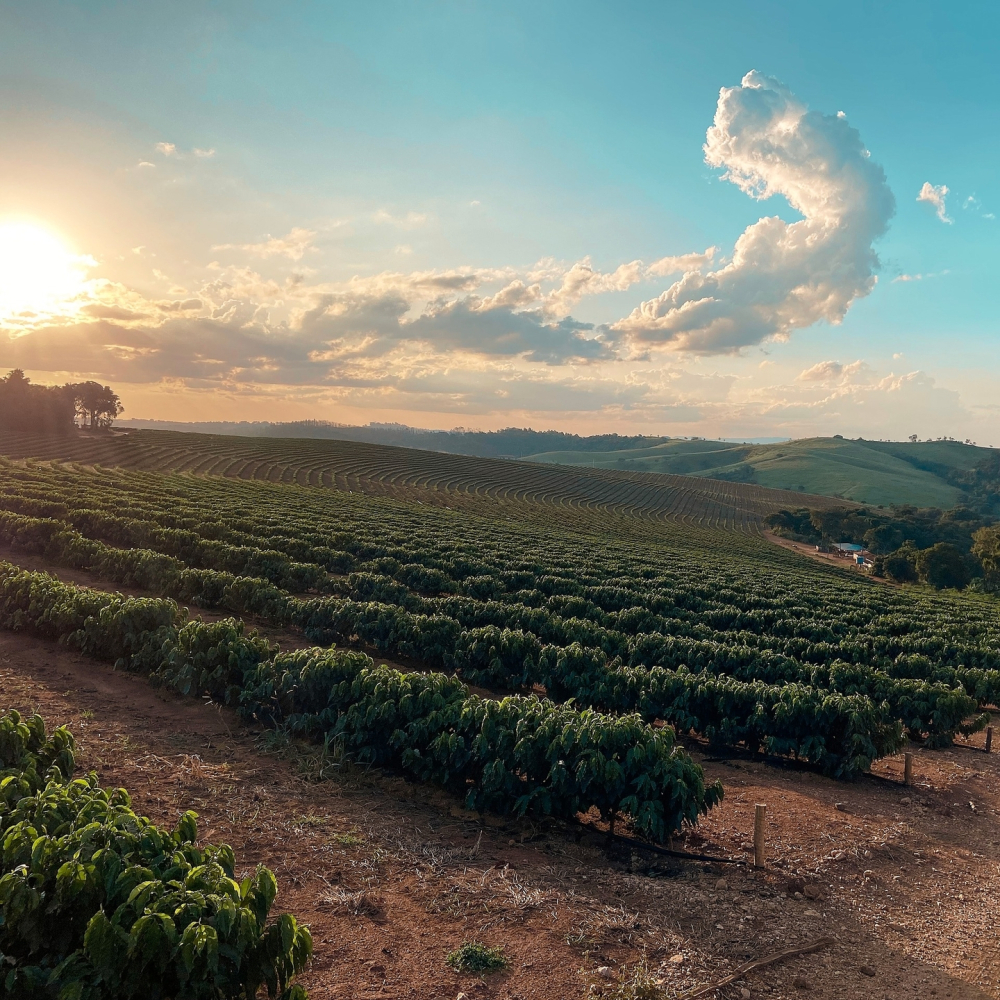
However, the generally low price of Brazilian coffee is mainly due to its growing environment and processing methods. Most Brazilian coffee is grown in central and southern regions, where the terrain is mostly flat or gently sloped, with elevations typically below 1200 meters. These areas lack the high-altitude and shaded environments traditionally required for premium specialty coffee.
To adapt to the limitations of the terrain, Brazilian coffee farmers developed Arabica varieties decades ago that could thrive in flat, high-light environments. These coffee trees do not require high altitudes or shade and can be planted directly in sunny locations. Due to the lower elevation, coffee cherries ripen faster, and their flavor development is not as complete as in high-altitude regions, resulting in beans with lower density, less pronounced acidity, and overall simpler flavors. As a result, such coffee is often used in espresso blends rather than high-end single-origin offerings, and its price remains relatively modest.
If you’re looking to enjoy a more layered Brazilian coffee, choosing a high-altitude, carefully processed specialty-grade bean is a better option. Among them, Fazenda Rainha in the Mogiana region of São Paulo state is one of the most representative specialty coffee farms.
Fazenda Rainha is located in the Mogiana area of São Paulo state, Brazil, close to the southern part of Minas Gerais. The region features hilly terrain and vegetation, offering a microclimate well-suited for specialty coffee cultivation. The farm is owned by the Carvalho Dias family, who manage a total of four estates. Since the first Brazilian COE (Cup of Excellence) competition in 1999, they have consistently achieved outstanding results, winning awards more than 12 times within seven years. In 2004, they even claimed the championship, 9th place, and 11th place simultaneously, earning international recognition for their quality.
The Yellow Bourbon coffee beans produced by Fazenda Rainha are grown at elevations between 1400 and 1950 meters, placing them in the mid-to-high altitude range, which helps develop richer flavors. This variety, Yellow Bourbon, is a mutation of the Bourbon variety, named for its recessive gene that causes the coffee cherries to turn a rare yellow color. Yellow Bourbon typically features tropical fruit aromas, balanced flavors, high sweetness, and a clean, clear mouthfeel.
This particular coffee is processed using a commonhoney processing methodin Brazil—a distinctive technique adapted to the country’s dry climate. Unlike traditional washed or natural (fully sun-dried) methods, the honey process removes the skin and pulp but retains some mucilage without fermenting in water tanks. Instead, the fermentation level is controlled through natural drying. This method preserves rich sweetness and body while minimizing the off-flavors associated with over-fermentation.
In terms of flavor profile, Fazenda Rainha’s Yellow Bourbon exhibits distinctnotes of nuts, cream, peanuts, fermented fruits, and cane sugar. It delivers a prominent sweetness on the palate, with a full-bodied and well-layered mouthfeel, making it ideal for coffee lovers who prefer round, mellow flavors.
Based on actual purchase reference prices, this coffee is priced at around 85 yuan per half-pound (227g) bag. When brewed using the pour over method, the cost per cup is approximately 30 yuan, offering excellent value for money.
If you’d like to brew this coffee at home using the pour over method, here are professionally recommended brewing parameters to help fully highlight its sweetness and rich body:
Filter cone recommendation: KONO
Coffee dose: 15 grams
Brewing temperature: 90°C
Grind size: Medium grind, approximately 75% passing through a standard #20 sieve
Water-to-coffee ratio: 1:15
Pour over technique (brew in stages):
Start by pouring 30 grams of water for a 30-second bloom, then continue pouring in small circles. When the water volume reaches 125 grams, perform the first pour stop. Once the water level drops and is about to expose the coffee bed, continue pouring until you reach 225 grams, then stop. Wait until the water level drops again and is about to expose the coffee bed before removing the filter cone to complete the brew. When using a V60 cone, aim for a total brew time of 2 minutes. If using a KONO cone, the time may be slightly longer, around 2 minutes and 10 seconds.
This Fazenda Rainha Yellow Bourbon coffee ultimately presents in the cup witha base of almond and cocoa notes, complemented by brightcane sugar sweetness. The overall flavor is balanced and layered, making it an excellent single-origin coffee for everyday enjoyment and showcasing the nuances of your pour over technique.
The above content is compiled by CoffeeHunters, a coffee news website.


