







Introduction:Do you know how the Ethiopian coffee ‘Huang Kui’ (Flower Queen) evolved from a competition bean to a globally acclaimed champion? This article delves into the origin of Flower Queen coffee, the unique natural sun-drying process of the Buku Abel estate, and the story behind the naming of ‘Huang Kui X.0’. It also compares the flavor profiles of a certain brand’s small-bean Huang Kui and the Natural Huang Kui 5.0, while offering expert pour over brewing recommendations to help you better understand this vibrant specialty coffee.
Flower Queen coffee is one of Ethiopia’s top-tier specialty coffee representatives. Its distinctive name hides an inspiring story of transformation from an unnamed competition bean to an international champion. This coffee originates from the Guji region in Ethiopia’s Sidama zone, more precisely, the Hambella Kebele under Shakisso Woreda—commonly known as Hambella. Many coffee enthusiasts immediately associate the name ‘Hambella’ with this uniquely flavored championship coffee.
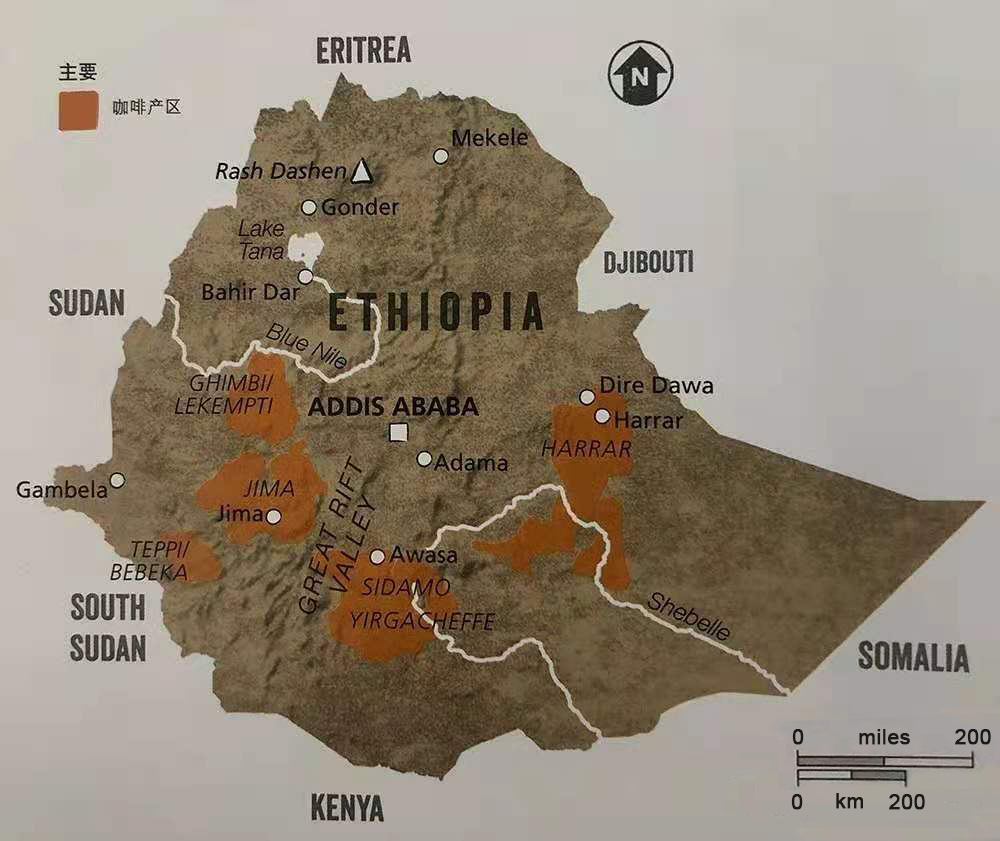
Sidama is located in southern Ethiopia and boasts ideal climate and geographical conditions for growing coffee cherries. In the past, both Yirgacheffe and Guji were part of the Sidama region, but following the ECX (Ethiopian Commodity Exchange) rezoning of coffee regions, these two renowned areas have since become independent. Nevertheless, Sidama remains celebrated for its intense fruity acidity and rich aroma, with flavor complexity that can rival even Yirgacheffe, making it particularly appealing to coffee drinkers who favor bold flavors. A cup of Sidama coffee pairs beautifully with classical music on a lazy afternoon.
When discussing Sidama, one cannot overlook its complex administrative and regional structure. Ethiopia’s administrative divisions are divided into four levels: Region, Zone, Woreda, and Kebele, similar to our familiar provinces, cities, districts, and neighborhoods. The origin of Flower Queen coffee is specifically within Hambella Kebele under Shakisso Woreda in the Guji zone of the Sidama region. This exact location has made ‘Hambella’ synonymous with Flower Queen in the minds of coffee enthusiasts.
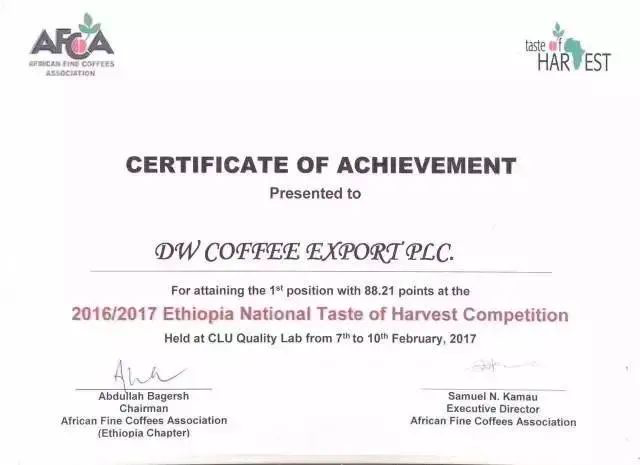
As for the romantic name ‘Flower Queen’, it actually stems from the 2017 TOH (the Taste Of Harvest) competition. That year, Ethiopia’s DW Coffee Exporters submitted a naturally processed coffee bean from the Hambella area to the competition. With its rich strawberry cream flavors, it captured the hearts of international judges and won the championship. This previously unnamed competition bean was later introduced to the Chinese market. Due to its outstanding flavor and great potential, it was given the name ‘Flower Queen’, symbolizing the queen of flowers. Interestingly, in the same year’s World Brewers Cup in China, contestant Li Jianfei used the same batch of Flower Queen beans to secure second place, further boosting the coffee’s fame.
Since then, Flower Queen has gradually become one of the symbols of Ethiopia’s specialty coffee, with a new version released each year—the well-known ‘Flower Queen X.0’ series. The naming convention is simple: it follows the harvest year in sequential order. For example, 2018 was Flower Queen 2.0, 2019 was 3.0, 2020 was 4.0, 2021 was Flower Queen 5.0, and so on. It is reported that the 2022 harvest beans will soon become Flower Queen 6.0, expected to arrive in April of this year—definitely something to look forward to.
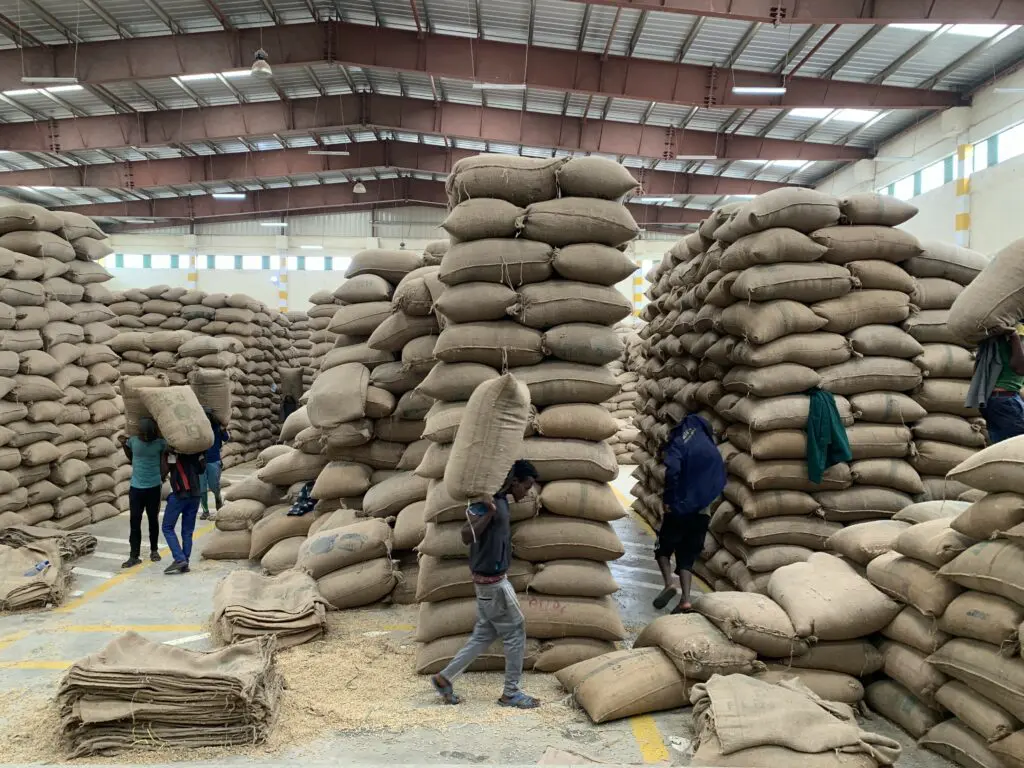
The unique flavors of Flower Queen coffee owe much to its producing estate—Buku Abel. In the local language, Buku Abel means ‘new place’. This village in the Hambella area of Guji not only sits at a very high altitude but is also a treasure trove where coffee heirloom varieties thrive alongside wild forests. The estate is surrounded by mountains, features reddish-brown organic soil, receives over 1,200 mm of rainfall annually, and adheres to strict harvesting standards—only selecting red coffee cherries with a sugar content of over 30%. These factors lay the foundation for its exceptional coffee flavor.
The sun-drying process at Buku Abel estate is meticulously executed. During the first two days, the moisture level of the red cherries is controlled to promote initial fermentation of the fruit sugars, while taking advantage of the large diurnal temperature variations at high altitudes to prevent over-fermentation. Shade is provided during midday heat, and temperatures may drop to 12°C at night, significantly reducing the risk of excessive fermentation. Only fully ripe, bright red coffee cherries are used, spread out on African beds with carefully managed layer thickness and regularly turned to ensure even fermentation and dehydration. In case of rain, thick plastic sheeting is used for emergency coverage. The entire sun-drying process lasts approximately 18 days, followed by about 50 days of resting to allow the moisture content to drop to around 10% before hulling and sale. Such rigorous processing results in Flower Queen coffee’s rich and layered fruity aroma.
Those who have tasted Flower Queen coffee are often impressed by its aroma and mouthfeel. A certain brand’s Sidama Natural Flower Queen often presents sweet fruity notes such as passionfruit, rose, and strawberry, with a juice-like entry that feels like stepping into a tropical orchard. This unique flavor profile is also a key reason why it is hailed as a champion bean.
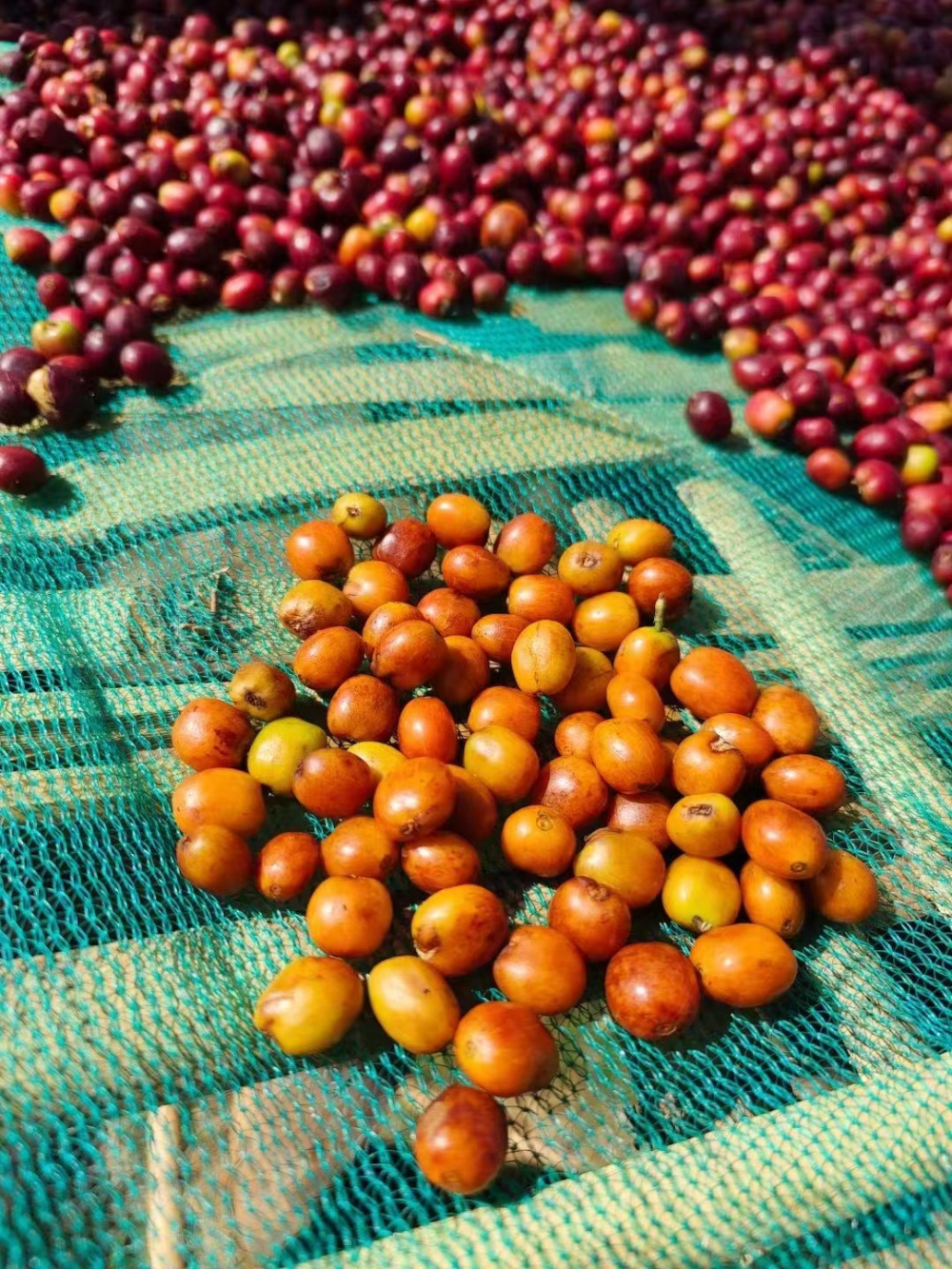
Regarding the naming rules of ‘Flower Queen X.0’, it is primarily based on the harvest year, with the number increasing by one each year. Moreover, genuine Flower Queen coffee beans must also meet a critical criterion—they must come from the Buku Abel estate and be processed using the natural sun-drying method. Both of these conditions are essential.
In addition to the commonly available Flower Queen 5.0, a certain brand also offers a special small-bean Flower Queen. These beans come from the DW company’s Buku Abel processing facility, where they noticed that each season there are always some smaller-sized coffee beans that often possess more intense aromas. After cupping, these smaller beans were processed separately and became an independent brand called ‘Small Bean Flower Queen’. In comparison, Small Bean Flower Queen has a more expressive aroma, with flavors that are closer to the strawberry cream profile of the 2017 champion beans; whereas Natural Flower Queen 5.0 showcases more of the classic Guji region citrus, berry, and tea notes, along with subtle floral hints and a soft tea-like mouthfeel.
If you wish to brew Flower Queen at home, it is recommended to use beans with a medium-light roast, ground to a size that allows about 80% of particles to pass through a standard Chinese No. 20 sieve. Use a Hario V60 dripper, with water temperature controlled at 90°C, a coffee-to-water ratio of 1:15, and about 15 grams of coffee. The specific steps are as follows: start with a 30-gram bloom for 30 seconds, then pour water in a slow spiral from the center outward to 125 grams, wait for the water level to drop, and continue pouring to 225 grams. The total extraction time should be around 2 minutes. These parameters will fully highlight Flower Queen’s berry, citrus, and juicy characteristics.
In summary, Flower Queen coffee is not just a simple competition-winning bean. It represents a series of meticulous cultivation, selection, and processing procedures, combined with an exceptional terroir, resulting in a specialty coffee with captivating flavors and rich layers. Whether you’re a coffee novice or a seasoned enthusiast, understanding the history and characteristics of Flower Queen will deepen your appreciation for the story behind a great cup of coffee.
The above content is compiled by CoffeeHunters, a coffee news website.


