








Introduction:Delve into the unique charm of one of the world’s top specialty coffees — Hawaiian Kona. From its volcanic soil cultivation environment and rigorous grading system to the classic flavor profile represented by Queen Farm, this article provides a detailed exploration of Kona coffee’s historical roots, regional characteristics, and processing methods, along with expert cupping insights to help coffee enthusiasts fully understand this rare Hawaiian gem.
Renowned as one of the world’s premier specialty coffees, Hawaiian Kona is celebrated not only for its limited production and high price but also for its distinctive flavor and cultivation background, making it a long-held dream coffee for enthusiasts. As the only coffee-growing region in the United States, Hawaii’s unique volcanic terrain, mild island climate, and ideal elevation produce Kona coffee with delicate and complex flavor layers.
The Natural Advantages of Hawaiian Coffee Cultivation
Although Hawaii is an archipelagic state composed of 132 islands in the Pacific, only a few areas are suitable for coffee cultivation. These regions are mostly formed by volcanic activity and still host active volcanoes today. Volcanic ash enriches the soil with abundant minerals, creating an excellent medium for coffee growth. Coupled with a stable island climate featuring evenly distributed rainfall throughout the year, ample sunshine, and no frost threats — especially the frequent afternoon cloud cover that offers natural shading for coffee trees — these conditions further enhance coffee quality.

However, the high price of Kona coffee is not solely due to its exceptional flavor but also its limited planting area — only about 1,400 hectares across all of Hawaii are suitable for coffee cultivation, resulting in extremely limited output. In addition, strong domestic demand in the U.S. market leads to very low export volumes, making authentic Kona coffee even rarer. Some markets even offer “blended Kona” products, where Kona beans often make up less than 5% of the blend to satisfy consumer desire for the Kona flavor. Moreover, other Hawaiian islands such as Maui, Kauai, and Molokai have gradually developed their own coffee industries in recent years, but in terms of flavor and prestige, Kona remains unmatched.
Main Producing Regions and Island Characteristics of Kona Coffee
The core producing region of Kona coffee is located in the southwestern part of Hawaii’s Big Island (i.e., the Island of Hawaii), encompassing multiple volcanic zones within the Kona area. Overall, coffee cultivation in Hawaii is primarily concentrated on five major islands: Oahu, the Big Island, Maui, Kauai, and Molokai. Each island, due to differences in geology and microclimate, produces coffee with distinct flavor profiles. For example, Kauai coffee is typically soft and smooth; Molokai coffee is known for its full body and low acidity; Maui coffee exhibits moderate acidity and vibrant flavor expression. Among them, the Kona region, situated on high volcanic slopes, benefits from the nutrient-rich volcanic soil combined with meticulous manual management, yielding some of the most uniformly shaped and highly regarded coffee beans.
The Historical Development of Hawaiian Kona Coffee
The history of coffee cultivation in Hawaii dates back to the early 19th century. It is recorded that in 1817, Spanish advisor Don Francisco de Paula Marin attempted to introduce coffee to Hawaii but was unsuccessful. It wasn’t until 1825, when the governor of Hawaii brought coffee seeds from Brazil and successfully planted them in the Manoa Valley, that the development of Hawaiian coffee truly began. Subsequently, in 1828, Bourbon variety coffee was introduced to the Big Island and gradually became one of the main cultivars.
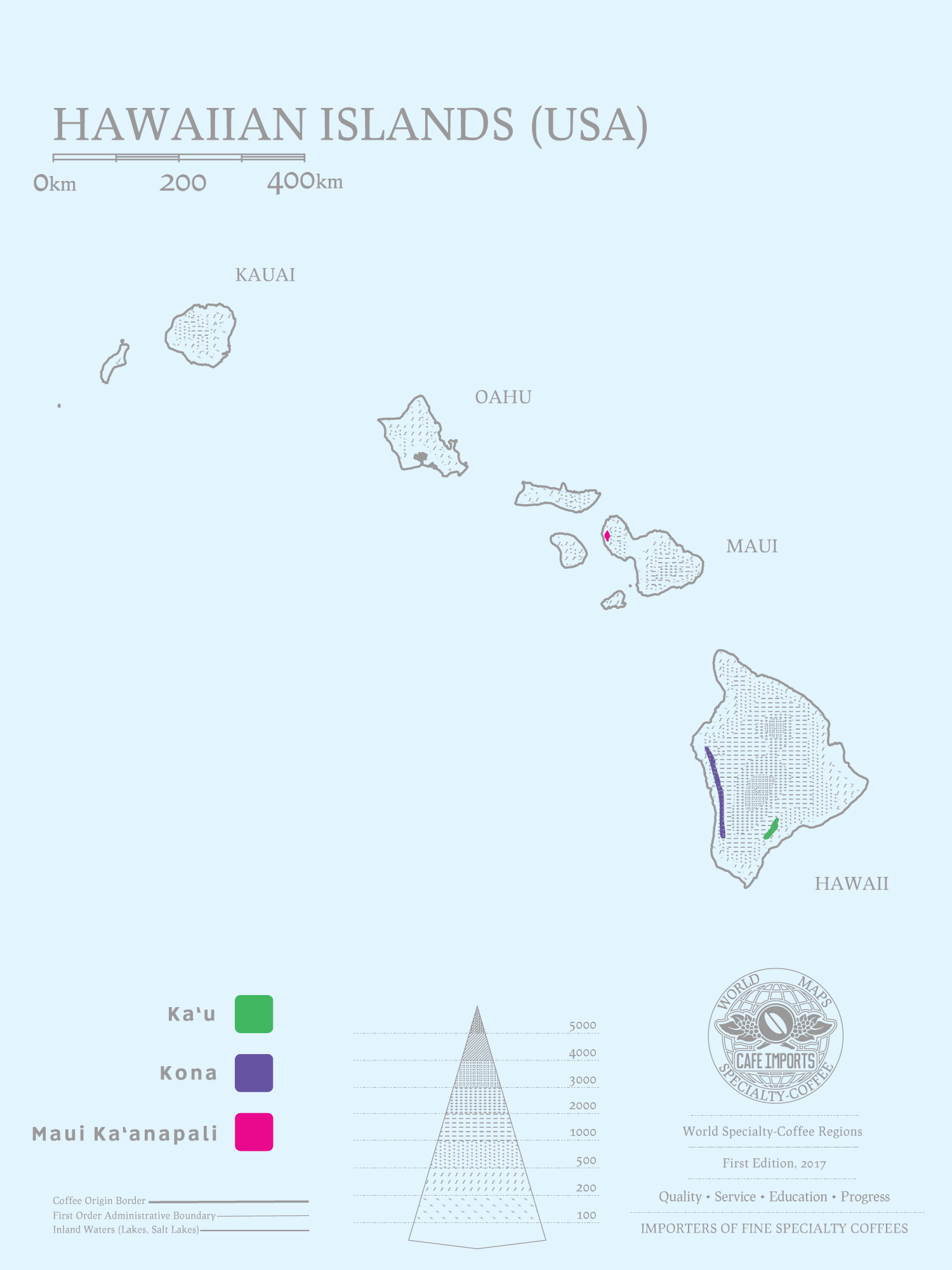
Starting in 1836, large-scale coffee planting began on Kauai. However, a pest and disease outbreak in 1858 nearly destroyed all the coffee trees on the island, with only the Kona region on the Big Island surviving. This led to the gradual establishment of Kona’s central role in Hawaii’s coffee industry. To this day, the Kona region is still considered one of the few places in the world capable of consistently producing high-quality volcanic coffee.
The Strict Grading System of Kona Coffee
To ensure quality, Hawaiian Kona coffee has a clear grading standard divided into five grades: Extra Fancy, Fancy, Prime, No.1 Peaberry, and Peaberry Prime. Among these, the most common and market-prized grades include:
• Extra Fancy: Bean size larger than 19 screen, moisture content controlled between 9%–12%, with no more than 10 defective beans per 350g sample of green beans.
• Fancy: Bean size larger than 18 screen, with the same moisture content range of 9%–12%, and a limit of up to 16 defective beans.
• No.1 Peaberry: Bean size smaller than 10 screen, classified as peaberry type, with moisture content maintained at 9%–12% and no more than 20 defective beans.
This stringent grading system not only ensures the basic quality of the coffee beans but also serves as an important reference for consumers to identify premium Kona coffee. Additionally, Hawaii hosts an annual Kona coffee evaluation competition, where Queen Farm won second place in both 2009 and 2011. Its coffee beans are known for a high proportion of top-grade specialty beans, delivering an impressive flavor profile.
Classic Flavor and Processing Method of Queen Farm
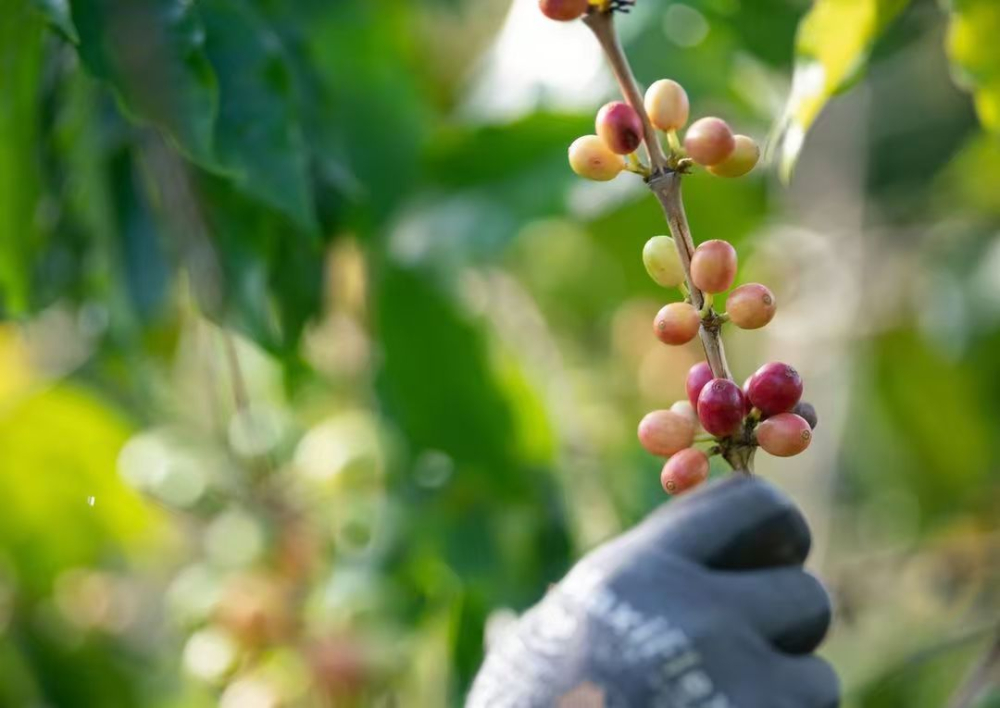
The Hawaiian Kona coffee beans introduced in this article are grown at Queen Farm in the Kona region, at an altitude of about 1,100 meters. They are cultivated using the traditional Typica variety and processed through the washed method. Typica, as one of the oldest Arabica varieties, although low-yielding and susceptible to disease, is prized for its elegant and layered flavors, making it a classic favorite among many specialty coffee enthusiasts.
The steps of the washed processing method include: first removing floaters and selecting dense, mature beans; then removing the skin and pulp while retaining the mucilage layer; subsequently fermenting the beans in a tank for 16–36 hours to allow microbes to break down the mucilage; followed by thorough washing to remove fermentation residues; finally drying the beans to a moisture content of 10%–14% and using a hulling machine to remove the parchment and silver skin, completing the entire process. This method fully highlights the coffee’s original flavors, resulting in a clean and distinctly layered taste.
Professional Cupping Flavor Experience
Through professional cupping, this Hawaiian Kona coffee from Queen Farm exhibits a sweet and rich aroma, with a clean and smooth mouthfeel. It presents pronounced osmanthus floral notes, berry-like fruitiness reminiscent of mulberry juice, and a subtle malty sweetness. The overall flavor is well-balanced and layered, also releasing a complex aromatic profile of fruit, wine, and spices — making it a classic choice for experiencing the charm of Hawaiian volcanic coffee.
In summary, Hawaiian Kona coffee is not only a gift of geography and climate but also the crystallization of meticulous cultivation and refined craftsmanship. Whether you’re a coffee novice or a seasoned connoisseur, gaining a deeper understanding of Kona coffee’s growing environment, grading standards, and flavor characteristics will enrich your tasting experience.
The above content is compiled by CoffeeHunters, a coffee news website.


