







Introduction:The coffees from Kenya’s Thika region are renowned for their bright acidity and clean flavor profile, making them a favorite among many coffee enthusiasts. This article delves into the environment of Kiambu, the region to which Thika belongs, the evolution of coffee cultivation in Kenya, the characteristics of Kenya’s ten major coffee-growing regions, and an analysis of the country’s rigorous grading system. It further explains how the K72 washed process contributes to its unique flavors and provides practical pour-over parameters and steps, offering a comprehensive understanding of Kenya’s specialty coffee from origin to cup.
Kenyan coffee has long been celebrated for its vibrant, bright acidity and rich, full-bodied mouthfeel. In particular, the Thika region within the Kiambu area is often the gateway for many coffee lovers exploring East African coffee. This article will take you through the geography, historical background, regional distribution, grading system, processing methods, and hands-on pour-over brewing to help you fully grasp the essence of Kenyan coffee.
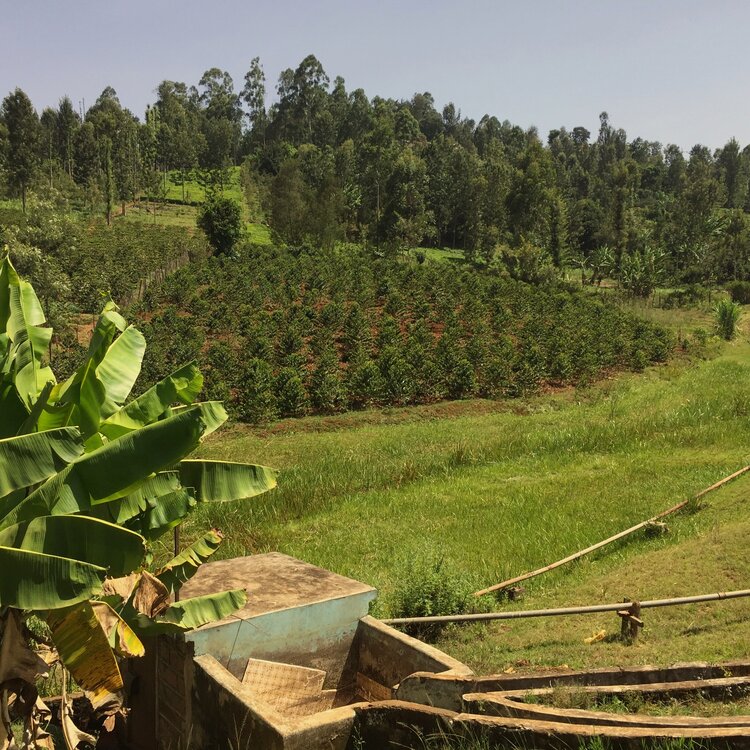
Located in East Africa, Kenya is bisected by the equator and is predominantly highland terrain with an average elevation of about 1,500 meters. Its highest peak, Mount Kenya (also known as Mount Kirinyaga), rises to 5,199 meters and is perpetually snow-capped. Due to its tropical location and distinct double rainy seasons—occurring from October to December and from June to August—this climate, combined with high-altitude volcanic soils, allows coffee cherries a longer maturation period, aiding the accumulation of flavor compounds. This results in the distinctive bright acidity and solid body that define Kenyan coffee.
The history of coffee cultivation in Kenya dates back to the late 19th century. In 1893, missionaries introduced the Bourbon variety from Brazil, and in 1895, with British colonization, coffee production gradually came under the control of the colonial government. Between 1900 and 1933, the colonial government established the Coffee Board (CB) to oversee and manage the coffee industry. The first coffee auction was held in 1935, and the Coffee Marketing Board (CMB), founded in 1946, ceased operations in 1971. Despite changes in the institutional framework, Kenya has consistently maintained a rigorous quality control and grading system, establishing itself as a key origin for global specialty coffee.
Kenya has ten major coffee-growing regions: Nyeri, Murang’a, Kirinyaga, Embu, Meru, Kiambu, Machakos, Nakuru, Kisii, and Kericho. Among these, Nyeri is known for its volcanic red soil and high altitude, and is home to numerous high-quality smallholder cooperatives; Murang’a was one of the earliest areas where missionaries settled and has a large number of smallholders; Kirinyaga and Embu also primarily consist of smallholder production, often yielding coffees with unique regional characteristics; Meru is one of the earliest regions where Kenya’s indigenous Meru people cultivated coffee; Kiambu includes not only large estates but also well-known sub-regions such as Thika, Ruiru, and Limuru; Machakos, Nakuru, and Kisii each possess distinct topographies and altitudes, collectively contributing to Kenya’s diverse coffee terroirs.
Kenya’s coffee grading system is famously detailed, primarily classifying green beans based on size, shape, and density. The top-tier AA grade (17–18 mesh) is typically the most flavorful and commands the highest market value, with the famous “little tomato” beans falling into this category; the AB grade (15–16 mesh) is a mix of A and B grades and is a common high-quality choice in the market; TT grade consists of lighter beans sorted by air and mostly originates from AA and AB grades; PB (peaberry) accounts for about 10% of Kenyan coffee and is often considered a specialty bean due to its unique growth structure. Additionally, C, T, and HE grades generally include lots with more defects or lighter beans. Green beans that do not meet official standards are classified as UG (Ungraded), further divided into UG1 and UG2. Aside from washed beans, Kenya also produces naturally processed MBUNI, which is divided into MH (heavier beans with no obvious defects) and ML (lighter beans that may have minor insect damage or impurities). Some exporters also apply additional grading to AA and AB beans, such as TOP, PLUS (+), and FAQ, providing more refined purchasing references.
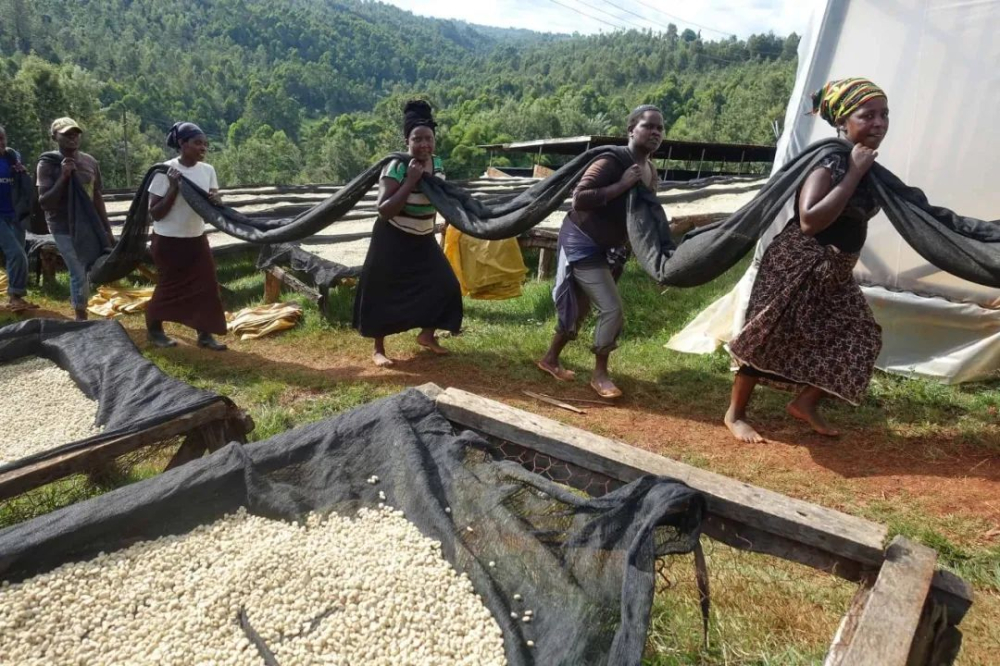
The reason Kenyan coffee possesses such a vivid flavor profile lies in its unique K72 washed process. Compared to the 24–36 hour fermentation common in other regions, the Kenyan washed process extends to 72 hours, and after pulp removal, the beans are further soaked in clean water for 24 hours. This extended fermentation and soaking time are believed to be key factors in shaping Kenya coffee’s bright, clean, and layered acidity. Many cupping experts and roasters point out that this process enhances the fruitiness and sweetness of the coffee while maintaining exceptional clarity and balance.
To experience the charm of Kenyan coffee at home, try a pour-over using the “little tomato” beans as an example. These beans come from the Asali washing station in the Thika region, grown at elevations between 1,550 and 1,750 meters, and are of the classic SL28 and SL34 varieties. Their flavor profile often features layers of black plum, cherry tomato, pear, brown sugar, and plum, with a balanced acidity and sweetness, and a rich fruity character.
Recommended pour-over parameters are as follows: use a Hario V60 filter, 15 grams of coffee, a 1:15 coffee-to-water ratio, and water temperature controlled at 90°C. The grind size is suggested to be EK43s#10 (approximately 80% passing through a 20-mesh sieve). The specific steps are: start with a 30-second bloom using 30 grams of water, then pour to 125 grams for the first pour, and when the water level drops and is about to expose the coffee bed, continue pouring to 225 grams for the second pour. After that, wait for all the water to drip through the filter. The total extraction time is about 2 minutes. Using these parameters and process will fully highlight the delicacy and vibrancy of Kenyan coffee.
The above content is compiled by CoffeeHunters, a coffee news website.


