







Introduction:Jamaican Blue Mountain coffee is renowned for its rarity and refinement, yet the market is flooded with various imitations. This article delves into the official certification features of authentic Blue Mountain No. 1 beans, including wooden barrel packaging, the tropical rain frog logo, and government-issued certificates. It also provides professional pour over parameters: KONO filter, 88°C water temperature, and a 1:15 coffee-to-water ratio. Through a three-stage brewing test, it guides you in identifying its unique citrus acidity, nutty mid-palate, and dark chocolate finish, helping you master the key to distinguishing truly balanced and smooth Blue Mountain flavors.
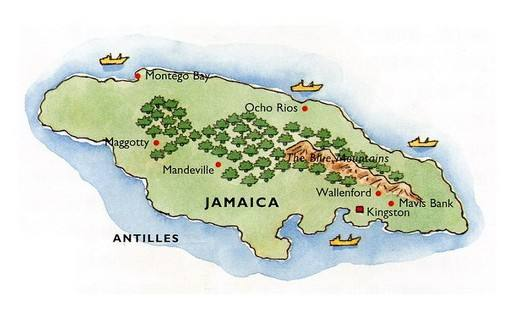
Blue Mountain coffee has long been hailed as the pinnacle representative of the coffee world, grown in the Blue Mountain region of Jamaica. This mountain range, named for the blue haze created by sunlight refracting off the sea, strictly limits coffee cultivation to elevations above 1000 to 1700 meters. Precisely because of its scarce production, high price, and limited availability, the market is awash with substitutes labeled as "Blue Mountain flavor" or "Blue Mountain blend," which differ substantially from genuine Blue Mountain coffee.
According to the Japanese market classification, Blue Mountain-related products are divided into three grades: "Blue Mountain Coffee" made from 100% pure Blue Mountain beans, "Blue Mountain Blend" with at least 60% Blue Mountain beans, and "Blue Mountain Flavor" which may contain no Blue Mountain beans at all. Consumers often mistakenly assume that any product labeled with Blue Mountain is authentic, but in reality, only officially certified Blue Mountain No. 1 beans can truly embody their distinctive flavor.
The primary key to identifying genuine Blue Mountain coffee lies in its packaging and certification. Authentic products are not packed in common cotton or linen sacks but are stored in wooden barrels, which bear the tropical rain frog logo and come with an official certificate issued by the Jamaican government. When purchasing, it is recommended to ask the vendor for these documents to ensure the beans are genuinely sourced.
Jamaican Blue Mountain coffee is categorized into three main types based on altitude and quality: Blue Mountain Coffee, High Mountain Coffee, and Jamaican Coffee, each further divided into two grades. According to the CIB standard, the ranking from highest to lowest quality is Blue Mountain No. 1, Blue Mountain No. 2, High Mountain No. 1, High Mountain No. 2, and Jamaican Coffee. Among these, Blue Mountain No. 1 and No. 2 are the highest grades, with green beans required to meet strict standards such as a screen size of 17 or above, a defect rate below 3%, and a moisture content of around 13%. These conditions directly impact the purity of the final flavor.
Many consumers learn about Blue Mountain coffee through packaging promotions, where common descriptions emphasize its perfect balance of acidity, bitterness, sweetness, and body, often highlighting its cultivated origin and scarcity. However, the actual flavor experience varies from person to person, and textual descriptions alone are hard to verify. Some reviews describe Blue Mountain coffee as "precious as a gem," with its balanced characteristics making it mostly enjoyed as black coffee. Its caffeine content is also less than half that of regular coffee, aligning with modern healthy eating trends.
Notably, in recent years, some producers have blended low-altitude beans with high-altitude ones or introduced blends containing only trace amounts of Blue Mountain beans, resulting in inconsistent market quality. Without careful selection, consumers may easily end up paying a premium for products that fail to live up to their name.
The actual Clifton Estate Blue Mountain No. 1 beans obtained are grass-green in color, with uniform appearance and slightly curled ends. After high-temperature roasting, the beans visibly expand and become plump. Due to growing in a high-altitude environment, their cell structure is relatively loose, and hand grinding reveals a crisp, consistent texture, distinctly different from the resistance typically felt with regular coffee beans.
The ground Blue Mountain coffee releases a rich, dense aroma, a characteristic that imitations or counterfeits struggle to replicate. The actual pour over test used a KONO filter, with a water temperature of 88°C and a 1:15 coffee-to-water ratio (15 grams of coffee to 225 milliliters of water). A three-stage extraction was performed: the first stage involved pouring 30 grams of water for a 30-second bloom to form a "hamburger" shape in the coffee bed; the second stage added water up to 125 grams at 54 seconds, continuing the pour once the water level dropped to two-thirds of the coffee bed; the third stage poured up to 225 grams at 1 minute and 40 seconds, with the total extraction time controlled at 2 minutes and 10 seconds. After completion, the coffee pot was gently shaken to even out the liquid before tasting.
The brewing result exhibited a mild citrus acidity, with an extremely smooth overall mouthfeel. The mid-palate showcased a distinct nutty character, and the finish carried a rich dark chocolate aftertaste. This harmonious balance of flavor elements, with no single taste overly dominant, is the core hallmark of authentic Blue Mountain coffee and an advantage that other regional coffees find hard to replicate.
The above content is compiled by CoffeeHunters, a coffee news website.


