







Introduction:Jamaican Blue Mountain No. 1 coffee is hailed as the pinnacle of the coffee world, yet the market is flooded with imitations. This article delves into the authentic Blue Mountain No. 1 certified by the Jamaica Coffee Industry Board (CIB), exploring everything from the terroir of the growing region and the background of the Clifton Estate, to the characteristics of the Typica variety, as well as the flavor differences between washed and natural processing methods. It also provides expert pour over recommendations—including the use of the KONO filter, optimal water temperature, grind size, and brew ratio—to help you grasp the essence of this legendary coffee.
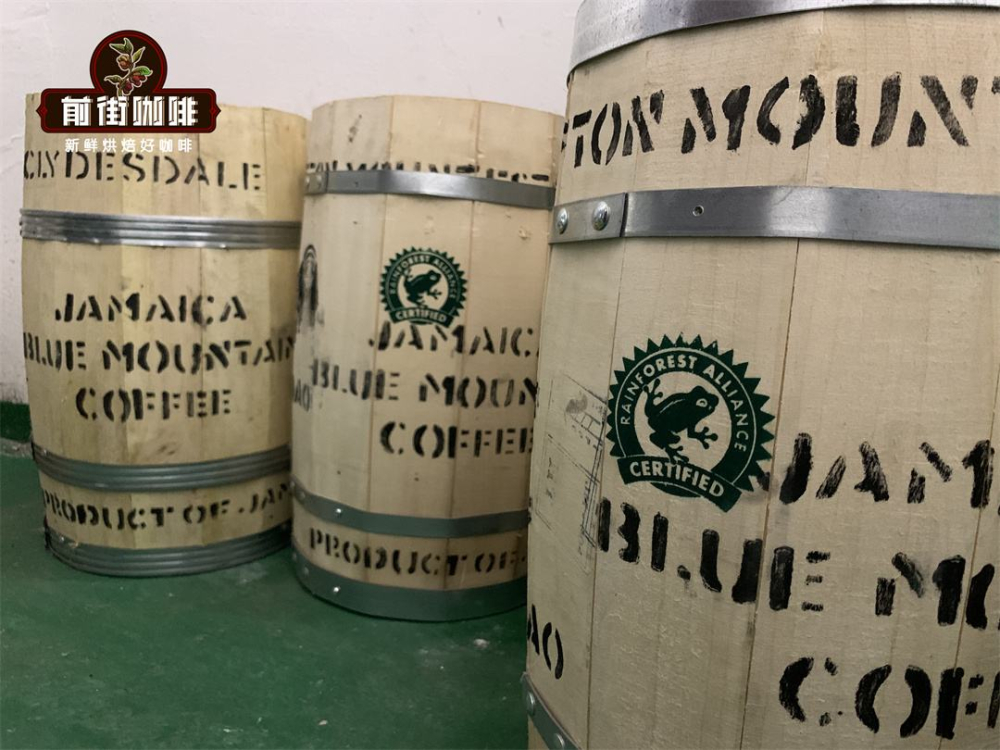
Blue Mountain coffee has long been a dream for coffee enthusiasts, yet many products labeled as having a “Blue Mountain flavor” have no real connection to the genuine article. The authentic Blue Mountain No. 1 certified by the CIB is not only rare in production but also must meet stringent quality standards. The Blue Mountain No. 1 offered by this brand comes from the historic Clifton Estate, which holds both Rainforest Alliance certification and barrel-shipping qualification, making it one of the few truly orthodox choices available on the market.
The Blue Mountains are located in eastern Jamaica and are renowned for their spectacular scenery and unique climate. When sunlight pierces through the mist over the Caribbean Sea and shines upon the mountain peaks, the blue-hued glow gives the area its name. The region boasts fertile volcanic soil, abundant rainfall (averaging nearly 1,980 mm per year), and a stable temperature of around 27°C, coupled with year-round fog cover. These exceptional geographical conditions contribute to the distinctive richness and balance found in Blue Mountain coffee. It is precisely these ideal conditions that have earned Jamaican Blue Mountain coffee its prestigious global reputation.
The Jamaican government strictly demarcates the planting areas for Blue Mountain coffee, limiting cultivation to elevations above 2,100 meters north of Kingston. Local farms commonly employ mixed cropping systems where coffee trees coexist with crops such as bananas and avocados on terraced fields. Due to the steep terrain, harvesting relies entirely on skilled local female workers, who must carefully select coffee cherries at just the right stage of ripeness to ensure the purity and excellence of the final flavors.
The Blue Mountain No. 1 coffee beans featured in this article all come from the Clifton Estate—a historic farm that has been cultivating coffee since the mid-18th century (around 1750) and is currently the only coffee-growing site in Jamaica with Rainforest Alliance certification. The estate sits at an average elevation of about 1,310 meters (4,300 feet). Afternoon cloud cover provides natural shade for the coffee trees, while the mineral-rich soil and ample sunlight not only extend the maturation period of the coffee cherries but also impart a richer complexity to the beans.
The so-called Rainforest Alliance certification is a set of rigorous sustainable agricultural standards promoted by the Rainforest Alliance. Farms that receive this certification must meet various criteria including ecological conservation, restricted pesticide use, and proper waste management. This certification emphasizes traditional farming methods using native shade trees, which help maintain biodiversity. A portion of the profits is also allocated to wildlife protection and improving laborers’ livelihoods. With this certification, the Clifton Estate ensures that Blue Mountain No. 1 offers both environmental and quality guarantees right from the source.
The Typica variety used in Blue Mountain No. 1 is one of the oldest strains in the coffee world. Its top leaves display a distinctive bronze color, the foliage is long and smooth, and the tree is tall with slightly sloping branches. While Typica offers delicate and elegant flavors, it is relatively fragile, with poor disease resistance, low individual plant yield, and fewer fruits per tree. The ripe fruits are bright red, resembling cherries, and contain elliptical or slender coffee beans. These varietal traits contribute to the more refined and unique flavor profile of Blue Mountain No. 1.
In terms of processing, the Clifton Estate traditionally employed the washed method for processing Blue Mountain green beans. This classic technique involves first removing the fruit skin and pulp, followed by a 12 to 18-hour fermentation process. Through friction between the beans and water washing, the residual mucilage is removed until the bean surface becomes smooth and clean. The washed beans are still enclosed within the parchment layer, with a moisture content of about 50%. They must then be sun-dried over an extended period to reduce the moisture level to 12–14% to prevent mold, after which they undergo strict sorting and storage. This method results in Blue Mountain coffee with rich aroma and balanced taste, without any single flavor being overly dominant or lacking.
However, starting in 2019, the Clifton Estate began experimenting with the natural (sun-dried) processing method for the first time, introducing a new dimension of flavor to Blue Mountain No. 1. This approach alters the traditional flavor structure. Compared to the clean and balanced profile of the washed version, naturally processed Blue Mountain coffee often exhibits more intense fruity sweetness. While the brand still recommends the washed version as the choice that best represents the character of the Blue Mountain region, the natural process is gradually becoming a notable new trend in the market.
How to identify genuine Blue Mountain coffee? According to CIB regulations, only coffee beans grown at elevations above 2,200 feet (approximately 670 meters) in the Blue Mountains qualify as “Jamaican Blue Mountain.” The beans are graded by bean size into NO.1, NO.2, NO.3, and the precious peaberry (PB), with NO.1 meeting basic criteria such as a screen size of 17 or higher, a defect rate below 3%, and a moisture content of about 13%. The Jamaica Coffee Industry Board issues three official documents for all exported Blue Mountain coffee: a quality certificate, an authorized sales certificate from the producer, and a certificate of origin, ensuring consumers purchase authentic products.
The Blue Mountain No. 1 sold by this brand is shipped as green beans in barrels via export companies designated by the national coffee authority, and holds Rainforest Alliance certification, ensuring every bean meets orthodox standards.
The grading system for Blue Mountain coffee is highly rigorous, with detailed classifications as follows:
• Blue Mountain No. 1: 96% of beans must be 17/18 mesh, with a defect rate not exceeding 2%
• Blue Mountain No. 2: 96% must be 16 mesh, with the same maximum 2% defect rate
• Blue Mountain No. 3: 96% must be 15 mesh, adhering to the same defect limit
• Blue Mountain Peaberry: 96% must be 10 mesh single peaberries, with a defect rate not exceeding 2%
• Blue Mountain Triage: A blend of Grades 1 to 3, allowing minor slight defects
• Blue Mountain Fine Beans: Below 15 mesh, for sample sales only
• Blue Mountain Triage Peaberry: A mix of peaberries, with a defect rate not exceeding 4%
The Blue Mountain coffee listed on this brand’s menu is the highest-standard Blue Mountain No. 1.
Regarding brewing, the brand recommends using freshly roasted coffee beans to fully experience their complete flavor profile. The Blue Mountain coffee produced by this brand is shipped within five days of roasting, ensuring customers receive it at the peak of its flavor. Generally, the coffee beans’ resting period is around 4 to 7 days, during which extraction can deliver optimal performance.
For equipment selection, the brand recommends using the KONO filter. This filter design highlights a rounder and fuller mouthfeel, with direct and pronounced flavor expression. Although its venting performance is slightly inferior (the ribs are straight and only occupy one quarter of the filter cup depth, causing most of the filter paper to cling tightly to the cup wall), once the water level rises above the rib line, the water pressure gradually increases, extending the contact time between coffee grounds and water. This helps extract more soluble substances, achieving the rich body that consumers expect.
Recommended brewing parameters are as follows:
• Coffee powder amount: 15 grams
• Powder-to-water ratio: 1:13
• Water temperature: 88–89°C
• Grind size: Medium-coarse (approximately 60% passing through a standard #20 sieve)
Suggested specific pour over steps: Begin with a 30-second bloom using 30 grams of water, then slowly pour in water in small streams from the center outward to reach 100 grams (total weight 130 grams). When the coffee bed descends to half, switch to a larger stream and quickly pour 65 grams of water, bringing the total brew volume to 195 grams. Once the coffee liquid in the filter cup has completely dripped through, remove the filter. The total brew time is approximately 1 minute and 50 seconds.
In terms of flavor profile, the natural (sun-dried) Blue Mountain offers an upfront prominent brown sugar sweetness and berry acidity, with nutty and cocoa aromas emerging in the mid-to-late stages. The texture is creamy and smooth, with distinct layers, and the finish leaves hints of walnut aroma. Meanwhile, the washed Blue Mountain presents clean flavors of dark chocolate and nuts, with an elegantly balanced acidity, sweetness, and bitterness. The mouthfeel is refreshing yet notably full-bodied, with an overall bright character.
The above content is compiled by CoffeeHunters, a coffee news website.


