







Introduction:Panama Geisha coffee from Hacienda La Esmeralda has become a standout in the specialty coffee world, thanks to its unique flavor profile and rigorous grading system. This article delves into the differences among the three main grades—Red Label, Green Label, and Blue Label—covering aspects such as origin altitude, processing methods, and cupping performance. It also provides practical pour over parameters and flavor characteristics to help you choose the most suitable Geisha coffee beans based on your preferences.
Why does Panama Geisha coffee from Hacienda La Esmeralda hold such a prestigious position in the global specialty coffee market? This is not only due to its exceptional terroir but also stems from its strict grading system and exquisite post-harvest processing. This article will start with the natural conditions of the Boquete region, taking you through how Geisha transformed from windbreak trees into a highly sought-after auction lot. It will also detail the grading logic, altitude standards, and cupping features of the Red Label, Green Label, and Blue Label, while offering practical pour over recommendations and flavor descriptions to give you a comprehensive understanding of La Esmeralda’s Geisha.
The unique flavors of Geisha from Hacienda La Esmeralda are inseparable from the special geographical environment of the Boquete region. Boquete Town is located in western Panama, surrounded by active volcanoes, with the highest peak being the western slope of Volcán Barú at an elevation of 3,475 meters, the highest point in all of Panama. The local climate is cool, with significant day-night temperature variations, and the volcanic soil is rich in minerals, providing ideal growing conditions for Geisha coffee. Starting from the Sendero de los Quetzales trail in Boquete, you can not only enjoy breathtaking mountain views but also sense how this land nurtures Geisha coffee with its richly layered flavors.
The name Geisha originates from the Gesha forest in Ethiopia. Due to its pronunciation being similar to the Japanese word for "geisha" (藝妓), it is also referred to as the Geisha bean. This variety was first introduced to Panama from Costa Rica by Don Pachi Serracin in 1963, but it was long overlooked due to its low yield. It wasn’t until 2004 that Daniel Peterson, the owner of Hacienda La Esmeralda, discovered that the Geisha coffee trees located at the highest part of the estate—originally used only as windbreaks—produced beans with unique citrus and floral aromas. This marked the beginning of Geisha’s legendary journey. That batch of beans won the Panama Coffee Cupping Competition that year and went on to claim the top spot for several consecutive years, solidifying its status in the specialty coffee world.
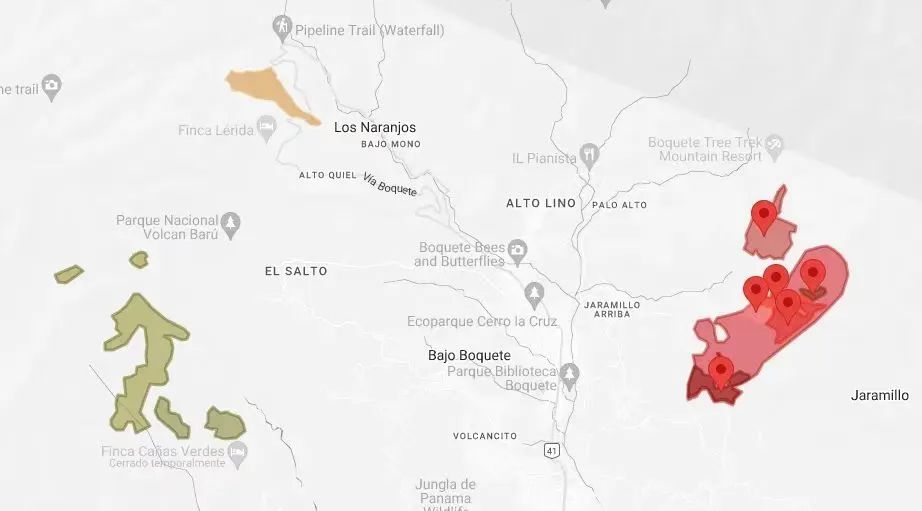
Hacienda La Esmeralda was established in 1964 and was initially purchased by American banker Rudolph A. Peterson, primarily for dairy farming. In 1987, his son, Price Peterson, abandoned his medical career to help his father transition into coffee farming and established a wet processing mill in 1994. In 1996, the Petersons acquired the neighboring Jaramillo Estate, a high-altitude plot with unique flavors that later became the primary growing region for Geisha coffee. The coffee beans from Jaramillo Estate, with their rare citrus and fruity-floral notes, were distinctly different from typical Panamanian coffee flavors. Cupping revealed that these unique characteristics came from the Geisha coffee trees planted at the highest elevation of the estate, ushering in the golden age of Geisha coffee at Hacienda La Esmeralda.
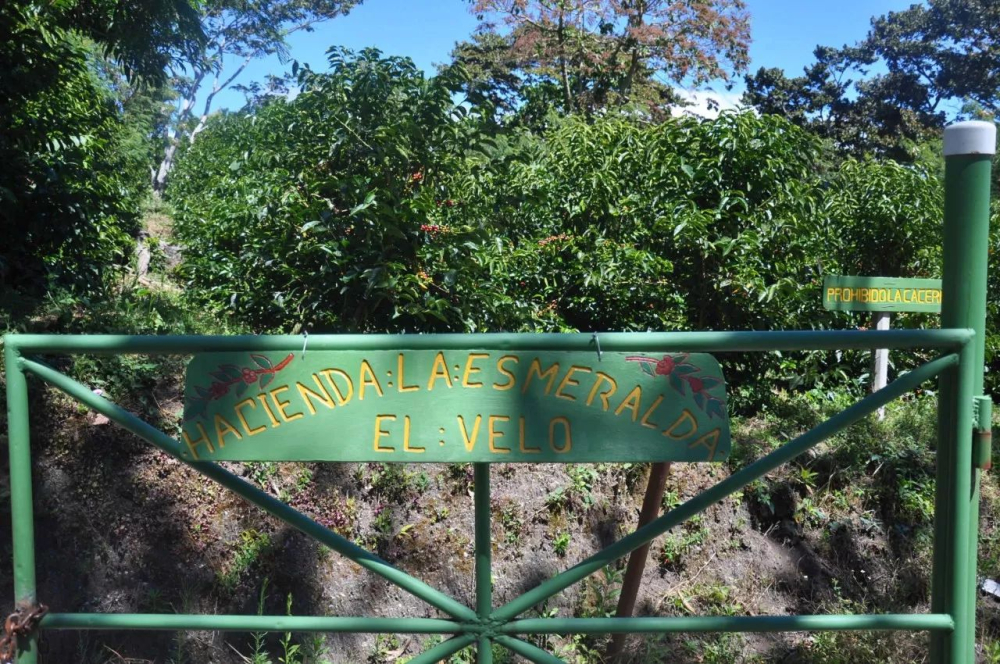
Hacienda La Esmeralda owns three main estates—Jaramillo, Cañas Verdes, and El Velo—divided into 22 smaller subplots. Geisha grading is primarily based on altitude and cupping results: below 1,500 meters is Blue Label; above 1,500 meters with mixed harvests is Green Label; and those with clearly labeled single-plot information are Red Label. Some Red Label beans participate in Hacienda La Esmeralda’s annual auctions, but the auction itself is not a separate grade. High-quality Geisha mainly comes from the Jaramillo and Cañas Verdes plots, where the altitude, climate, and soil conditions provide an ideal growing environment for Geisha coffee.
Jaramillo Estate receives about 4,000 mm of rainfall annually, with average daytime temperatures of 19–25°C and nighttime temperatures of 11–15°C, at an average elevation of 1,600–1,700 meters. Cañas Verdes Estate receives 3,500 mm of rainfall annually, with slightly lower temperatures but an elevation range of 1,600–1,800 meters, also suitable for Geisha cultivation. The newly acquired El Velo Estate has an even higher average elevation of 1,700–1,900 meters and grows not only Geisha but also Catuai and small amounts of other varieties such as Laurina and Pacamara. These microclimatic differences across the plots allow Hacienda La Esmeralda to produce Geisha coffee with distinct and varied flavor profiles.
Hacienda La Esmeralda’s auction system is a major event in the specialty coffee industry. After each year’s cupping competition, the estate invites global buyers to participate in the auction. The auction lots typically come from the highest-altitude and highest-scoring plots, and the beans are rigorously selected to ensure consistency in quality. Through the auction, not only do consumers get access to top-tier Geisha, but growers also receive fair compensation, creating a virtuous cycle.
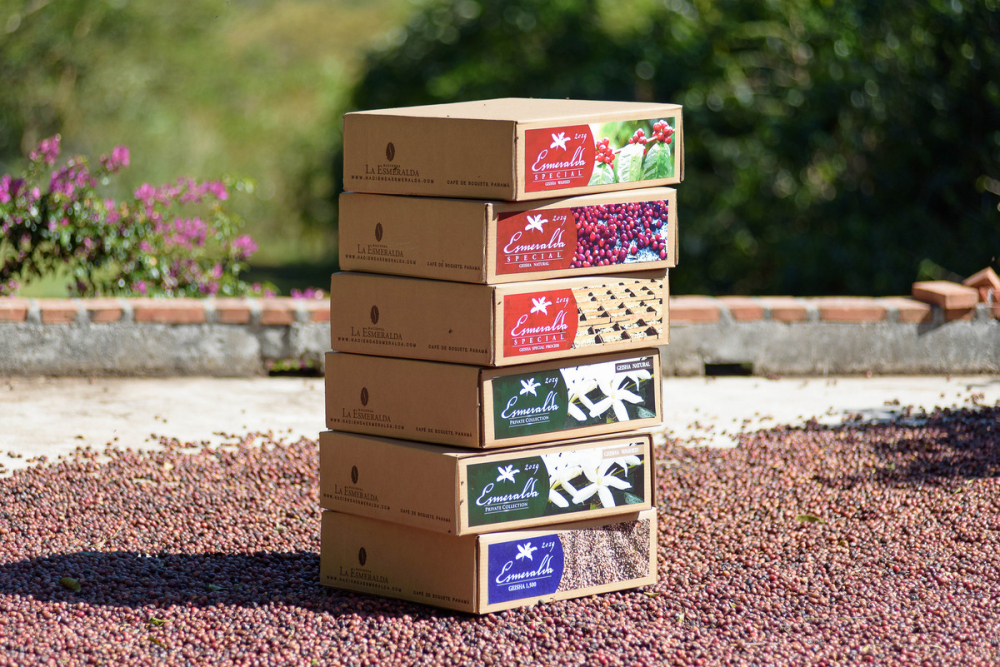
Hacienda La Esmeralda’s Geisha is divided into three main grades: Red Label, Green Label, and Blue Label.Red Label (Auction Batch)Grown at altitudes of 1,600–1,800 meters, with cupping scores of 90 or above, produced exclusively from Jaramillo and Cañas Verdes, processed via natural or washed methods, and available only through the annual auction.Green Label (Reserve Batch)Grown at the same altitudes, these are micro-lots blended from the Jaramillo, Quiel, and Cañas Verdes estates, also showcasing Geisha’s classic floral, fruity, and citrus notes, with options for washed or natural processing.Blue Label (Selection Batch)Grown at 1,500 meters, these are blended lots from the three estates, with a lighter flavor profile and only washed processing, suitable for everyday drinking.
Based on actual pour over experience, it is recommended to use a Hario V60 dripper, with a water temperature of 90°C, a coffee-to-water ratio of 1:15, and a medium-fine grind (BG#6S).Red LabelFlavor profile features bright rose and citrus aromas, accompanied by complex fruit notes such as rice, berries, and apricots, with a full body and prominent sweetness.Green LabelHighlights jasmine floral notes as the main theme, paired with citrus, berries, and a creamy body, with a long-lasting aftertaste.Blue LabelHas a lighter flavor, with soft acidity from lemon and grapefruit, and develops oolong tea and honey sweetness as it cools. These flavor characteristics can serve as a reference for selection and brewing.
The above content is compiled by CoffeeHunters, a coffee news website.


