







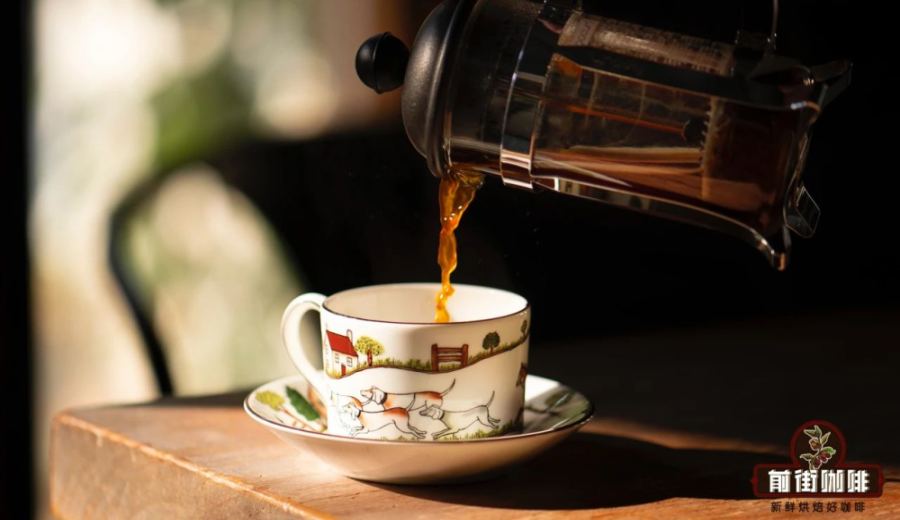
Introduction:The French press is a beloved coffee brewing tool in many households. Though simple to use, it’s often misunderstood as only capable of producing mediocre coffee. However, with the right grind size, water temperature, steeping time, and coffee-to-water ratio, it can consistently extract rich and well-balanced coffee flavors. This article will delve into the extraction principles of the French press, guiding you through bean selection, parameter settings, and maintenance to help you fully master this classic brewing method.
The French press (also known as cafetière or plunger pot) is a classic coffee brewing device originating from France. It consists of a cylindrical carafe and a movable metal mesh filter. The coffee grounds are fully immersed in hot water, and then separated from the liquid using the filter. This immersion-style brewing method has a low learning curve, requires no complex techniques, and can brew enough coffee for two people in a single batch—making it perfect for everyday home use.
However, many users often report that the coffee brewed with a French press lacks ideal flavor. The key lies in several core variables: grind size, water temperature, steeping time, and coffee-to-water ratio. By precisely controlling these parameters, the French press can produce a cup with complexity and body that rivals that of a pour over.
Recommended Grind Size:: The French press most commonly recommends using acoarse grind, which can be roughly compared to about 70% passing through a No. 20 standard sieve in China—similar in texture to coarse sugar. This coarseness helps reduce the production of ultra-fine particles and prevents fine grounds from passing through the metal filter, which could result in cloudy coffee. If you prefer a richer mouthfeel, you can try a slightly finer grind, but be sure to reduce the steeping time accordingly to avoid over-extraction, which may lead to bitterness.

Steeping Time and Flavor Balance:: Steeping time is a critical factor affecting extraction yield. When using a coarse grind, medium to light roasted beans are recommended to steep for4 minutes, which allows for a full release of fruit acids and aromas. For medium to dark roasted beans, which tend to release more bitter compounds, it’s advisable to shorten the time to3 minutes and 30 seconds. This range helps balance flavor intensity with control over off-flavors, avoiding woody or astringent notes caused by over-steeping.
Water Temperature Tips:: Since the French press involves a single pour of water without stirring, the water temperature will naturally decrease over time. For medium to light roasted beans, it’s recommended to use92–94°Chot water to highlight acidity and aroma; for medium to dark roasted beans,89–90°Cis more suitable to suppress excessive bitterness. In cooler autumn and winter environments, pre-warming the French press with hot water can help reduce heat loss.
Coffee-to-Water Ratio and Strength Control:: It’s recommended to follow a1:16golden ratio1:15, such as 15 grams of coffee to 240 milliliters of water, yielding a coffee concentration of about 1.1–1.2%, resulting in a clean and layered cup. If you prefer a stronger flavor, you can adjust to a
higher coffee-to-water ratio
by increasing the amount of coffee grounds.
The above content is compiled by CoffeeHunters, a coffee news website.


