







Introduction:Explore the unique charm of Hawaiian Kona coffee, from the region’s geography and Typica variety characteristics to the washed processing method, and delve into the flavor profile of this world-renowned specialty bean. This article also provides professional pour over recommendations and practical parameters to help you brew a Kona coffee with balanced sweetness and delicate acidity.
Hawaiian Kona coffee is renowned for its rich caramel sweetness and round, full-bodied mouthfeel, and is widely recognized by global coffee enthusiasts as a high-quality representative. However, this exquisite production area located on volcanic slopes faces triple challenges: leaf rust, insect infestations, and reduced rainfall. These not only impact yield but also keep coffee prices high. This article will take you deep into the development background of the Kona region, the characteristics of its cultivated varieties, and the key processes of washed processing, while also sharing practical pour over extraction parameters to help you fully grasp the essence of Kona coffee from origin to cup.
 Kona coffee not only boasts captivating flavors but also carries a history of struggle against nature. Coffee cultivation here is primarily concentrated on the southwestern side of Hawaii’s Big Island, where steep terrain and a unique climate form an exceptionally favorable coffee ecosystem. However, in 2020, the Kona region reported its first discovery of leaf rust, a highly destructive fungal disease for Arabica varieties that can cause leaf wilting, plant weakening, and even death within a few years. According to the Hawaii Department of Agriculture, the source of the outbreak is suspected to have spread from Maui to the Holualoa area of the Kona region, causing quite a shock to local coffee farmers.
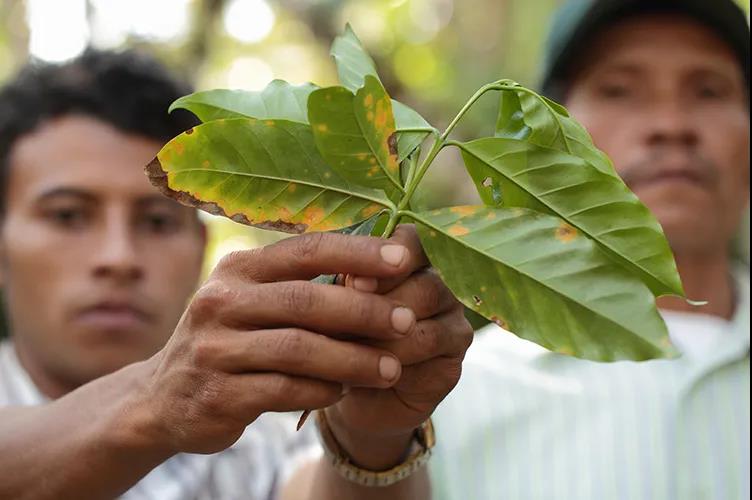
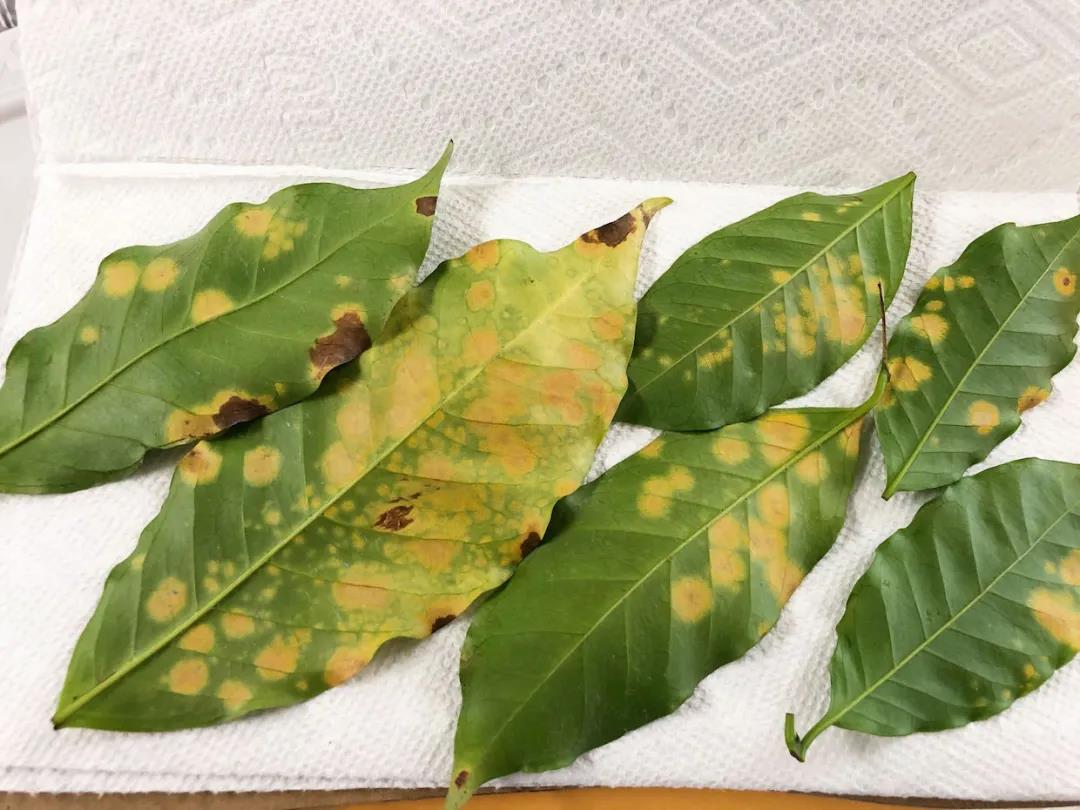
Typical symptoms of leaf rust include pale yellow water spots appearing on the undersides of leaves, which gradually enlarge and are covered with orange-yellow spore piles. In severe cases, the lesions dry out, turn brown, and fall off, eventually leading to the death of the coffee tree. Since most Kona coffee in Hawaii is grown on volcanic slopes at altitudes of 600 to 1,100 meters—an environment originally conducive to suppressing disease spread—climate change and frequent global travel have still increased the risk of disease invasion.
 In addition to diseases, the Hawaiian Kona region has also experienced severe fruit fly infestations. In 2010, a fruit fly disaster caused local coffee production to plummet by as much as 50%, and it was not until 2015 that some production capacity was gradually restored. Moreover, recent significant declines in rainfall have also adversely affected coffee growth, resulting in reduced Kona coffee supply and continuously rising prices, even approaching those of Blue Mountain coffee. It is worth mentioning that the planted area of Kona coffee is only about 7,200 acres, with an annual output of approximately 5.7 million pounds of green beans, making it a small-scale, boutique production that further adds to its rarity and value.
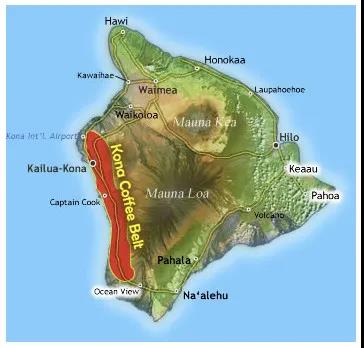
The core production area of Kona coffee is located in the southwestern part of Hawaii’s Big Island, covering the volcanic slopes of Hualalai and Mauna Loa, at altitudes ranging from 300 to 1,100 meters—an ideal growing zone for Arabica coffee trees. Only coffee beans grown within this specific area and certified through a rigorous process are qualified to be labeled and sold as “Kona” coffee. These coffees typically feature a nutty base note such as walnut, paired with soft berry acidity like plum or blackberry, along with a distinct creamy sweetness. The overall flavor profile is well-layered, with a clean mouthfeel and a long, lingering aftertaste.
 Most Kona coffee is of the Typica variety, one of the earliest original Arabica types introduced from Ethiopia and an ancestor of many modern varieties. Typica is known for its elegant acidity and gentle sweetness but is relatively weak in disease resistance and susceptible to leaf rust. Since Typica was introduced to the Kona region from Guatemala in 1892, local farmers have successfully cultivated varieties adapted to the local environment. Although the planting altitude is not particularly high (compared to other producing countries), the volcanic climate of Hawaii has created a unique balance of fruity acidity and sweetness. Attempts to transplant Kona Typica to other regions have consistently failed to replicate the same flavor profile due to differing temperature and altitude conditions.
In terms of processing methods, Kona coffee primarily uses the washed method, which fully showcases the coffee’s purity and bright, fresh flavors. During washed processing, the outer skin and pulp of the coffee cherry are first removed, followed by a fermentation step to eliminate the sticky mucilage layer. After fermentation, the coffee beans are washed again to remove residual fermentation bacteria and impurities, then dried and hulled. The clear and sweet mountain spring water in Hawaii provides excellent conditions for washed processing, giving Kona coffee a crystal-clear bean appearance and a crisp, bright mouthfeel.
If you want to brew Kona coffee with its refined flavors at home, the following professional-grade pour over settings are recommended: Use a Kono filter cone, control the water temperature between 89–90°C, and grind the coffee beans to a fineness similar to superfine sugar, sieved through a #20 mesh to achieve about 80% uniform particle size. A recommended coffee-to-water ratio is 1:15. For 15 grams of coffee, use a total of 225 milliliters of water. During brewing, you may use a three-stage pouring method: start with a 30-second bloom using 30 grams of water, then pour in a small circular motion up to 125 grams and pause. Once the water level drops, continue pouring steadily up to 225 grams to finish. The total extraction time should be controlled between 2 minutes and 2 minutes 10 seconds, including the bloom stage.
Kona coffee brewed using the above parameters typically exhibits a mellow osmanthus honey-like sweetness, paired with a soft yet full-bodied mouthfeel, and releases a gentle mulberry aroma. The aftertaste carries a smooth malted sweetness. When served chilled, it resembles a long-flavored mulberry tea, making it highly suitable for coffee drinkers who enjoy balanced acidity and sweetness.
The above content is compiled by CoffeeHunters, a coffee news website.


