








Introduction:Flat White, one of Starbucks’ popular milk-based coffee drinks, is often mistaken for being the same as a latte. However, it actually differs significantly in terms of milk foam thickness, coffee-to-milk ratio, and overall flavor profile. This article delves into the traditional way of making a Flat White, its core differences from a latte, explores the debate over its origins, whether it's suitable as a cold drink, and offers practical tips for home brewing—helping you better appreciate the charm of this “plain white coffee.”
Flat White, the transliterated name originating from English, is often referred to as “Australian-style white coffee” and is considered a classic milk coffee by many coffee enthusiasts. It combines the smooth texture of a latte with the rich intensity of a cappuccino, but compared to a latte, it places greater emphasis on the flavor of the coffee itself, with a thinner layer of milk foam. This beverage has consistently enjoyed high popularity within Starbucks' milk coffee lineup, yet its place of origin remains a subject of ongoing debate.
Regarding the origins of the Flat White, Starbucks officially states that it was born in Australia in the 1980s, subsequently launched in Australian stores in 2009, and then gradually introduced in the UK, the US, and China. However, New Zealand disputes this claim. The New Zealand Herald directly refers to the Flat White as a “New Zealand classic coffee,” asserting that even if Sydney may have been the first to introduce a similar drink in the 1980s, it was Wellington that truly perfected it. Food historian Michael Symons points out that while the origin might be Sydney or Melbourne, the most classic version indeed emerged in New Zealand’s capital. Although the exact origin remains inconclusive, what is certain is that the defining characteristics of a Flat White lie in its more intense coffee expression and thinner, more translucent milk foam.
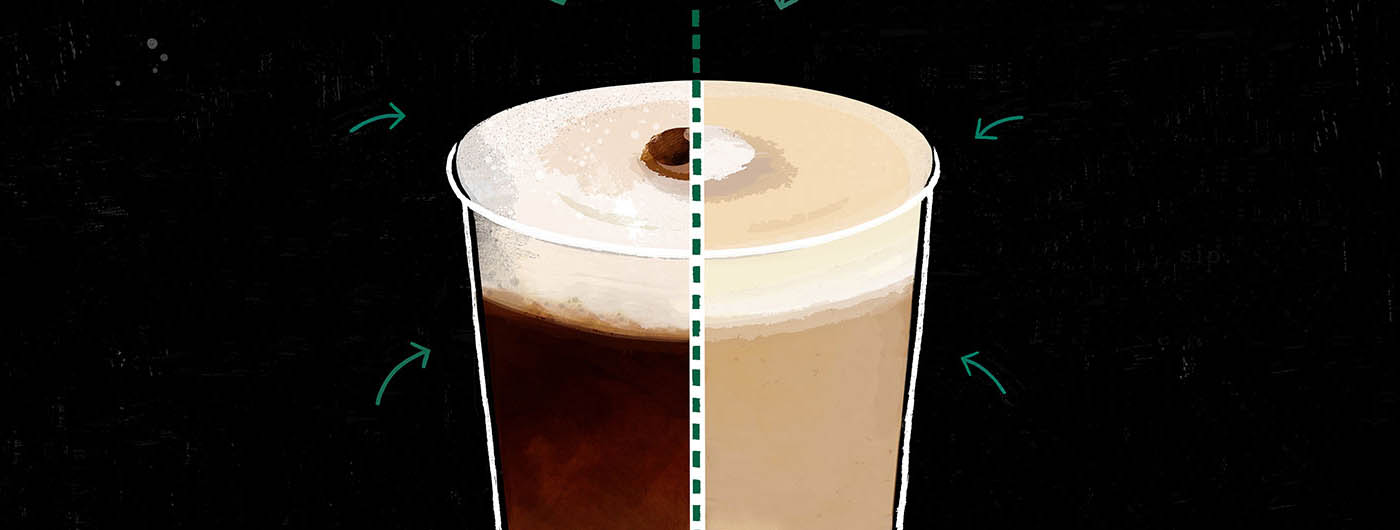
If you’ve ordered a Flat White at Starbucks, you might wonder about its standard preparation. In fact, Starbucks adjusts the amount of espresso used according to cup size, typically employing 2 to 4 shots of ristretto (or concentrated espresso essence), paired with milk heated to a specific temperature and about 0.5 cm of fine microfoam. For the iced version, ice cubes and milk are usually added first, followed by pouring the espresso on top. However, it’s worth noting that although an iced Flat White is available, most professional opinions suggest that for the most authentic flavor experience, the hot version remains the top choice.
So, can you replicate this classic coffee at home? The key lies in using the right coffee beans and brewing method. It is recommended to use a medium-to-dark roasted espresso blend, such as a composite recipe consisting of Brazilian, Indonesian, and Vietnamese beans, which can bring out a rich aroma with nutty and chocolatey undertones. For extraction, it’s advised to use ristretto (or espresso essence), extracting 30 grams of coffee liquid from 20 grams of coffee grounds, with the brewing time controlled between 23 to 28 seconds. This will yield a strong and well-layered coffee base.
Next comes the milk. Pour 150 ml of chilled fresh milk into a milk pitcher, and use the steam wand of an espresso machine to heat and froth it to create approximately 0.5 cm of fine, velvety microfoam. This thickness ensures a smooth mouthfeel without overpowering the flavor of the coffee itself. Finally, combine the milk with the coffee to complete your homemade Flat White. If you wish to try the iced version, simply add ice and milk first, then pour the espresso on top—but the flavor performance is generally slightly inferior compared to the hot version.

When discussing the difference between Flat White and latte, the most直观 aspect is the milk foam thickness and coffee ratio. Latte (Caffe Latte), which means “milk” in Italian, is characterized by a balance between coffee and milk. Its milk foam layer is usually thicker, ranging from 0.5 to 0.7 cm, delivering an overall soft texture with a pronounced milky flavor. In contrast, Flat White puts the coffee in the spotlight, with the milk foam deliberately kept thinner—typically only 0.3 to 0.5 cm. Some professional shops even flatten it to align with the rim of the cup, creating a so-called “flat” visual and textural effect. Hence, it is also referred to as “plain white coffee.”
In addition, the two differ in cup size and the number of espresso shots used as the base. Generally, Flat White is served in a smaller cup, commonly around 150 ml, and is based on a double shot of espresso. Some specialty coffee shops may even use a double ristretto to enhance the richness and layered complexity of the coffee. In comparison, lattes come in larger cups, have thicker milk foam, and a more balanced coffee-to-milk ratio, making them suitable for those who enjoy the blended taste of milk and coffee.
Another noteworthy detail is the texture of the milk foam. Flat White requires fine and smooth microfoam, without too many large bubbles, as this can affect the overall smoothness of the drinking experience. When pouring the milk, attention should be paid to the techniques of “latte art” and “integration” to ensure the coffee and milk are uniformly mixed, allowing each sip to deliver both the richness of the coffee and the silkiness of the milk. Lattes, on the other hand, with their thicker foam, are more conducive to decorative latte art, making them ideal for those who value visual presentation in their coffee experience.

In summary, although both Flat White and latte are based on milk and espresso, they differ significantly in ratio, milk foam thickness, brewing method, and overall flavor profile. With its more intense coffee flavor, thinner foam, and refined texture, Flat White has become a daily favorite for many coffee lovers. Whether you want to recreate this classic at home or make a smarter choice when ordering at a café, understanding these details can help you better savor the unique charm of each sip.
The above content is compiled by CoffeeHunters, a coffee news website.


