







Introduction:Grind size is a key factor that influences the release of coffee flavors and extraction efficiency, yet many coffee enthusiasts have a vague understanding of where the line between "coarse" and "fine" lies. Based on cupping standards and incorporating 20-mesh sieve throughput, this article thoroughly breaks down the ideal grind sizes for French press, pour over, cold brew, ice drip, and espresso, and provides corresponding EK43s grinder settings. It also explains how bean density and roast levels affect actual grinding results to help you precisely control your grind and improve extraction consistency.
The expression of coffee flavor can show clear differences from the very first sip based on grind coarseness. Too coarse leads to under-extraction, resulting in thin flavors with astringent bitterness; too fine leads to over-extraction, concentrating flavors but often producing burnt bitterness. Therefore, mastering the precise grind size needed for different brewing methods is the first step for every coffee enthusiast to enhance flavor control.
But when it comes to "coarse" and "fine," different equipment, beans, or even roast levels can lead to drastically different outcomes using the same setting. To make grind parameters more meaningful, we use the industry-recognized cupping grind as the benchmark, combined with 20-mesh standard sieve throughput, to systematically outline the ideal grind ranges for French press, pour over, cold brew, ice drip, and espresso machines, along with actual EK43s grinder scale references. This allows you to adjust to the most suitable extraction conditions based on your specific setup.
First, understand why we grind coffee beans — crushed coffee particles significantly increase the surface area in contact with water, facilitating faster release of flavor compounds. But not all soluble substances are desirable; appropriately controlling extraction levels highlights the good flavors while suppressing unpleasant ones. And this "extraction level" is one of the core factors influenced by grind size.
Common brewing methods such as pour over, French press, espresso machines, cold brew, and ice drip each operate on very different principles, and thus have varying grind requirements. If ranked from "coarse to fine," the general order is: 【French press > Pour over > Cold brew & Ice drip > Espresso machine】. But simply knowing the coarseness order isn’t enough — it’s more important to clearly define what constitutes “how coarse is coarse?” or “how fine is fine?” and how to express these differences quantitatively.
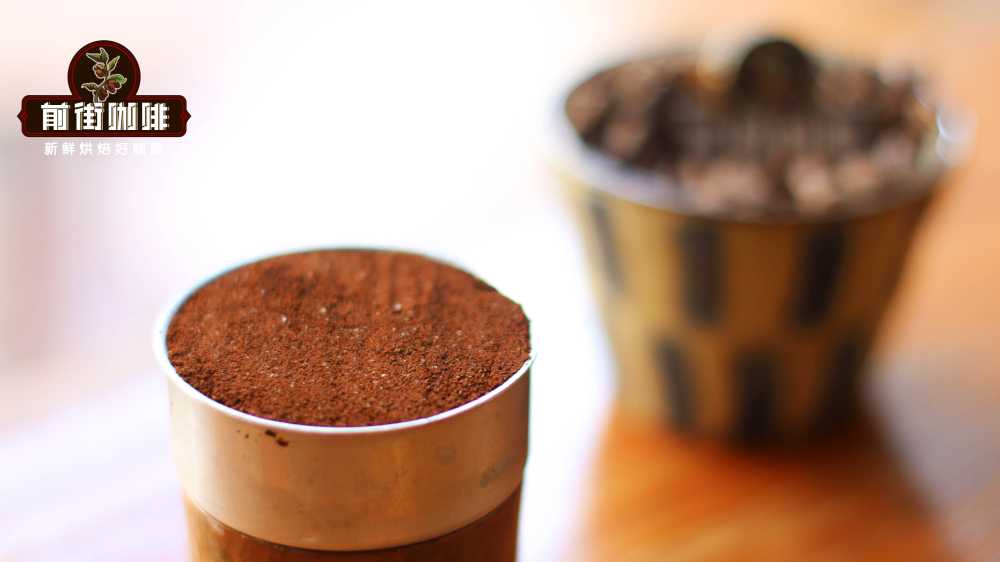
The industry-recognized cupping grind is an extremely valuable reference standard. Cupping was originally a method for evaluating green coffee bean quality, and its grind settings are equally applicable as a reference for pursuing balanced flavor extraction. The standard cupping grind corresponds to a 20-mesh sieve throughput of 70% to 75%; if converted to an electric grinder like the EK43s, it’s roughly around scale 10.5.
【Fun fact: The sieve aperture diameter of the 20-mesh Chinese standard sieve is 0.85 millimeters, used for accurately classifying particle sizes. To use it, pour the ground coffee powder onto the sieve, gently shake it horizontally until no more powder falls through, then weigh the coffee that passed through to calculate the throughput rate. For example, if 15.2 grams out of 20 grams of coffee pass through the sieve, the throughput is 76%. The higher the throughput, the finer the grind.】
With cupping serving as this "benchmark," we can further clarify the grind parameter ranges for other brewing methods based on it.
【French Press】Suited for immersion-style extraction, similar to cupping, so the recommended grind size falls between 68% and 75% 20-mesh sieve throughput, corresponding to EK43s scale approximately 11 to 10.5. Note that the French press uses a metal filter with larger holes, so using slightly coarser grinds helps ensure smooth filtration. For medium to light roasts, you can opt for a slightly finer grind (throughput 72%–75%, EK43s scale 10.5); for medium to dark roasts, it's advisable to grind a bit coarser (throughput 68%–71%, EK43s scale 11) to avoid over-extraction that brings out harsh bitterness.
【Pour Over Coffee】Belongs to drip-style extraction, differing from the immersion logic of the French press. Pour over typically has a brew time controlled between 1 minute 30 seconds to 2 minutes 30 seconds; going too long can release undesirable flavors. Therefore, pour over requires a finer grind than cupping to adequately release flavors within a shorter time. The recommended throughput range is 70% to 80%, corresponding to EK43s approximately 10.5 to 10. Medium to light roasts suit a slightly finer grind (throughput 75%–80%, scale 10), while medium to dark roasts suit a slightly coarser one (throughput 70%–75%, scale 10.5).
【Cold Brew and Ice Drip】Since they use cold water throughout, the kinetic energy of water molecules is low and extraction speed is slow, so a finer grind is needed to improve extraction efficiency. The recommended 20-mesh sieve throughput is 80% to 85%, with EK43s scale varying according to bean conditions. For a richer taste, choose a throughput closer to 85%; for a crisper taste, around 80% is sufficient. But be especially cautious — too fine may cause water pooling in the ice drip coffee bed or cloudiness in cold brew, affecting filtration and flavor expression.
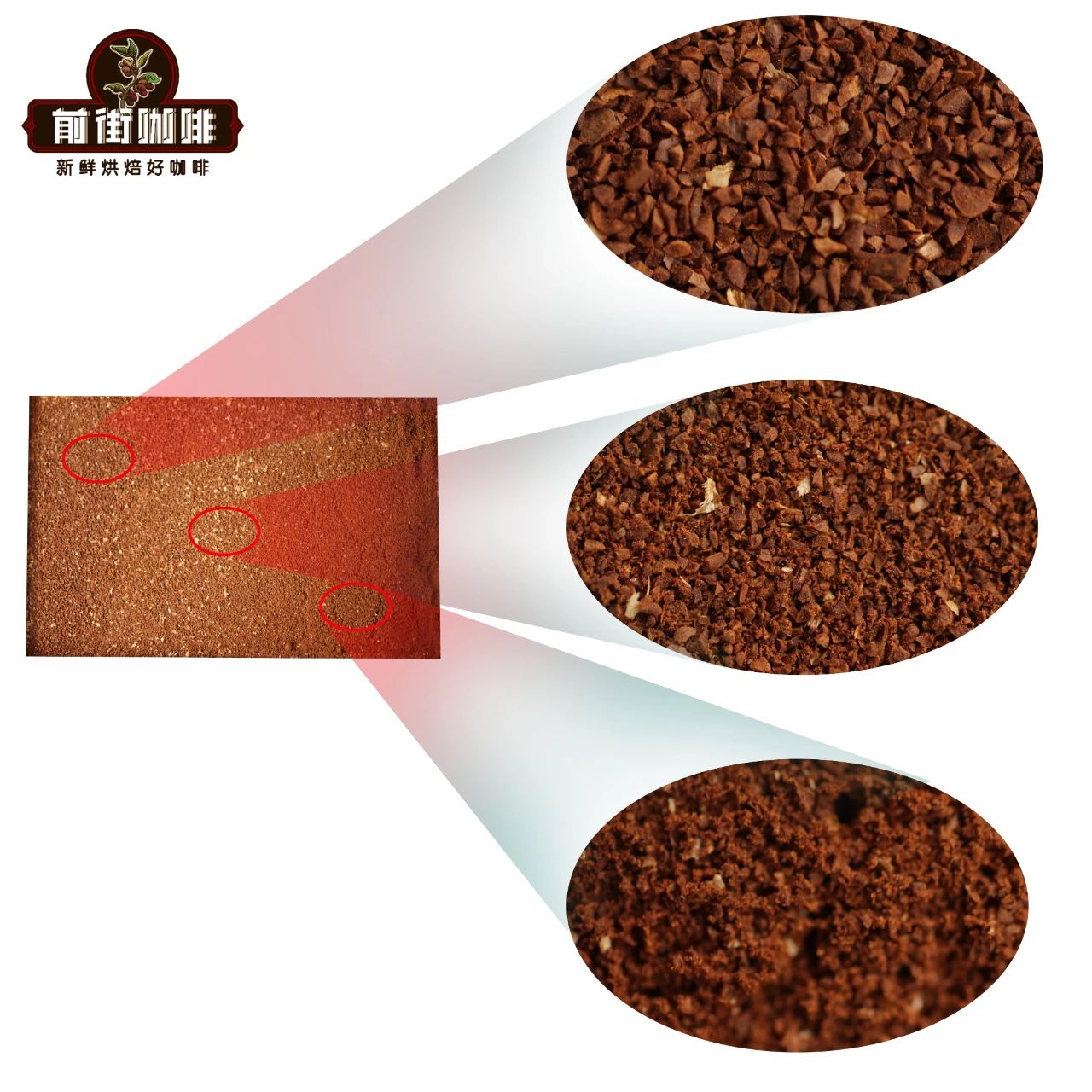
It’s important to note that even when using the same grinder and the same scale setting, coffee beans with different densities or roast levels may produce grounds of varying actual coarseness. For example, one batch of Yirgacheffe at EK43s scale 10 may yield 80% sieve throughput, while the same scale setting on Colombian Sidamo might only result in 75%. Therefore, if you notice unusual extraction flavors or flow rates, it’s recommended to use the same bean as the basis for determining grind size to avoid misjudgment caused by bean differences.
As for 【Espresso Machines】, the required grind size is extremely fine and can hardly be accurately measured with a sieve. The industry typically adjusts based on espresso extraction parameters. Taking a common stable extraction example: 20 grams of coffee grounds extracted into 40 grams of espresso in 28 seconds (with a margin of error of ±1 gram). Fix this extraction goal first, then gradually adjust the grind size to achieve the ideal flow rate and flavor — this is the most reliable method of fine-tuning. Espresso grind adjustments are extremely sensitive; sometimes even a change of just 0.1 on the scale can alter the extraction time and taste of the entire cup. Thus, it's recommended to conduct multiple tests to find the optimal scale and flavor balance point.
The above content is compiled by CoffeeHunters, a coffee news website.


