








Introduction:Mocha coffee is often misunderstood as a latte with chocolate added, but in fact, it has a much deeper history and unique flavor background. From the ancient Mocha Port of Yemen to the coffee beans still highly sought after today, this article will guide you through the multiple meanings of "mocha," the naming logic of Yemeni Mocha beans, their distinctive flavors, as well as professional roasting recommendations and pour-over parameters to help you appreciate this classic coffee more deeply.
When "mocha" is mentioned, many people immediately think of a coffee drink mixed with chocolate and milk. However, true mocha coffee carries a meaning that is far more profound and diverse than this common combination. From the ancient Mocha Port of Yemen to coffee beans with lingering chocolate notes, to various brewing methods such as pour over and espresso, the word "mocha" encompasses a rich tapestry of culture and taste.
So, what exactly does "mocha" represent? It can refer to a place of origin, a flavor characteristic of a bean, a type of brewing device, or even a beverage. For example, the early "mocha" referred to coffee beans exported from the port of Mocha in Yemen, which was an important hub of global coffee trade in the 17th century. Over time, due to some Yemeni coffees having a strong chocolatey finish, these beans gradually became collectively known as "mocha beans," including Yemen Mocha, Harar Mocha, and Tanzania Mocha, among others.

However, in everyday usage, "mocha" is often used to describe a blended beverage containing hot chocolate and coffee, especially in chain stores like Starbucks. In Italian coffee culture, a "moka pot" is a classic stovetop brewing device that uses pressure extraction, popularized by the Italian company Bialetti, but this has no direct connection to mocha beans themselves. Therefore, the term "mocha" can encompass a variety of meanings—from place of origin and bean variety to equipment and beverage—depending on the context.
The naming system for Yemeni coffee is relatively unique, and there is still no unified official grading or standard. Naming is mainly based on two methods: one is according to the origin, such as "Mokha Mattari," which refers to coffee produced in the Bani Matar province; "Mokha San'ani" comes from the hilly areas near the capital, Sana'a. The other method is based on the coffee plant variety, such as "Mokha Ismaili," whose production area is located in Hirazi, southwest of Bani Matar. These names may be unfamiliar to consumers, but in the specialty coffee market, they are important indicators for identifying flavor profiles.
For roasting Yemeni Mocha beans, one coffee team recommends medium roast as the main direction. This roast level can balance its unique acidity with the rich notes of chocolate, spices, and nuts. Due to Yemeni Mocha’s low moisture content and inconsistent bean size, it is important during the early stages of roasting to control the charge temperature and drying rate to avoid over-development or the emergence of defective flavors.
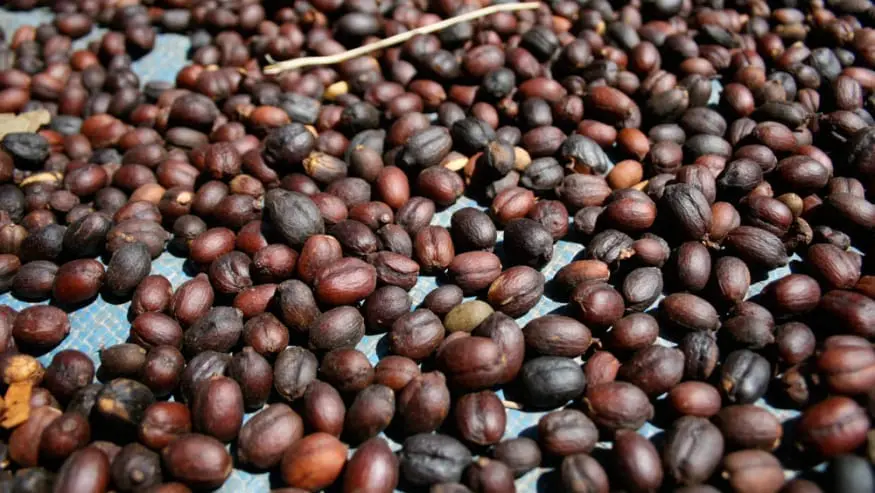
In practice, it is recommended to preheat for 30 seconds and then set the airflow to 3. Once the bean surface turns light green or white, adjust to 4, and after the first crack begins, it is recommended to fully open the airflow (set to 5). This ensures that the flavors are fully expressed and effectively suppresses the rubbery notes brought about by over-roasting. The ideal roast curve suggests starting at 170°C, gradually adjusting heat and airflow to control each detail of the drying phase, first crack, and development stage. For example, at the 5-minute mark when the temperature is around 147.2°C and the beans turn yellow, you can adjust the heat and airflow, and drop the beans at 8 minutes and 23 seconds when the temperature reaches 197.9°C at the start of the first crack, to achieve optimal flavor expression.
If you choose the pour-over method, it is recommended to use a V60 dripper, with water temperature controlled between 92–93°C, a powder-to-water ratio set at 1:15, and grind size similar to fine sugar (approximately 78% passing through a #20 sieve). The first step is to pour 30 grams of water for a 30-second bloom, followed by pouring 95 grams of water, totaling about 125 grams within approximately 1 minute. Then, when the water level drops to two-thirds of the coffee bed, add the remaining 100 grams of water, totaling about 225 grams, with the overall extraction time controlled around 2 minutes and 10 seconds to fully showcase the layers and aromas of the Mocha beans.
In summary, the charm of mocha coffee lies not only in its multifaceted cultural and semantic background, but also in its unique flavor potential and refined processing requirements. Whether you prefer pour over or espresso, understanding the orthodox meaning of mocha and mastering its roasting secrets will bring you closer to the true essence of this classic coffee and allow you to enjoy its nuanced and rich flavor journey.
The above content is compiled by CoffeeHunters, a coffee news website.


