







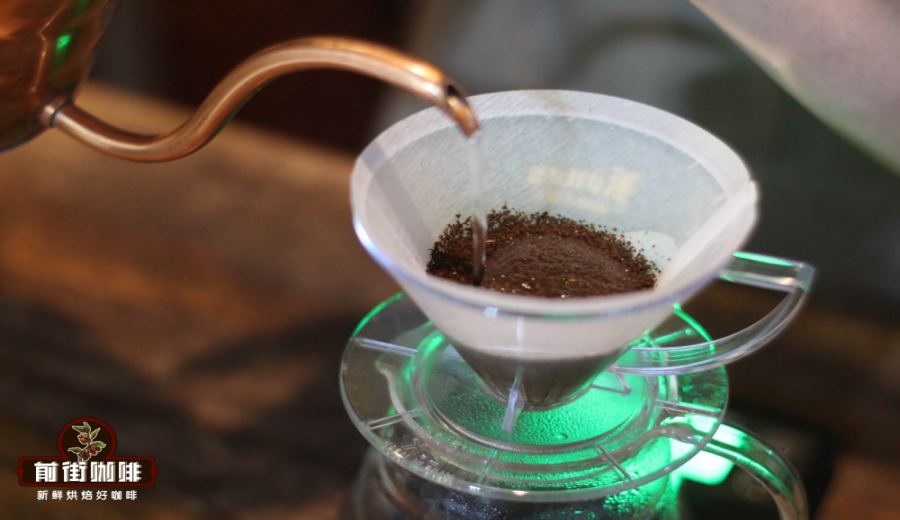
Introduction:Want to extract the richness and sweetness of medium-to-dark roasted coffee using a KONO filter? This article delves into the design principles behind the KONO filter’s ribs and bottom ridges, explaining how they influence flow rate and extraction uniformity. With practical pour over parameters, it teaches you how to master the coffee-to-water ratio, water temperature, grind size, and pulse pouring techniques to consistently replicate a concentrated, layered Japanese-style pour over.
Thanks to its unique short ribs and bottom ridge structure, the KONO filter can bring out more pronounced sweetness and bold body when brewing medium-to-dark roasted coffee, making it a go-to tool for many coffee enthusiasts at home. This article starts with an exploration of the KONO filter’s design principles, analyzing how it affects the extraction process. Then, using a real-world pour over example—Jamaica Blue Mountain No. 1—it details key operational points such as dose, water temperature, grind size, and pulse pouring, helping you easily brew a rich, full-bodied, and well-layered cup at home.
For extracting medium-to-dark roasted coffee, many professional cafes and coffee lovers opt for the KONO filter. Well-known dark roasted specialty beans like Jamaica Blue Mountain, Hawaiian Kona, and Indonesian Golden Mandheling are often brewed using the KONO filter. What makes the KONO filter so well-suited to medium-to-dark roasts? Let’s break down its mysteries step by step from a design perspective.
KONO is a renowned Japanese coffee equipment brand that has been deeply involved in coffee bean roasting and equipment development since inventing the siphon pot in 1925. The brand was founded by Mr. Toshio Kono, and the KONO filter is also named after him. Observing the rib design of the KONO filter, you’ll notice its biggest difference from conventional filters: its ribs do not extend all the way to the top edge of the filter, but stop roughly halfway up its height.
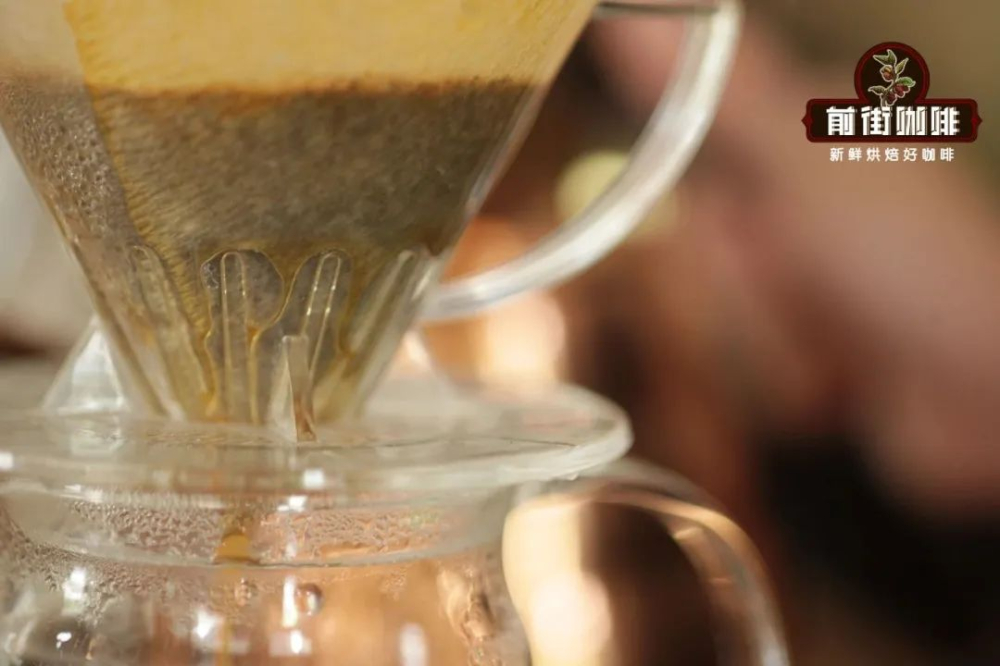
This rib height design serves a purpose. When pouring water, the filter paper, after absorbing water, is more likely to cling tightly to the inner wall of the filter due to the shorter ribs near the top. This reduces the venting space and restricts airflow, thereby extending the water absorption time of the coffee grounds. As a result, the KONO filter has a relatively slower flow rate, which helps highlight the sweetness in the coffee, leads to a bolder body, achieves more even overall extraction, and presents a more restrained aroma—making it highly suitable for medium-to-dark roasted beans.
In addition, the bottom of the KONO filter features a raised ridge skeleton, which is a key structure for creating a siphon effect. It is understood that this design underwent ten years of repeated adjustments and testing by the brand’s founder before the depth and length of the ribs were finalized. When the water level rises to the rib level, and because there are no additional guiding ribs above, the filter paper clings tightly to the cup wall, allowing air to flow only downward and thus forming a near-vacuum immersion environment above the coffee grounds.
At the same time, the ridges at the bottom of the filter extend along the rib structure to the spout. Under the influence of gravity, the filtrate generates a noticeable downward suction force. When air cannot circulate smoothly, this suction becomes more concentrated, allowing the coffee grounds to undergo a longer immersion period. This results in a richer, fuller extraction with clear layers, showcasing the delicate and profound nuances typical of Japanese-style pour over.
Next, let’s take Jamaica Blue Mountain No. 1 as an example to illustrate how to use the KONO filter—with precise parameters and pulse pouring techniques—to enhance the coffee’s round body and bold flavor.
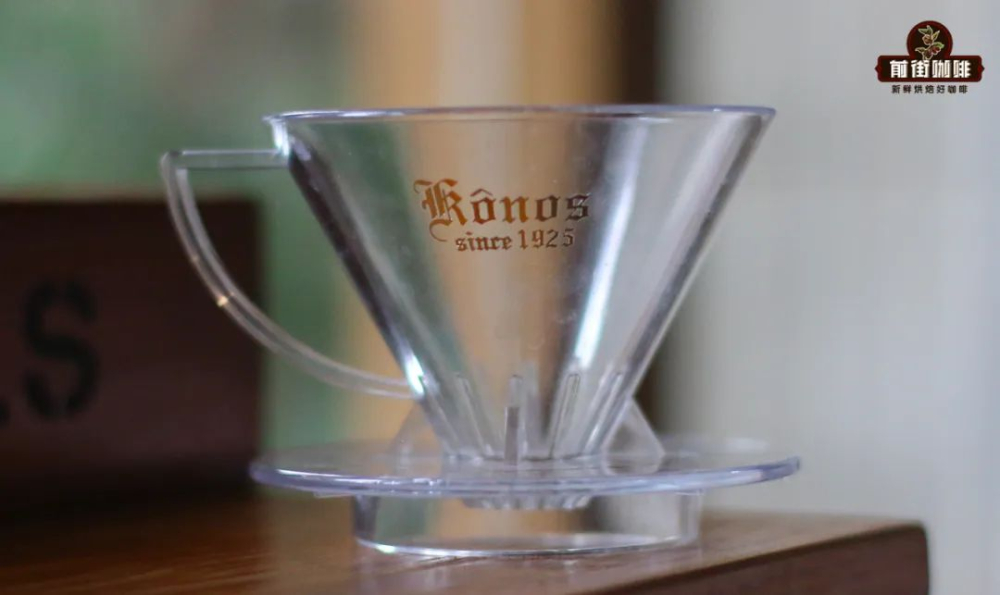
Recommended pour over parameters are as follows:
• Dose: 15 grams
• Coffee-to-water ratio: 1:15
• Grind size: EK43s setting 10.5 (approximately equivalent to 75% extraction through a No. 20 Chinese sieve)
• Water temperature: 87–88°C
• Brewing method: Pulse pouring
Before starting, it’s recommended to pre-wet the KONO filter with hot water. This not only preheats the equipment but also helps the filter paper adhere better to the cup wall, reducing paper taste interference. Remember to pour out the water in the server before brewing, and turn on your timer and scale.
Place 15 grams of ground coffee into the filter and start the timer. The first stage is the bloom: pour 30 grams of hot water and let it sit for 30 seconds. This step allows the coffee grounds to fully absorb water and release CO₂, preparing them for subsequent flavor release. Be aware that if medium-to-dark roasted coffee is bloomed for too long (e.g., extended to 45–50 seconds), it may release excessive woody or off-flavors, so it’s best to keep it at 30 seconds. For lighter roasts, you may consider extending the bloom time as needed to enhance aroma.
In the second stage, pour slowly with a small stream in a circular motion from the center outward until the total water volume reaches 125 grams. Aim to evenly wet all the coffee grounds and gently raise the coffee bed to help develop flavor layers. Once the coffee bed has descended to about halfway down the middle section of the filter, you can proceed to the third stage.
The third stage also uses a center-out circular pouring technique, slowly adding water until the total reaches 225 grams. Once the coffee liquid in the filter has completely dripped through, the total brew time should be kept around 2 minutes, with a margin of error no more than 10 seconds. Finally, gently swirl the coffee in the server before serving.
The Jamaica Blue Mountain No. 1 brewed with the KONO filter reveals intense aromas of dark chocolate and nuts, with a bold and solid body. The finish carries a distinct almond sweetness. As the coffee cools slightly, roasted hazelnut and creamy, silky sweet notes gradually emerge, accompanied by soft acidity and caramel sweetness. The overall flavor profile is rich and lingers delightfully on the palate.
The above content is compiled by CoffeeHunters, a coffee news website.


