







Introduction:Mastering the SCA Golden Cup extraction standard and understanding the scientific relationship between concentration and extraction yield is key to improving the quality of your pour over coffee. This article delves into the origins of the Golden Cup extraction, the differences in standards across countries, and guides you through practical examples to learn how to calculate coffee concentration and extraction yield, and adjust the coffee-to-water ratio to achieve ideal flavor. Whether you're a beginner or an advanced enthusiast, you'll find actionable brewing references here.
The Golden Cup Standard is an internationally recognized indicator of coffee extraction quality, aiming to extract balanced and complex coffee by controlling the concentration of the brewed liquid and the extraction yield of the coffee grounds. The ideal extraction range can fully showcase the potential of the coffee beans, while avoiding over-extraction or under-extraction.
So-called Golden Cup extraction refers to maintaining the coffee liquid's concentration between 1.15% and 1.45% , while the extraction yield falls within 18% to 22% . Such extraction results allow the coffee’s acidity, sweetness, and bitterness to be well-balanced, with clear flavors and a pleasant aftertaste.
Different specialty coffee organizations around the world have slightly adjusted the parameters of the Golden Cup extraction. For example, the Specialty Coffee Association of America (SCAA) recommends an extraction yield of 18%–22%, with a concentration range of 1.15%–1.35%; the Specialty Coffee Association of Europe (SCAE) accepts concentrations up to 1.45%. Standards in Norway and Brazil even permit higher concentrations, reflecting differences in local drinking habits.
Here, concentration refers to the proportion of soluble substances in the coffee liquid relative to the total liquid volume, while extraction yield is the proportion of substances dissolved from the coffee grounds out of the total coffee grounds. Simply put, concentration affects the 'intensity' of each sip of coffee, while extraction yield determines the 'richness' of the flavors.
To calculate the extraction yield, you can use the formula:Extraction Yield = (Coffee Liquid Volume × Coffee Concentration) ÷ Coffee Grounds Weight. For example, if you use 15 grams of coffee grounds to brew 195 grams of coffee liquid with a concentration of 1.45%, the extraction yield would be 1.45% × 195 ÷ 15 ≈ 18.85%, which falls within the ideal range.
The Golden Cup Extraction Chart is an intuitive tool, with the x-axis representing extraction yield and the y-axis representing concentration. The diagonal lines in the middle represent different coffee-to-water ratios. Through this chart, you can quickly determine whether your current coffee extraction has achieved an ideal balance.
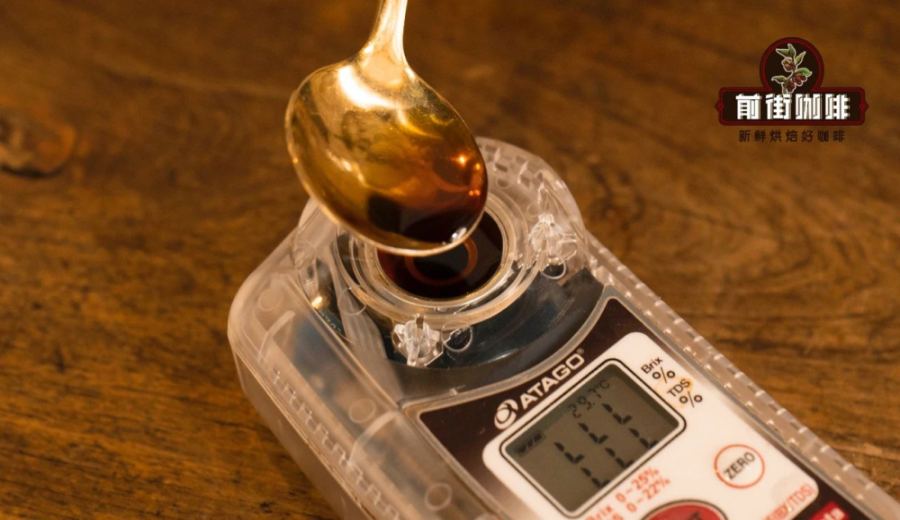
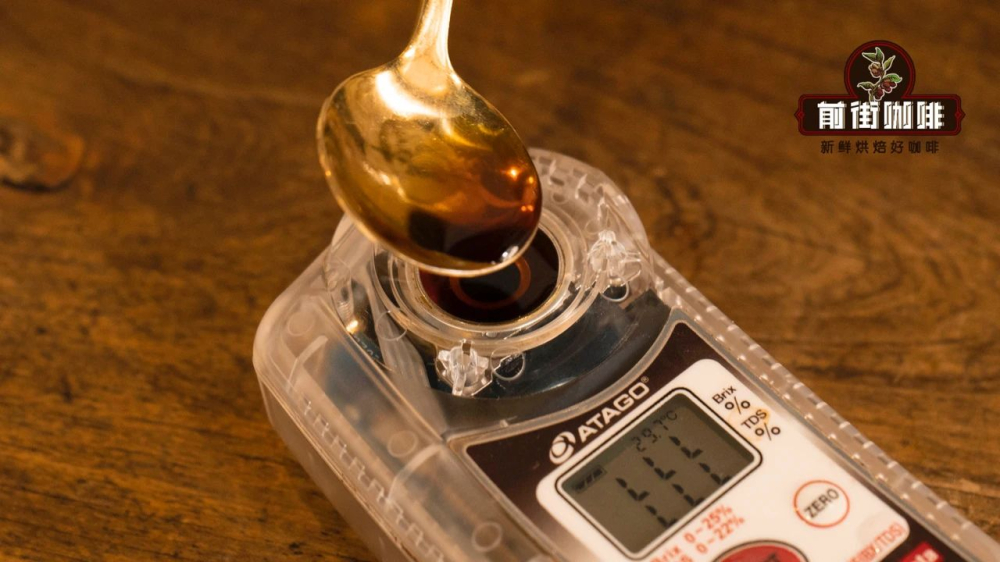
To accurately measure concentration, you can use professional concentration testing tools such as VST or ExtractMoJo. By simply dropping in a small amount of cooled coffee liquid, you can quickly read the TDS (Total Dissolved Solids) value and calculate the concentration percentage. Without such instruments, the past method involved drying the coffee liquid and measuring the solid residue, which was more complicated.
In practice, we take Ethiopian Natural Huigui 4.0 as an example, using 15 grams of coffee grounds, a coffee-to-water ratio of 1:15, a grind size of about 80% passing through a 20-mesh sieve, and water temperature controlled at 91°C. We perform a three-pour brewing method using a V60 filter. The total water volume used is 225 grams, with an estimated dripping time of around 2 minutes.
After extraction, first calibrate the concentration tester with pure water, then take a sample of the brewed liquid to measure. Repeat several times to confirm the values are stable. Combining the assumption that the coffee grounds absorb water at about 1:2, we can estimate the actual brewed coffee liquid volume to be around 195 grams, thereby calculating whether the extraction yield and concentration meet the Golden Cup standard.
According to actual measurements, the concentration of this pour over coffee is 1.45%, and the extraction yield is 18.85%, indicating that while the concentration is slightly high, the extraction yield is within the ideal range. The overall profile is balanced with rich fruity and tea-like notes, suitable for drinkers who prefer a fuller mouthfeel.
The coffee-to-water ratio is one of the key variables affecting concentration and extraction yield. Common ratio ranges include:1:10–1:11 (bold flavor),1:12–1:13 (moderate), and 1:14–1:16 (lighter flavor). Among them, 1:14.5–1:15.5 is the easiest range to meet the Golden Cup standard, and is also the starting point recommended by many baristas for most coffee bean varieties.
When adjusting, it’s recommended to make small changes to the water-to-coffee ratio and observe the flavor variations to find the balance point that best suits your taste. No matter which ratio you choose, stable water temperature, appropriate grind size, and uniform pouring technique are all important factors that affect the final result.
The above content is compiled by CoffeeHunters, a coffee news website.


