







Introduction:Rwandan Red Bourbon coffee has gradually gained attention in the specialty coffee market in recent years. Its washed processing method imparts clean, bright acidity and vibrant fruit notes. This article delves into Rwanda’s geographical conditions, the evolution of coffee varieties, and the washed processing technique, while also analyzing the flavor profile of Red Bourbon and providing practical pour over parameters to help you fully understand the characteristics of this African washed specialty bean from origin to cup.
Although Rwanda is a small inland country in Africa, it has carved out a niche in the international specialty coffee market thanks to its unique geographical environment and continuously improving coffee processing techniques. In particular, coffees dominated by the Red Bourbon variety showcase clear, bright berry and stone fruit tones through washed processing, making them a popular choice for many coffee enthusiasts trying African beans.
Located in Central Africa, Rwanda is predominantly mountainous, earning it the nickname “Land of a Thousand Hills.” The country is home to numerous volcanoes and abundant water systems, which provide ideal growing conditions for coffee. Despite past turmoil, Rwanda’s coffee industry has gradually recovered with the help of international aid and its own efforts. Technical collaborations such as the PEARL project have significantly improved overall coffee quality and regional competitiveness.
Coffee cultivation in Rwanda is mostly concentrated in highland areas at elevations of 1,500 to 1,700 meters. The cool climate and significant diurnal temperature variation help coffee cherries ripen slowly, accumulating richer flavor compounds. The local volcanic soil is rich in minerals, providing ample nutrients for coffee plants and laying the foundation for tightly structured beans with complex flavor profiles.
In terms of variety, Rwanda primarily grows traditional Arabica varieties such as Bourbon, Caturra, and Catuai, among which Bourbon-type varieties have long been favored for their prominent sweetness and stable cupping performance. As a classic variant of Bourbon, Red Bourbon is characterized by its bright red fruit when ripe, symbolizing mature quality and often possessing more abundant acidity and aromatic potential.
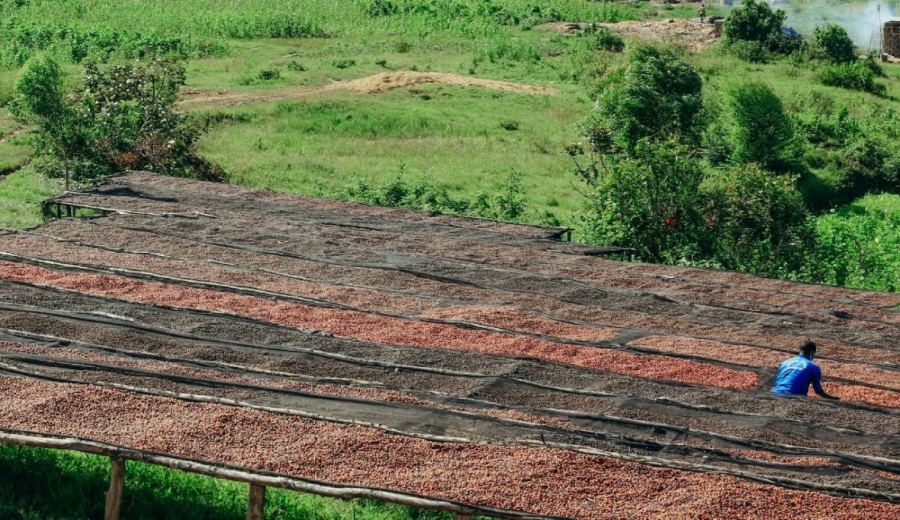
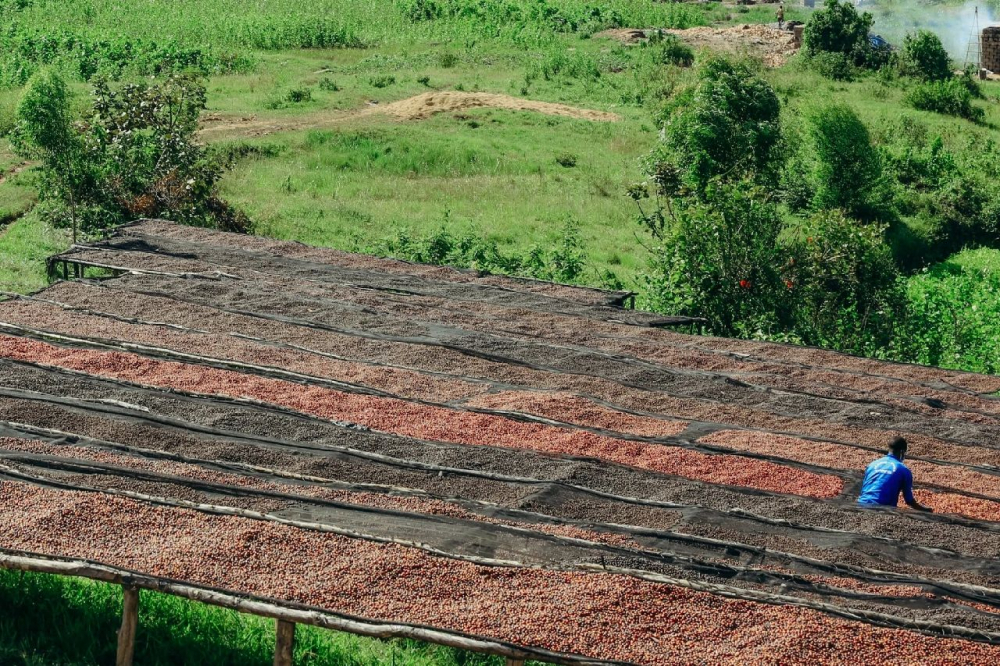
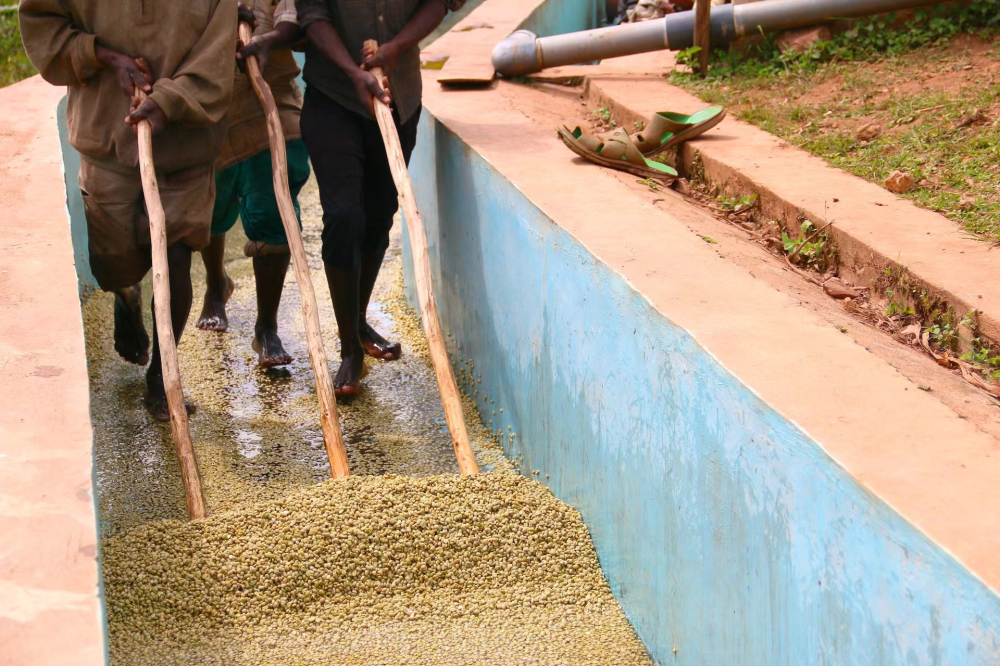
Washed processing is the mainstream method in Rwanda, as it effectively enhances coffee clarity and acidity. In the washed process, unripe or defective cherries are first removed through floatation, followed by the removal of the skin and pulp. The beans, still covered in mucilage, are then placed in water tanks for fermentation to break down the sticky layer. After fermentation, the beans are thoroughly rinsed with clean water and finally spread out evenly to dry until the moisture content is reduced to the ideal range of 11% to 13%.
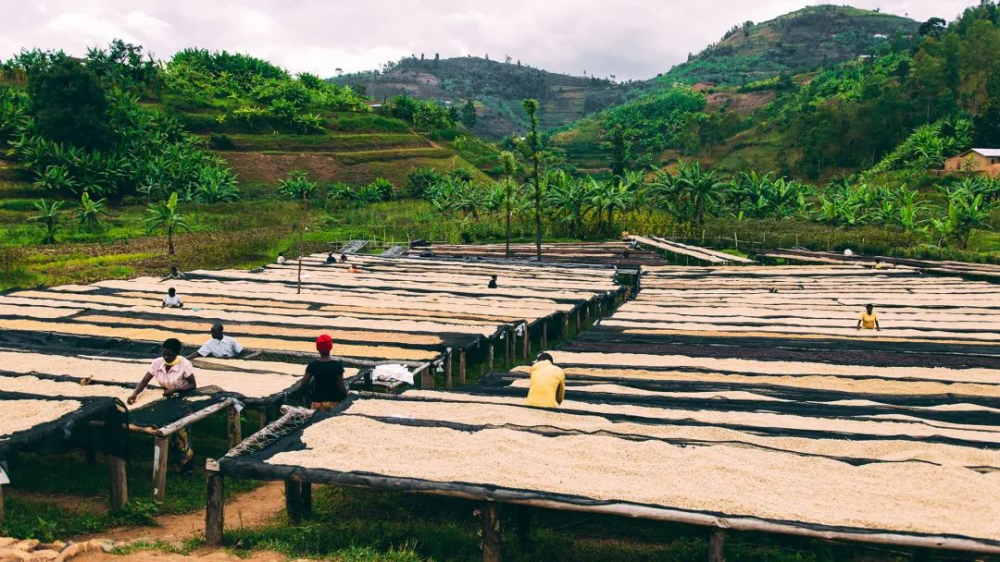
The advantage of washed processing lies in its ability to highlight coffee acidity and aroma while maintaining an overall clean and balanced flavor. Compared to natural processing, washed processing is easier to control in humid and rainy environments and helps avoid quality instability caused by climatic factors. Especially under the influence of Rwanda’s two annual rainy seasons, washed processing becomes a more practical and efficient choice.
Among the many Rwandan coffee-growing regions, the Southern Province stands out for its consistent performance and distinctive flavor profile. The region’s elevation and microclimate provide ideal growing conditions for Red Bourbon, resulting in coffees that often exhibit complex flavors such as berries, apples, green tea, and apricots in cupping. The acidity is bright yet not overly sharp, with a sweet, soft finish and hints of stone fruit.
In actual cuppings, Rwandan Red Bourbon often presents a bright top note of fresh apple and green tea, followed by distinct berry acidity and the gentle fruitiness of apricot in the mid-palate. The finish reveals subtle layers of nuts and honey. As the temperature cools slightly, berry flavors become more pronounced, delivering a balanced and dynamic cup that appeals to coffee drinkers who enjoy pronounced acidity and layered flavors.

To brew Rwandan Red Bourbon at home and highlight its unique characteristics, a step extraction method is recommended to fully release its fruit acidity and aroma. It is suggested to use a V60 cone dripper with 15 grams of coffee grounds, a water temperature of 90°C, and a grind size of medium-fine—approximately 80% passing through a standard 0.85 mm sieve.
The specific brewing steps are as follows: Start with a 30-second bloom using 30 grams of hot water to activate the coffee’s aroma. Then, pour in a circular motion with a slow stream until the total water weight reaches 125 grams for the first pour. Wait until the water level drops just before exposing the coffee bed, then continue pouring to 225 grams before stopping. Finally, wait for the water level to drop again and nearly expose the coffee grounds before removing the dripper to complete the extraction. The total brew time should be around 2 minutes to achieve a good balance and flavor expression.
Brewed with these parameters, Rwandan Red Bourbon delivers clear fruity acidity and a soft, nutty finish, offering a smooth mouthfeel with distinct layers. Although its berry flavors may not be as intense as those of Kenyan beans, its unique apple and apricot aromas, combined with a green-tea-like fresh base, make it an excellent choice for pour over enthusiasts exploring African specialty coffee.
The above content is compiled by CoffeeHunters, a coffee news website.


