







Introduction:Yunnan coffee has gained prominence in recent years thanks to promotion by international brands, yet the flavor profiles of its producing regions remain vague. This article delves into the differences between Yunnan’s mainstream variety, Catimor, and the ancient variety, Typica, analyzing the impact of special processing methods. It also details the flavor characteristics of Natural Typica and Baoshan Catimor, while providing practical pour-over parameters and techniques to help coffee enthusiasts choose the right beans and brew them to perfection.
In recent years, Yunnan coffee has rapidly risen under the impetus of international brands, not only becoming a market focal point but also seeing its prices soar. However, many consumers often feel puzzled after tasting it: what exactly are the distinctive flavors of Yunnan beans? Industry insiders point out that the core issue lies in the inherent limitations of the Catimor variety, which is the main cultivar in Yunnan—its flavor profile lacks clarity, and its aroma is not particularly prominent. In search of a breakthrough, starting in 2013, Typica and a small amount of Bourbon were introduced in Lincang, aiming to enhance the potential of Yunnan specialty coffee at the varietal level. This article will take you through the evolution of Yunnan’s main coffee varieties, analyze the impact of processing methods, and offer a practical tasting of two representative beans along with recommended brewing methods.
 Over the past few years, Yunnan coffee has transitioned from the margins to the mainstream, with an increasing number of well-known brands such as Luckin, Manner, and Seesaw launching related products, sparking a market craze and driving up the prices of Yunnan coffee beans. This wave of popularity has been fueled not only by brand promotion but also by the rise of guochao (China-chic), with consumers showing a stronger preference for local products. At the same time, strengthened technical guidance in producing regions and the diversification of processing methods have enabled Yunnan beans to gradually shed their previously monotonous flavor profile and begin showcasing uniqueness.
However, despite increased market attention, the “regional flavor” of Yunnan coffee still lacks a consistent perception. Generally speaking, specialty coffee emphasizes a unique flavor profile shaped by geographical and climatic conditions—for example, the bright acidity commonly found in Yirgacheffe. But Yunnan coffee has yet to establish a distinct signature, which is closely tied to the characteristics of its dominant variety, Catimor.
Industry analysis suggests that due to its genetic limitations, the Catimor variety exhibits weaker flavor cleanliness and layering. Coupled with the widespread use of special fermentation processing methods in the market, consumers’ impression of Yunnan coffee often remains stuck on “fermented flavors” rather than the intrinsic qualities of the variety itself. To establish a genuine regional character, varietal optimization is an unavoidable challenge.
 Therefore, starting in 2013, the industry chose to plant Typica in Lincang, Yunnan, supplemented by a small amount of Bourbon. Typica is one of the oldest surviving Arabica varieties, boasting a pure lineage and an elegant, balanced flavor, and has long been regarded as a representative of specialty coffee. Additionally, Typica was the first variety introduced to Yunnan, brought by French missionaries. At that time, Yunnan planted this variety on a large scale to repay loans to the Soviet Union, but after the loans were repaid, many coffee farms were converted to other cash crops due to insufficient market demand.
It wasn’t until the 1990s, when Nestlé, recognizing Yunnan’s unique natural environment, introduced the more disease-resistant Catimor variety, that local coffee cultivation was revitalized. However, Catimor contains about a quarter of Robusta genes, which results in relatively bland aromas, pronounced bitterness, and occasional astringency or off-flavors like mold. Due to its much higher yield compared to Typica, Catimor became the main commercial crop in Yunnan, primarily supplying the instant coffee market, and has long left the public with the impression of Yunnan coffee as being of low quality.
Catimor is not pure Arabica but a hybrid of Timor (a Robusta lineage) and Caturra (a Bourbon variant). This genetic combination inherently limits its ability to achieve the delicate flavors typical of Arabica. However, its yield advantage and disease resistance have made it the commercial variety Yunnan has long relied on. Conventional processing methods generally struggle to mask its inherent flavor flaws, and it has only been through the development of special fermentation and post-harvest techniques that consumers have gradually come to accept these “flavor-enhanced” Yunnan beans.
So why not switch back entirely to Typica? The answer lies in time and cost. It takes at least four years for a coffee tree to grow from planting to production, with significant investment required during that period. Therefore, post-harvest processing is still needed to enhance flavor expression for now. But if reliance on processing methods overshadows the essence of the varietal, Yunnan coffee risks straying from the original intent of specialty coffee.
The core of specialty coffee lies in the synergy of variety, altitude, and processing—not relying solely on post-harvest modification. While Catimor, as a high-yield raw material, holds industrial value, Typica represents flavor potential. The two could coexist, but conflating them and claiming quality improvement solely through processing methods is unlikely to convince true flavor-seeking consumers. For a planting area spanning two million mu, achieving a quality breakthrough cannot rely on packaging alone but must start with foundational varietals and growing environments, gradually establishing a recognizable regional flavor.
Guided by this philosophy, the industry began establishing its own estates and planting the Typica variety many years ago. Although as of 2022, the production of Yunnan Typica amounted to only about 600 kilograms—available only through company-owned stores and online shops—through hands-on involvement in the planting process and continuous adjustments and improvements, the 2013 vintage Natural Typica finally showcased clear varietal advantages. Even with traditional natural processing, this bean exhibited rich fruit aromas and a layered body, featuring a complex flavor profile of plum, berries, brown sugar, black tea, and nuts, leaving a deep impression.
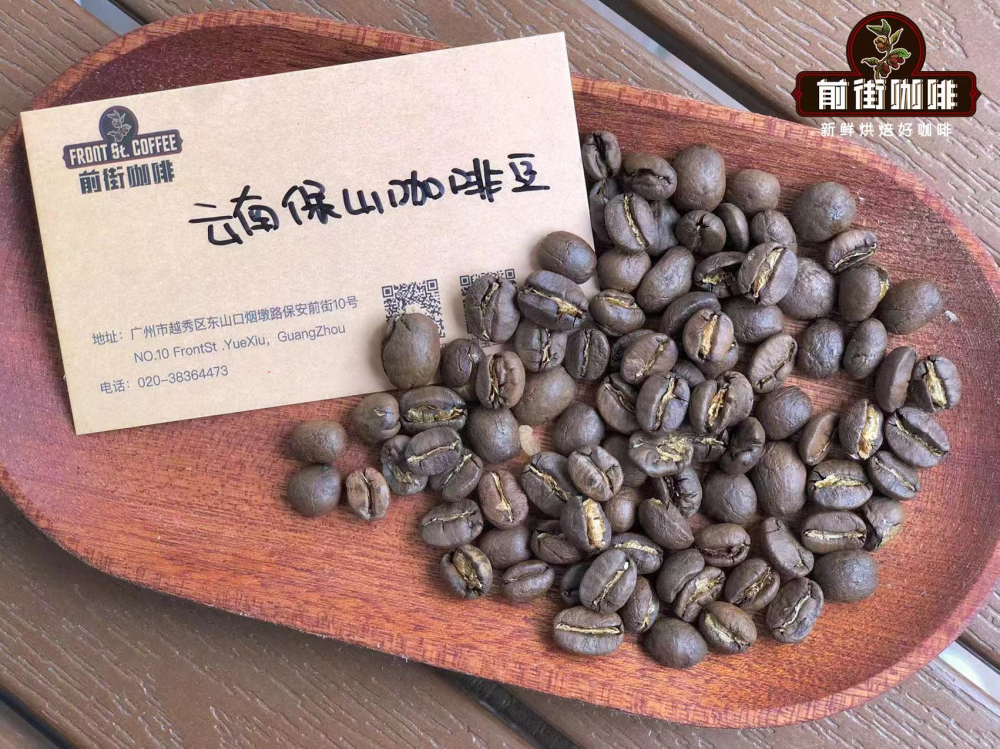 In addition to Natural Typica, the industry also offers Catimor from the Baoshan producing region as an entry-level everyday bean, providing consumers with an affordable way to experience the foundational flavors of Yunnan’s small-bean coffee. This bean is suitable for daily drinking and is a popular choice for many beginners. The everyday bean series also includes offerings from major global producing regions such as Ethiopia, Colombia, Costa Rica, Guatemala, Brazil, and Indonesia, allowing users to gradually explore different flavor characteristics and find their personal preferences.
All beans from the industry are shipped within five days of roasting to ensure optimal flavor. For Yunnan beans, it is recommended to use medium roast to preserve their sweet-acid balance and tea-like qualities. For actual pour-over brewing, it is recommended to use a V60 filter cone, with a coffee-to-water ratio of 1:15, a grind size of medium-coarse (similar to coarse sugar, with a sieve rate of about 75% through a Chinese No. 20 mesh), and water temperature controlled at 88–89°C.
The specific brewing steps are as follows: the first pour involves adding 30 grams of water for a 30-second bloom; the second pour uses a slow, circular motion to add water up to 125 grams, then waits until the water level drops by about half before continuing to add water up to 225 grams, with a total extraction time of approximately 2 minutes and 10 seconds. These parameters help balance the richness and layering of Yunnan Catimor, delivering a stable and consistent mouthfeel.
The above content is compiled by CoffeeHunters, a coffee news website.


