







Introduction:Yirgacheffe Kochere is one of Ethiopia’s most representative specialty coffee sub-regions, renowned for its washed processing method. The coffee beans produced here are known for their clean, bright, and sweet flavor profiles. This article will delve into Kochere’s geographical environment, farming practices, ECX grading system, and washed processing techniques, along with practical pour over parameters and flavor experiences. Whether you’re a beginner or an experienced coffee enthusiast, you’ll find valuable information here.
Yirgacheffe is a famous coffee-producing region in Ethiopia’s Sidama zone, located in the southern part of the country. Its coffee is celebrated for its intense fruity and floral aromas, as well as its bright acidity. As one of Yirgacheffe’s key sub-regions, Kochere stands out in the global specialty coffee market for its high-quality washed coffee beans. This article will provide you with a comprehensive understanding of Kochere’s regional background, processing techniques, grading system, as well as practical pour over parameters and flavor characteristics.
When it comes to the "Yirgacheffe flavor," many coffee enthusiasts first think of refreshing citrus notes, soft floral aromas, and a pleasant balance of acidity and sweetness. These flavor profiles largely stem from the cultivation and processing characteristics of core sub-regions such as Kochere. What kind of geographical conditions and processing methods create such unique coffee flavors? Let’s start with the environmental setting of Kochere.
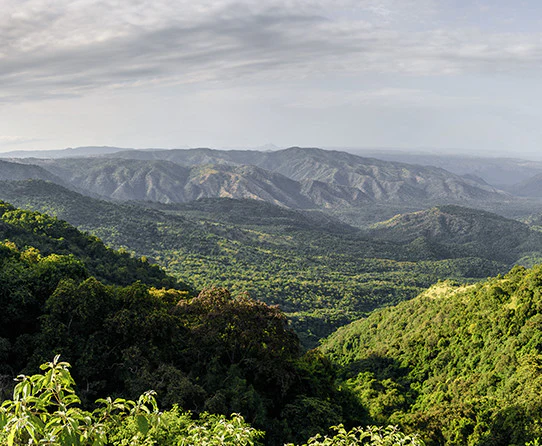
The town of Yirgacheffe is situated at an altitude of 1700 to 2200 meters in the plateau region, within Ethiopia’s Gedeo district of the Sidama zone. It serves as a major hub for the country’s specialty coffee, hosting over forty coffee cooperatives. The area enjoys a spring-like climate year-round, with cool and foggy weather, stable temperatures, and abundant spring water resources—providing an ideal natural environment for coffee cultivation. Notably, the name Yirgacheffe means "let us settle by this wetland" in the local ancient language, reflecting both the region’s geography and its cultural history.
Located approximately 25 kilometers southeast of Yirgacheffe, Kochere is one of the Woredas (administrative districts) in Ethiopia’s SNNPR (Southern Nations, Nationalities, and Peoples' Region). Its geographical conditions are similar to those of Yirgacheffe’s main producing areas, with planting altitudes generally ranging between 1900 and 2000 meters. The climate is also suitable for cultivating high-quality Arabica coffee. The region is composed mainly of smallholder coffee farmers, with each household cultivating an average of just about 1 hectare of land. The farming model is typically backyard coffee or intercropping with other crops. Such small-scale, meticulous cultivation has given rise to the nuanced and varied flavor characteristics of Kochere coffee.
To enhance transparency and fair trade in the coffee industry, the Ethiopian government established the Ethiopian Commodity Exchange (ECX) in 2008 to centrally manage the buying, selling, and grading of coffee nationwide. Within the ECX classification system, the Yirgacheffe producing region is divided into four major sub-regions: Kochere, Gedeb, Gelana, and Wenago. Each sub-region has its own unique microclimate and processing methods, which in turn influence the final flavor profiles of the coffee.
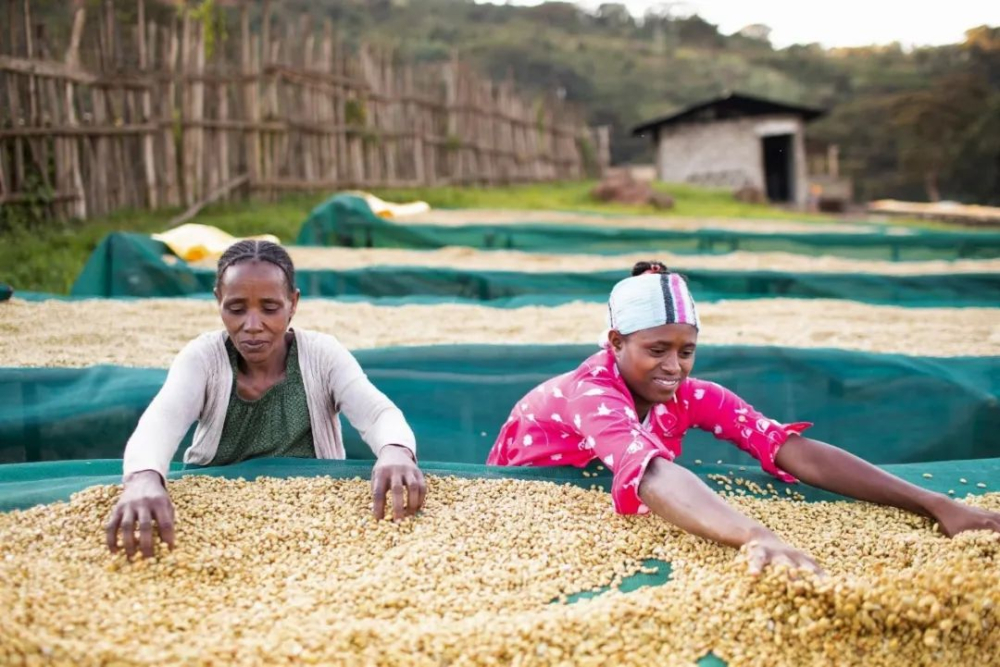
Thanks to its relatively advanced processing facilities and cooperative models, Kochere excels particularly in washed processing. The resulting coffee beans often exhibit layers of honey, citrus, and molasses, with a clean, sweet cup and high complexity. Local smallholders typically deliver their harvested red cherries to nearby cooperatives for unified washed processing, ensuring consistency and stability in quality. In addition, Kochere is surrounded by other notable producing regions such as Wenago, Gelena, and Abaya, together forming a premium coffee belt around Yirgacheffe.
The ECX has established a detailed green coffee bean grading system, primarily divided into three categories: Specialty, Commercial, and Local/Domestic. Among these, only Specialty and Commercial grades are suitable for export, with Specialty coffee required to meet extremely low defect counts and outstanding cupping performance. The Commercial grade is scored based on physical characteristics (40%) and cupping flavor (60%), and is divided into nine grades. Specialty coffee, on the other hand, undergoes professional cupping evaluations on top of Commercial Grades 1–3 to ensure outstanding flavor performance.
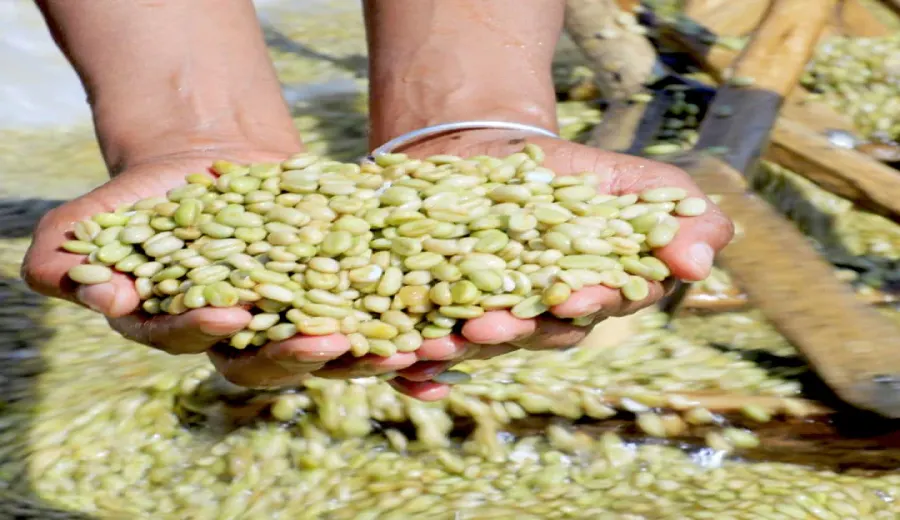
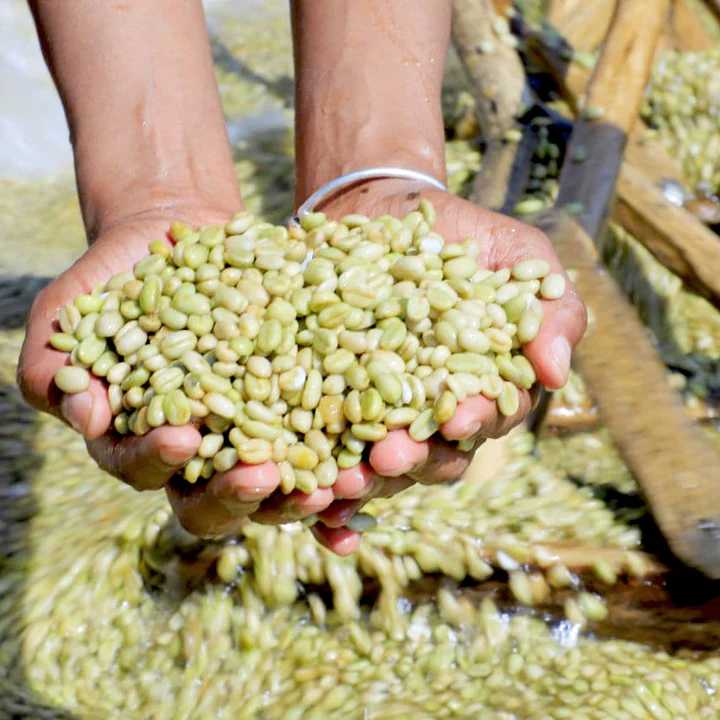
Coffee beans from the Yirgacheffe region are mostly processed using the washed method, which effectively removes the pulp and mucilage, enhancing the cleanliness and consistency of the green beans. During the process, the coffee fruit is first stripped of its outer skin and pulp, then undergoes fermentation for 12 to 36 hours, using natural acids to break down the mucilage. It is subsequently rinsed with clean water and sun-dried. Coffee farmers in Kochere typically send their harvested red cherries to cooperative washing stations, where standardized processing procedures ensure that each batch of beans can consistently deliver high quality.
The Yirgacheffe Kochere coffee beans used by this coffee shop are of the Heirloom variety, grown at an altitude of approximately 1650 to 1800 meters, and are graded as G1—the highest specialty grade in Ethiopia. The processing method is traditional washed, yielding a cup with pronounced lemon and citrus acidity, accompanied by jasmine floral notes, melon sweetness, and delicate spicy-tea undertones. The overall flavor profile is clear, layered, and well-defined.
If you’d like to brew this coffee at home using a pour over method, you can refer to the following practical parameters: Use a V60 #1 filter, with water temperature recommended between 90–92°C. The coffee-to-water ratio is 1:15, and the grind size is medium-fine (approximately 80% extraction through a Chinese No. 20 sieve). For brewing, it is suggested to use a three-stage extraction method: begin with a 30-second bloom using twice the weight of coffee in water (e.g., 30 grams of water for 30 grams of coffee); then pour in a slow circular motion until the total water reaches 125 grams and pause; once the water level drops slightly, continue pouring until the total reaches 225 grams. The entire extraction process should take about 2 minutes and 10 seconds.
After brewing, this coffee reveals a vibrant citrus and lemon profile, with a smooth mouthfeel, accompanied by elegant jasmine floral notes and distinct fruit acidity and sweetness. The finish leaves a hint of spice and tea-like character. It is highly suitable for coffee lovers who enjoy bright acidity and clear layering. Whether you’re new to specialty coffee or a seasoned connoisseur looking for a reliable daily brew, Yirgacheffe Kochere is a classic origin bean worthy of careful tasting and experimentation.
The above content is compiled by CoffeeHunters, a coffee news website.


