







Introduction:Salvadoran coffee is renowned for its bright acidity, rich body, and refined balance, with its SHG high-altitude grade beans being standout representatives of Central and South American specialty coffee. This article delves into the nation’s journey from indigo to coffee kingdom, analyzes the three altitude classifications—SHG, HG, and CS—and the unique flavor profiles of its nine major growing regions, while also exploring the characteristics of varieties such as Typica and Bourbon. Additionally, it shares practical roasting and V60 pour over parameters to help you master the brewing essence of Salvadoran coffee.
Located in northern Central America, El Salvador may have limited land area, but thanks to its fertile volcanic soils and mild, stable climate, it produces specialty coffee with rich flavor layers. Known as the "Land of Volcanoes," the country’s coffee cultivation is primarily concentrated in highland areas between 900 and 2,000 meters above sea level. Among these, SHG (Strictly High Grown) grade beans—grown at elevations above 1,200 meters—feature brighter acidity and more complex aromatic structures, making them a focal point for coffee enthusiasts worldwide.
Looking back at history, El Salvador’s coffee industry emerged in the mid-19th century. At that time, the rise of synthetic dyes in Europe led to a sharp decline in demand for indigo—the country’s main export—prompting the government to promote coffee as its economic successor. Interestingly, the land previously used for indigo cultivation was mostly controlled by a few large estate families. To expand coffee farming, these families passed legislation to forcibly relocate poor farmers and convert the vacated land into coffee plantations. In 1856, the first 693 bags of Salvadoran coffee were shipped to Europe, marking the beginning of its international trade. By 1930, coffee exports accounted for over 90% of the country’s total exports, becoming an absolute economic pillar.
However, the industry’s development masked deep-seated social conflicts. The estate system long monopolized resources, and it wasn’t until the end of the civil war in the 1980s that land reform policies gradually dismantled this structure, capping individual landholdings at 245 hectares. Today, over 90% of coffee is produced by smallholders with farms under 20 hectares. Yet the industry also faces challenges from climate and disease: the global coffee price crash between 1997 and 2001 caused production to plummet by 34%; in 2013, a widespread outbreak of coffee leaf rust led to a near 60% drop in harvest in 2014—when only 3% of coffee trees had rust-resistant genes, most being highly susceptible Bourbon and Pacas varieties.
To revive the industry, the Salvadoran Ministry of Agriculture has distributed 20 million rust-resistant plants to smallholders since 2016 and planned to invest $100 million over eight years starting in 2017 to renew coffee trees on 70,000 hectares of land. Although international organizations such as World Coffee Research have established research farms in Santa Ana Province to promote variety improvement, challenges remain, including insufficient certification and maintenance funding for seedlings.
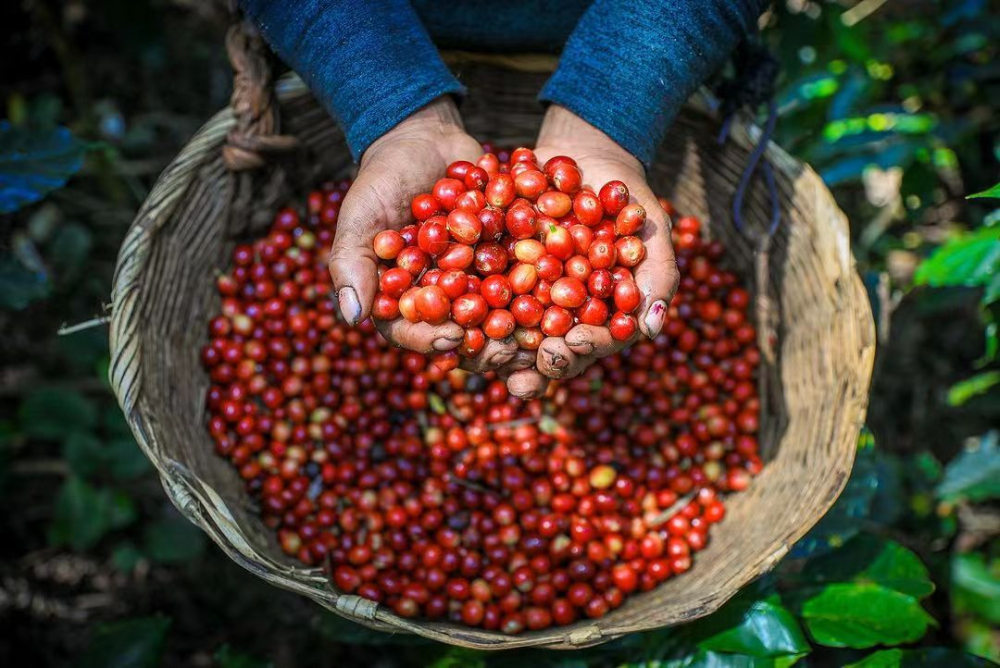
El Salvador’s coffee-growing conditions are exceptionally favorable: the mountainous and highland terrain, enriched by volcanic activity, provides mineral-rich fertile soil. Additionally, the main harvest season, from November to April of the following year, features dry weather that aids in the ripening of coffee cherries. Currently, there are approximately 23,000 growers nationwide, with 90% of farms smaller than 17 hectares. Small and medium-sized farmers contribute 80% of production. These farmers can be categorized into three types based on scale: small (under 7 hectares), medium (7–70 hectares), and large (over 70 hectares), with most receiving technical and sales support through 119 cooperatives.
The country’s coffee grading system is primarily based on altitude, with higher altitudes generally indicating superior quality:SHG (Strictly High Grown) requires growth above 1,200 meters, with beans in this category being denser and maturing more slowly, resulting in more concentrated flavors;HG (High Grown) ranges from 900 to 1,200 meters, offering good balance and aroma;CS (Central Standard) applies to regions at 500–900 meters, with relatively bright but less layered flavors. This grading system is similar to those of neighboring Guatemala and Honduras, but El Salvador’s volcanic soils often result in more pronounced acidity and sweetness even within the same altitude grade.
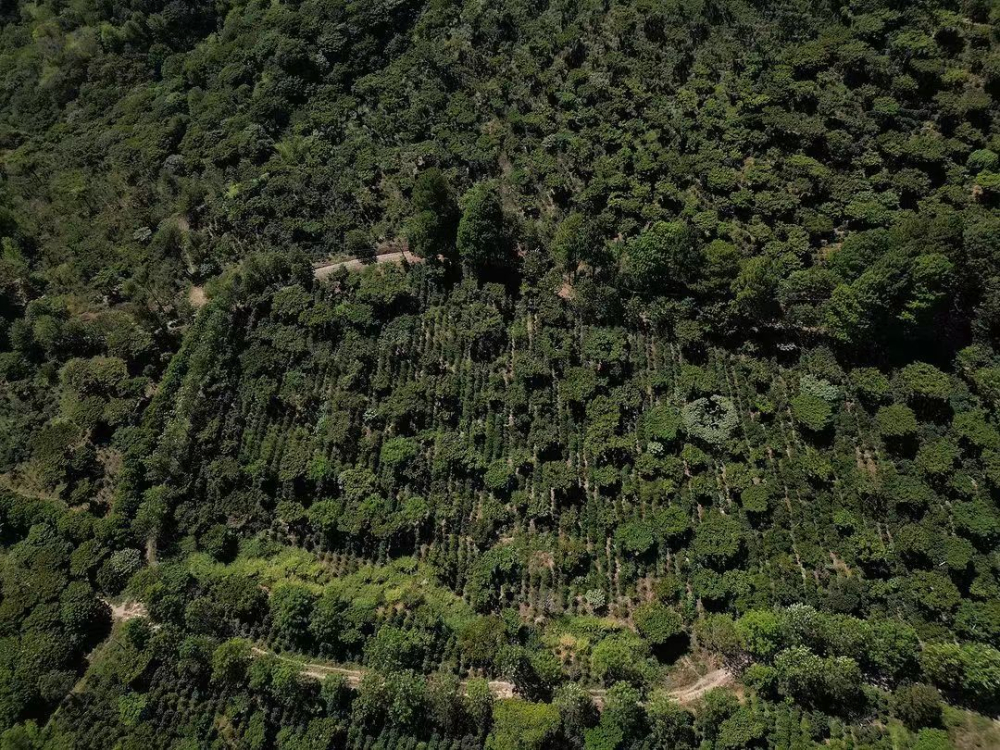
The country is divided into nine major producing regions, each with unique flavors shaped by microclimates and soils:The Apaneca-Ilamatepec mountainous region (e.g., Finca Leimus) at 1,250 meters is known for its black honey-processed Bourbon and Catuai varieties, showcasing a balanced profile of citrus, berries, and cocoa;The Chocolate Lover’s Estate (El Guayabo) in Santa Ana Province at 1,450 meters, using a 50% washed + 50% honey process for Bourbon beans, releases lingering notes of cocoa, caramel, and berries;The northern Chalatenango regionis noted for its soft acidity and nutty-chocolate tones. Notably,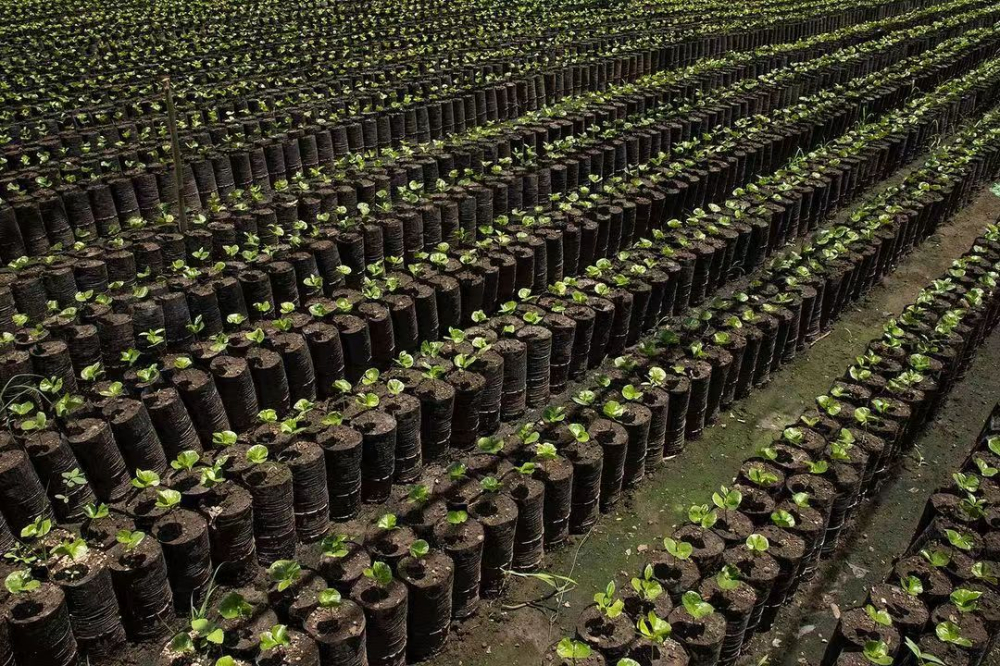 coffee from the Apaneca-Llamatepec mountains, as shown,often exhibits delicate layers of peach, cream, and citrus—a hallmark of high-altitude flavor profiles.
In terms of varieties, El Salvador primarily cultivates four classic types:Typica, the oldest Arabica variety, has bronze-tipped leaves and oval-shaped beans, offering elegant flavors but low yields and weak disease resistance;Bourbon, a mutation of Typica, has round beans and is celebrated for its prominent sweetness and complex aromas, making it one of the country’s mainstream varieties;Pacas, a natural mutation of Bourbon, was discovered by local farmers in 1935 and is known for its high yield and stable quality;Pacamara, a cross between Pacas and Maragogype, features large beans (90% or more are 18+ mesh) with vibrant acidity, often exhibiting biscuity and fruity notes, particularly excelling in Salvadoran and Guatemalan regions.
Taking practical roasting and brewing as an example, when processing SHG-grade Finca Leimus coffee beans, a light-to-medium roast was chosen to highlight its gentle acidity and balanced mouthfeel—this stage preserves the beans’ original aromas while avoiding over-roasting that could mask subtle flavors.For pour over, it is recommended to use a V60 filter cone with water at 90°C, as the high temperature helps extract fruity acids and aromatic compounds, while the V60’s 60-degree conical design and clockwise spiral ridges accelerate water flow through the coffee bed, reducing the risk of over-extraction.Specific parameters are: a 1:15 coffee-to-water ratio (15g of coffee), with a grind size passing 80% through a Chinese No. 20 sieve. The process involves pouring 30g of water for a 30-second bloom, followed by a slow circular pour to reach 125g, then a pause before pouring to 225g to complete extraction, with total time controlled around 2 minutes. This method clearly highlights the bean’s citrus, berry, and cocoa flavor profile.
The above content is compiled by CoffeeHunters, a coffee news website.


