







Introduction:Explore the development of Brazilian Bourbon coffee from its introduction in the 18th century to its current status in premium coffee regions. Learn about the differences between Red Bourbon and Yellow Bourbon, as well as the flavor profiles of representative regions such as Minas Gerais and São Paulo. This article also provides practical pour over recommendations and flavor descriptions to help you better experience the unique charm of Brazilian coffee.
As the world’s largest coffee producer, Brazil’s coffee cultivation history dates back to 1727, when a Portuguese officer brought coffee from French Guiana to Brazil, marking the beginning of the coffee era in this South American land. Over time, coffee cultivation expanded gradually from the north to the south, covering São Paulo, Paraná, and later Minas Gerais, gradually establishing its position as a major global supplier of specialty coffee.
In the early days, Brazil’s coffee-growing areas were mainly concentrated in climatically suitable zones, but Paraná, due to its higher latitude, occasionally experienced frost in winter, which threatened the crops. It wasn’t until the 1970s and 1980s that cultivation moved further north to warmer and more stable regions such as Minas Gerais and Bahia. Among them, Minas Gerais, with its high altitude and fertile soil, gradually became one of the core regions for Brazilian specialty coffee.
Before 1990, Brazil’s coffee industry was heavily regulated by the government, including price protection and production intervention policies. While these measures ensured farmers’ income, they also led to overproduction issues. With market liberalization, the former Brazilian Coffee Institute (IBC) was replaced by the National Economic Association, which no longer directly intervened in market operations but instead encouraged independent transactions between producers and exporters. This move significantly increased market flexibility and efficiency and has kept Brazil at the top of the global coffee production leaderboard to this day.
Brazil primarily cultivates two main species: Arabica and Robusta, with Arabica being dominated by the Bourbon variety. Bourbon is an ancient variety that mutated from Typica. Its green fruits turn bright red upon ripening, offering excellent quality and pronounced aroma. Based on fruit color, it can be subdivided into Red Bourbon, Yellow Bourbon, Orange Bourbon, and Pink Bourbon. Among them, Yellow Bourbon is highly praised for its rare yield and superior quality, while Red Bourbon is the most widely planted variety in Brazil.
However, since most Brazilian coffee is grown at altitudes between 400 and 1600 meters—relatively low compared to the high-altitude regions of Central America—the bean density is slightly lower, and the flavor complexity is less pronounced. Brazilian coffee generally exhibits a soft, balanced taste, often with notes of nuts, grass, and chocolate. Its acidity and bitterness are not prominent, making it widely used in espresso blends. It is worth noting that some coffees from the Rio de Janeiro region may exhibit unique iodine or salty flavors due to special microenvironments, but this characteristic is not common.
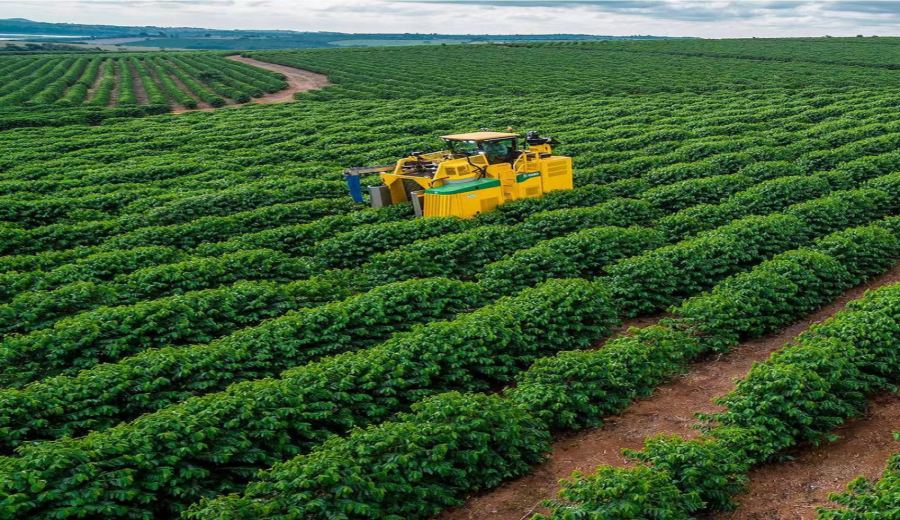
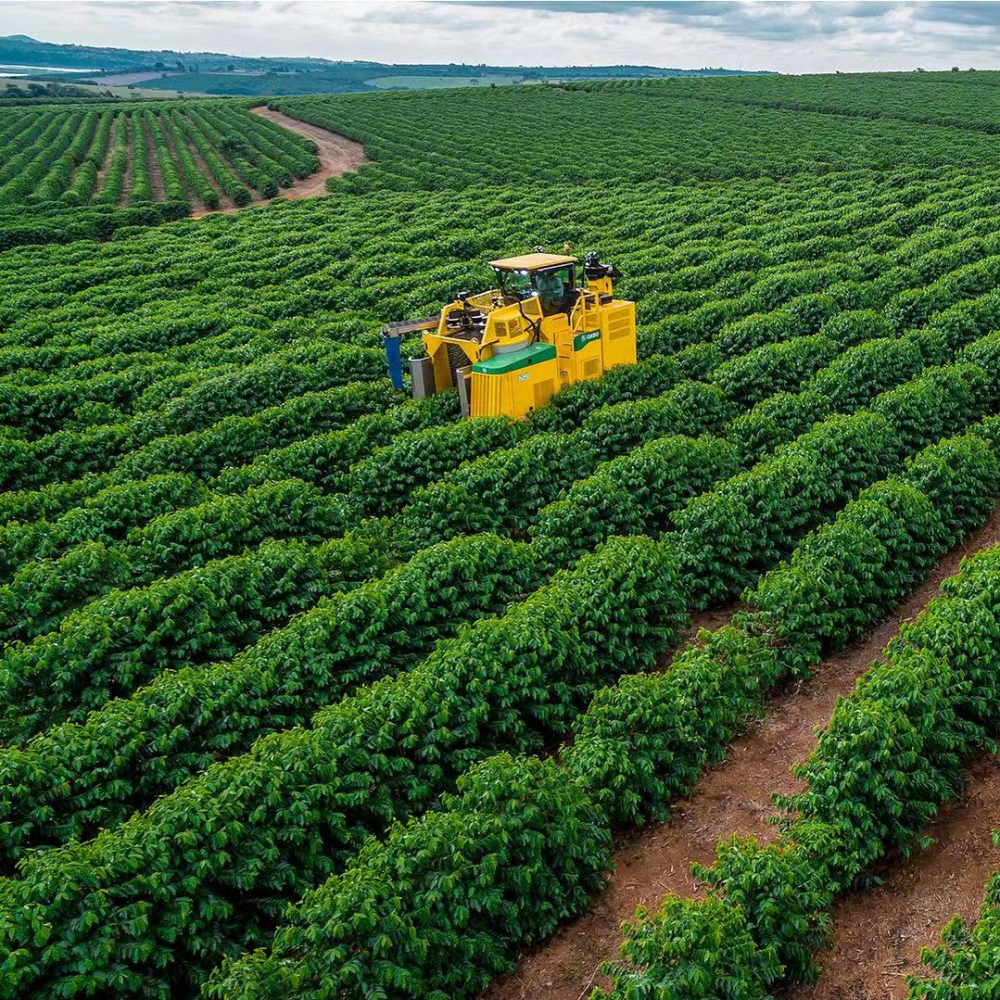
To improve overall quality, Brazil has continuously promoted industry reforms, including establishing a clear coffee grading system and implementing unified mechanized harvesting. These efforts have made coffee quality more stable and consistent. Meanwhile, Brazil’s massive production volume gives it significant influence in the global commercial coffee market.
In the selection of one coffee brand, two Bourbons from different Brazilian regions are particularly representative: one is Red Bourbon from the Cerrado region of Minas Gerais, and the other is Yellow Bourbon from Fazenda Rainha in the Mogiana region of São Paulo.
The Cerrado region is located in the highlands of Minas Gerais, featuring fertile soil and moderate altitude, and is known as a renowned high-quality coffee-producing area in Brazil. The Red Bourbon produced here is celebrated for its clear sweetness, rich body, and high cleanliness. It is often used for single-origin brewing or as a base bean for espresso blends, showcasing the classic profile of Brazilian coffee.
Fazenda Rainha (Queen Estate), owned by the Carvalho Dias family, has achieved remarkable success since the first Brazilian COE competition in 1999, winning awards more than 12 times within ten years. In 2004, it even swept the championship, 9th, and 11th places—an extraordinary accomplishment. The Yellow Bourbon grown on this estate naturally boasts distinct sweetness and clean flavor. Through the natural sun-drying process, its fruitiness and sweetness are enhanced, with soft acidity that perfectly balances the overall profile. It carries tropical fruit notes and is a highly representative Brazilian specialty coffee.
For brewing, it is recommended to use a Kono filter, with a water temperature of 88°C, a coffee dosage of 15 grams, a coffee-to-water ratio of 1:15, and a grind size of medium-fine (70–75% passing through a Chinese standard No. 20 sieve). Use a three-stage pour over method: start with a 30-second bloom using 30 grams of water, then pour in small streams until reaching 125 grams for the first pour. When the water level is about to expose the coffee bed, continue pouring to 225 grams, then stop. Wait for the water level in the filter to drop again before removing the filter. The total extraction time should be controlled between 2 minutes 05 seconds and 2 minutes 15 seconds.
Brewing Fazenda Rainha Yellow Bourbon with these parameters highlights a sugarcane-like sweetness and the soft texture of black tea, paired with distinct nutty and fruity sweetness. The acidity is balanced and not overly sharp, with a lingering finish of rich chocolate and nutty aromas. The overall mouthfeel is smooth and delicate. On the other hand, Cerrado Red Bourbon opens with a clear sweetness accompanied by subtle lemon aroma. The mid-palate features prominent nutty flavors, transitioning into a deep dark chocolate tone in the finish. The overall performance is round and full-bodied, making it ideal for coffee lovers who prefer a balanced taste.
The above content is compiled by CoffeeHunters, a coffee news website.


