







Introduction:Yirgacheffe is the go-to choice for many coffee newcomers exploring specialty coffee, thanks to its bright acidity and refreshing aroma. This article delves into the production background of Ethiopia’s Yirgacheffe Sun-Dried Red Cherry, its processing classification and grading, the origin of the Red Cherry Project, and provides a detailed breakdown of roast curve design, cupping flavor profiles, and practical pour-over parameters—taking you from origin to cup to fully understand this classic bean hailed as the “fruit bomb.”
Yirgacheffe in Ethiopia has long been one of the starting points for specialty coffee enthusiasts seeking to explore coffee with diverse flavor layers. A well-known shop in the region offers a Yirgacheffe Sun-Dried Red Cherry that, with its outstanding cost-performance ratio and vivid fruity character, has attracted many first-time specialty coffee drinkers. Contrary to the common perception that “black coffee equals bitterness,” this coffee showcases bright lemon acidity and the aromas of cherries and berries—tropical fruits that completely redefine preconceived notions about coffee.
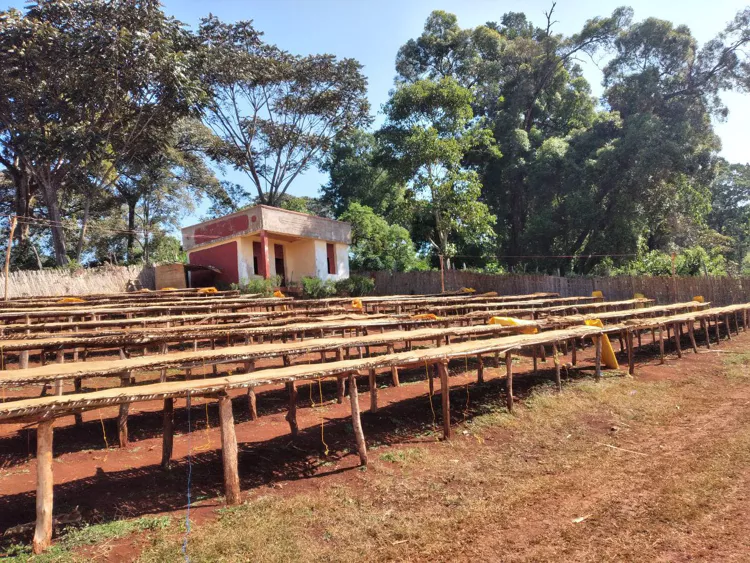
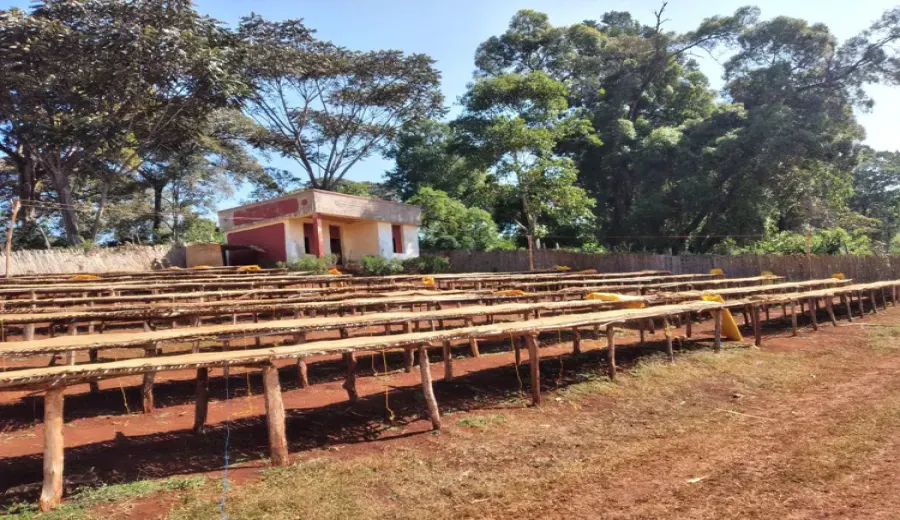
Although administratively once part of Sidamo, Yirgacheffe was eventually designated as a separate region due to its unique processing style and highly distinctive flavor profile. The area's average elevation ranges between 1,700 and 2,100 meters. The high altitude, combined with microclimatic variations, gives the coffee here uniquely fruity notes and crisp acidity. In addition to the main Yirgacheffe region, neighboring micro-regions such as Kochere, Gelena Abaya, and Wenago are often grouped under the same classification due to their similar flavors, with Kochere even sometimes directly regarded as part of Yirgacheffe. The entire area consists of approximately 28 small cooperatives, mostly run by smallholder farming families. Cultivation often takes place in backyard mixed plantings, and while yields are modest, the coffee is exceptionally distinctive.
In the early days, almost all Yirgacheffe coffee was processed using the traditional African natural (sun-dried) method, preserving the full fruity fermentation characteristics of the pulp. With the introduction of washed processing techniques from Central and South America, the region gradually developed a washed style with greater clarity and bright acidity, establishing Yirgacheffe’s dual representation in both washed and natural categories. For example, a certain shop’s Gu Ding Ding washed Yirgacheffe exhibits light floral notes, citrus acidity, and a green-tea-like finish—making it highly suitable for those just beginning their specialty coffee journey.
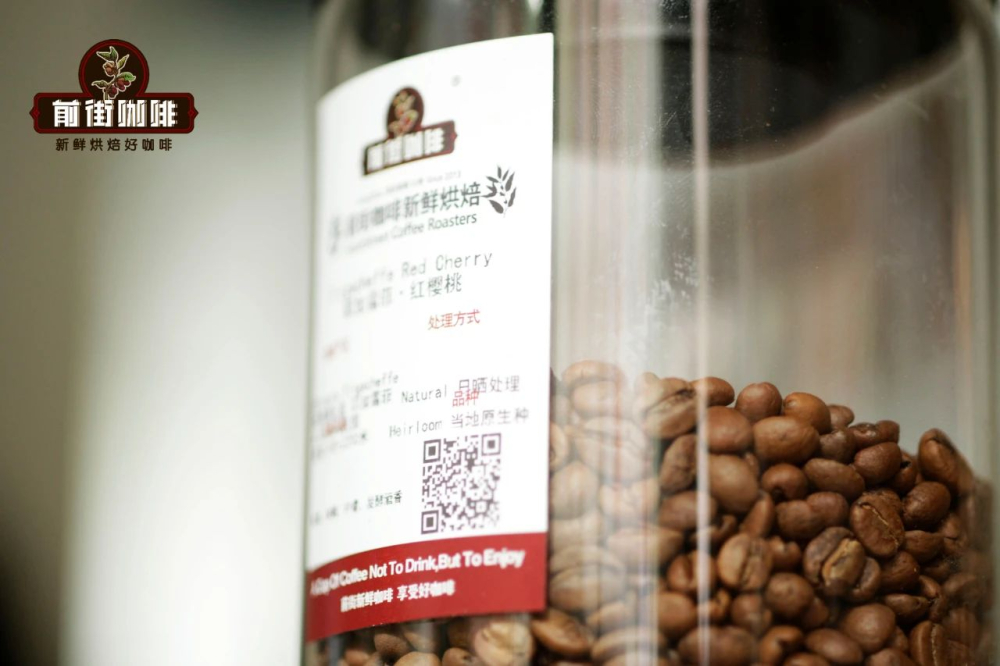
Yirgacheffe coffee beans are graded based on processing method, bean size, and defect rate. For washed beans, the grading mainly follows the standards of the Specialty Coffee Association of America (SCAA), divided into Grade 1 (G1) and Grade 2 (G2)—the lower the number, the higher the quality. A certain shop’s G1 washed Yirgacheffe showcases a highly representative blend of citrus and floral flavors, often being many beginners’ first taste of Yirgacheffe. As for sun-dried Yirgacheffe, it is categorized into G1, G3, G4, and G5, with G1 also being the highest grade, often characterized by intense fruity aromas and fermentation notes. Some first-time tasters are even surprised to discover that coffee can possess such vivid fruit characteristics.
It’s worth mentioning that most Yirgacheffe coffee beans are of local heirloom varieties, with relatively small bean size typically ranging between 14 and 15 mesh, and a rounder shape. Compared to commercial beans, these appear denser and more refined. Although these heirloom varieties may not match some improved breeds in yield or disease resistance, their flavor performance is a key reason why many specialty coffee farmers insist on preserving them.
When discussing a certain shop’s Yirgacheffe Sun-Dried Red Cherry, one cannot overlook the “Red Cherry Project (Operation Cherry Red Project, ORC).” This initiative originated in 2007, launched jointly by Dutch trader Trabocca and local Ethiopian farmers, with the goal of encouraging smallholders to focus on harvesting only fully ripe coffee cherries through incentive mechanisms to enhance the final coffee quality. During the harvest season, Trabocca designates specific microclimate zones and requires farmers to harvest only 100% red, ripe coffee fruits, with each batch weighing around 1,500 to 3,000 kilograms. The project also emphasizes meticulous sorting processes to ensure every bean meets high-quality standards.
The Red Cherry Project includes a variety of processing methods such as washed, natural, semi-washed, semi-natural, and experimental processes. In addition to Yirgacheffe, the producing regions also include Sidamo, Pungu Forest, Lekempti, Kembaata, Illubabor, Harrar, Limu, and even Golocha, added in 2011. These coffees are not only rich in flavor but also showcase the diverse potential of Ethiopian coffee. After initial processing at origin, Trabocca further conducts rigorous evaluations in cupping labs in both the Netherlands and Ethiopia. Those scoring above 88 points not only earn high bonuses for the farmers, but Trabocca also provides loans, equipment, and technical support—creating a positive cycle that ensures excellence at every step from origin to roast.
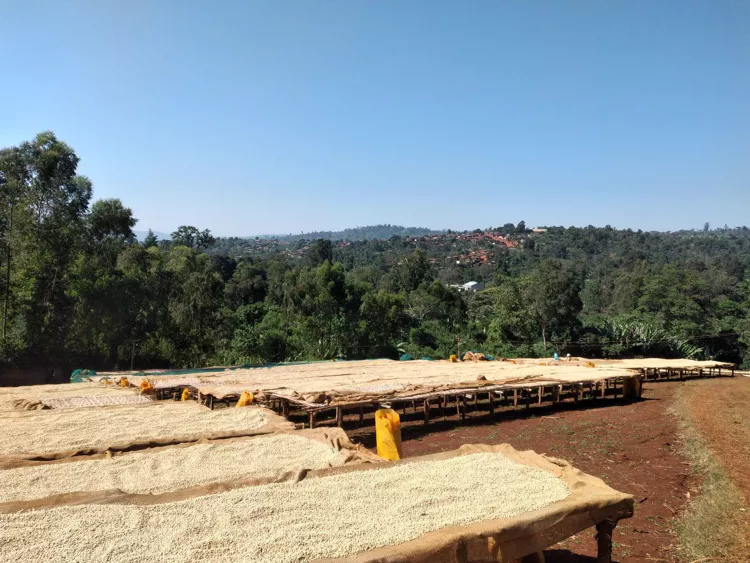
This strictly controlled natural processing allows a certain shop’s Yirgacheffe Red Cherry to retain abundant pulp fermentation aromas, resulting in intense berry and tropical fruit profiles. It has become the preferred base for many baristas and roasters aiming to craft a “fruit bomb” flavor profile.
To fully highlight the floral and fruity characteristics of this coffee, a certain shop’s roaster opted for a light and slow roast strategy to preserve as much of the origin flavor as possible. During the actual roasting process, a Yangjia 600g semi-direct-fire roaster was used, and three different roast curves were designed. The final chosen plan was as follows: beans were loaded at 200°C with the air damper set to 3.5. Initially, the heat was maintained at 160°C, then adjusted to 130°C when the temperature dropped to 148°C. At 5 minutes and 3 seconds, when the bean temperature reached 151°C and the beans turned yellow, the grassy notes had faded and dehydration was complete. The heat was then adjusted to 105°C and the air damper opened to 4. Around the 8-minute mark, the beans showed clear wrinkles and dark spots, and coffee aromas emerged, signaling the approach of first crack. At 9 minutes and 7 seconds, when first crack began, the heat was reduced to 70°C and the air damper fully opened. The roast was finished at 194°C.
Cupping results show that this Yirgacheffe Red Cherry has a rich dry fragrance with pronounced fruit aromas such as strawberry, mango, and apricot jam. The wet aroma presents a sweet syrupy texture, reminiscent of apricot puree blended with honey and chocolate. The flavor is refreshing on the palate, with bright and lively acidity, medium body, and an overall balance akin to fruit-infused black tea. The finish carries notes of chocolate, vanilla, cream, and a hint of alcohol, with a lingering sweetness, clean mouthfeel, and smooth texture—making it a coffee with rich flavor layers and high recognizability.
For brewing recommendations, a V60 filter cone is suggested, paired with medium-fine grind (approximately 80% passing through a Chinese standard No. 20 sieve), 15 grams of coffee, a 1:15 coffee-to-water ratio, and water temperature controlled at 90–92°C. Use a pulsed pouring technique: start with a 30-second bloom using 30 grams of water, followed by pouring 125 grams of water in small streams in a circular motion around the center. As the water level drops, continue pouring to reach 225 grams total, with an overall extraction time of about 2 minutes. This approach fully releases the berry fermentation aromas and fruity acidity-sweetness, ensuring every sip is full of surprises.
The above content is compiled by CoffeeHunters, a coffee news website.


