







Introduction:Geisha (Geisha) coffee beans are renowned for their unique floral and fruity aromas and high quality, often regarded as the pinnacle of specialty coffee. However, the term "艺伎" (Geisha in Chinese phonetic translation) is also commonly seen in the market, leading to confusion. Are Geisha and 艺伎 the same variety? Why is Panamanian Geisha particularly revered? This article delves into the origins of the Geisha variety, its flavor characteristics, and explains in detail the grading differences between Hacienda La Esmeralda’s Red Label and Green Label, helping you comprehensively understand this top-tier coffee—from origin and processing methods to tasting.
Geisha (Geisha), a name almost synonymous with premium flavor in the specialty coffee world. Many coffee enthusiasts’ first encounter with Geisha is often stunned by its delicate floral notes, bright acidity, and multi-layered fruitiness. However, in Taiwan or some Chinese-speaking markets, this coffee bean is also referred to as "艺伎", leading to the question: Are Geisha and 艺伎 the same coffee, or is there a difference?
The answer is: Geisha and 艺伎 are actually the same variety, except that "Geisha" is the transliteration of the English "Geisha", while "艺伎" stems from the fact that "Geisha" shares the same spelling as the Japanese word for "geisha". As a result, it is commonly referred to as such in Taiwan. Regardless of the name, this coffee variety, originating from Ethiopia but shining brightly in Panama, has become a dream coffee for coffee lovers around the world.
The history of Geisha dates back to 1931, when it was discovered in the wild forests of the Kaffa region in southern Ethiopia, originally in search of new disease-resistant varieties. These coffee trees originated from nearby Geisha Mountain, hence the name. Subsequently, it was introduced to Kenya, Uganda, and Tanzania for research. In 1953, this coffee variety, designated as T2722, arrived at CATIE, the Tropical Agricultural Research and Higher Education Center in Costa Rica. Although some farms conducted trial plantings, it was largely overlooked due to its relatively fragile plants and low yield.
It wasn’t until the 1960s, when CATIE distributed T2722 to coffee farmers in Panama, that Geisha began to take root in Panama. What truly brought Geisha to prominence was the Peterson family, founders of Hacienda La Esmeralda in the late 1990s. They purchased a farm called Jaramillo, located at high altitude, where the coffee trees were generally infected with leaf rust. However, Peterson noticed that the Geisha trees among them were relatively healthy, so he began to cultivate Geisha separately and gradually increased the planting altitude.
In 2003, Hacienda La Esmeralda conducted its first cupping of Geisha, and the results were astonishing: intense floral aroma, clean taste, and a finish with distinct citrus, bergamot, and berry notes, showcasing an extraordinary personality. In 2004, this coffee won the top prize in the Best of Panama (BOP) competition, thereby establishing its status as a "top-tier specialty coffee".
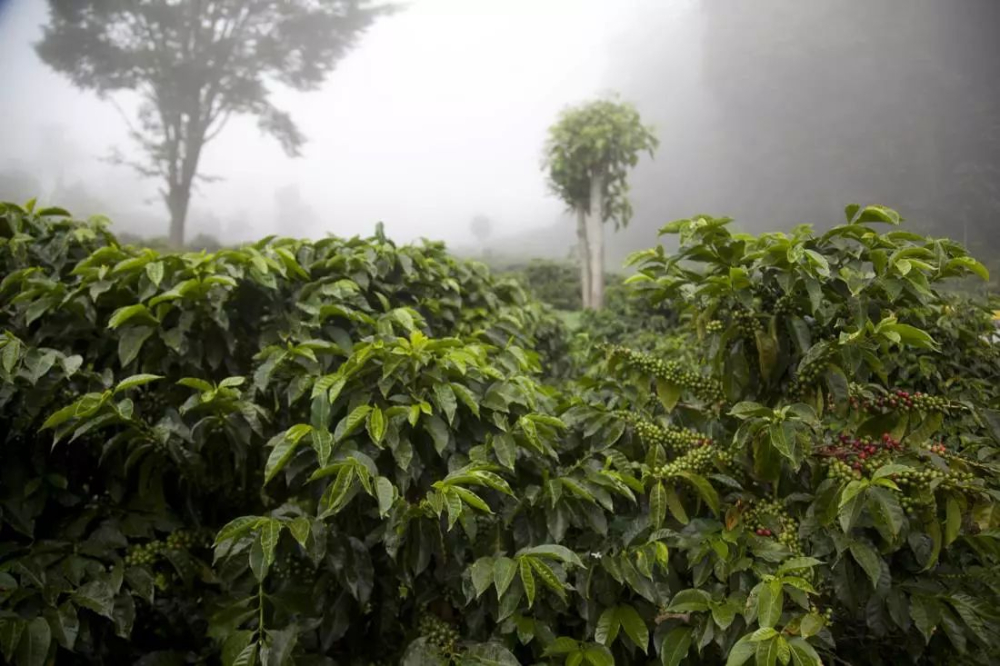
So, why is Panamanian Geisha particularly famous? In fact, even if the same variety is planted, the terroir, processing techniques, and microclimate of the region can greatly influence the final flavor profile of the coffee. The Boquete region of Panama, located in Chiriquí Province near the Barú Volcano, sits at an altitude of about 1000-2000 meters, with a cool and foggy climate, significant day-night temperature variations, and fertile soil, providing an ideal growing environment for Geisha. Geisha produced here often features delicate floral notes, tropical fruits, and citrus tones, with bright acidity and rich layers, frequently earning praise in international coffee evaluations.
Geisha has extremely high requirements for its growing environment, needing high altitude, moderate shade, and fertile, well-drained soil. Due to its thin leaves and shallow root system, Geisha has lower efficiency in absorbing water and nutrients, resulting in a yield far lower than other common varieties such as Caturra or Castillo. It is understood that the yield of a single Geisha coffee tree is less than half that of Caturra, which is also a major reason for its high price.
Returning to the popular Hacienda La Esmeralda Geisha on the market, the most talked-about is its Red Label and Green Label grading system. The so-called "Red Label Geisha" refers to the Esmeralda Special grade, typically sourced from the Jaramillo and Cañas Verdes lots, grown at altitudes of 1600-1800 meters, often scoring over 90 points in cupping, making it a premium, auction-level Geisha. These coffee beans are mostly processed using the natural (sun-dried) method, emphasizing intense floral and fruity aromas and sweetness, with layered flavors such as lemon, honey, berries, and mango, making it a favorite among many coffee connoisseurs.
As for the "Green Label Geisha", it belongs to the Private Collection series, also sourced from high-altitude regions, but generally without specific lot designation and not participating in auctions. Although its overall grade is slightly lower than the Red Label, it still retains the classic flavors of Geisha, such as fresh lemon, grapefruit, and berry notes, sometimes with an oolong tea-like aftertaste. The Green Label is mostly washed processed, suitable for those who prefer a cleaner, more pronounced fruity acidity.
The above content is compiled by CoffeeHunters, a coffee news website.


