








Introduction:Yellow Bourbon is a rare Bourbon variety unique to the state of São Paulo in Brazil. Its ripe fruits display a distinctive orange-yellow hue, and it is celebrated for its sweet profile, vibrant aromas, and balanced acidity. This article traces the historical journey of the Bourbon variety from Réunion Island to Brazil, explores the genetic basis of the Yellow Bourbon’s coloration and its advantages at high altitudes, and delves into the details of the sun-drying process used at Fazenda Rainha. It also provides medium-dark roast pour over parameters and practical brewing tips to help readers master the extraction essentials of this COE-winning variety.
Yellow Bourbon (Bourbon Amarello)is a Bourbon variety unique to the state of São Paulo in Brazil. Its ripe cherries exhibit a unique orange-yellow color instead of the typical red seen in most Bourbons, hence the name. This coffee showcases elegant sweetness, rich aromatics, and bright acidity in the cup, making it a hidden gem cherished by many specialty coffee enthusiasts.
This article will begin with the origins of the Bourbon variety, tracing its spread fromRéunion Island (formerly known as Bourbon Island)in East Africa to Brazil, and analyzing the genetic reasons behind the Yellow Bourbon’s distinctive color. It will also discuss the variety’s advantages when grown at high altitudes and why it has consistently performed well in Brazil’sCOE (Cup of Excellence)competitions. Finally, we’ll focus on the sun-drying process at Fazenda Rainha and offer pour over brewing recommendations under medium-dark roasting, including detailed parameter settings and step-by-step guidance.
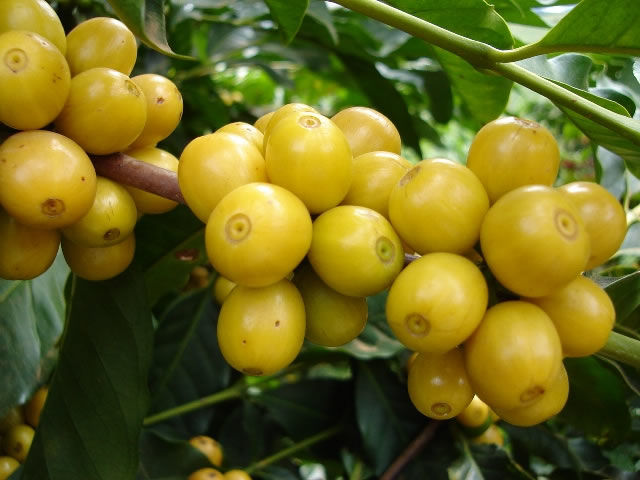
Yellow Bourbon is an ancientmutation of the Bourbon variety within Arabica coffee.Compared to the more common Red Bourbon, its most notable characteristic is the orange-yellow color of its ripe cherries. This color difference is primarily determined by genetic selection and is closely related to the high-altitude growing environment. At higher elevations, Yellow Bourbon accumulates more fructose, developing a sweet and juicy flavor profile with refined complexity.
The Bourbon variety originated onRéunion Island,which was a French territory in the 18th century and was originally called Bourbon Island. In the late 18th century, the French introduced round-seeded coffee beans from Yemen to the island. These beans gradually adapted to the local environment and took root. By 1860, Brazil had imported these round Bourbon varieties and subsequently spread them throughout Central and South America, making them one of the most important parent varieties in the region.
Coffee beans of the Bourbon variety typically havea short, round, and full shapewith high density. Especially when grown at high altitudes, they can exhibit remarkable sweetness and bright acidity. Compared to Typica, Bourbon not only shares similar excellent flavor qualities but also offers stronger resistance to coffee leaf rust, making it a preferred choice for many coffee farms.
Generally, as Bourbon cherries ripen, their color transitions from green to yellow, then to red, and eventually deep red—hence the name “Red Bourbon.” However, Yellow Bourbon is a rarer mutation that does not turn red upon ripening but instead displays a warm orange-yellow hue. This unique coloration gives it a highly distinctive presence in the market.
Fazenda Rainha (Queen Estate) is located in Brazil’sMogiana region,at an altitude ranging between 1400 and 1950 meters. This high-altitude environment provides ideal growing conditions for Yellow Bourbon. The farm employssun-drying processingto fully preserve the sweetness of the fruit pulp during drying, thereby enhancing the richness and layered complexity of the final cup profile.
It is worth noting that traditional sun-drying methods, if not handled properly, can easily produce off-flavors such as earthiness or over-fermentation. To avoid these issues, Fazenda Rainha first subjects the coffee cherries toflotationin water tanks to remove unripe or defective beans. Then, they use African raised beds for small-batch sun-drying, ensuring even heat exposure through frequent turning. This meticulous process significantly improves the purity of sweetness and clarity of flavors.
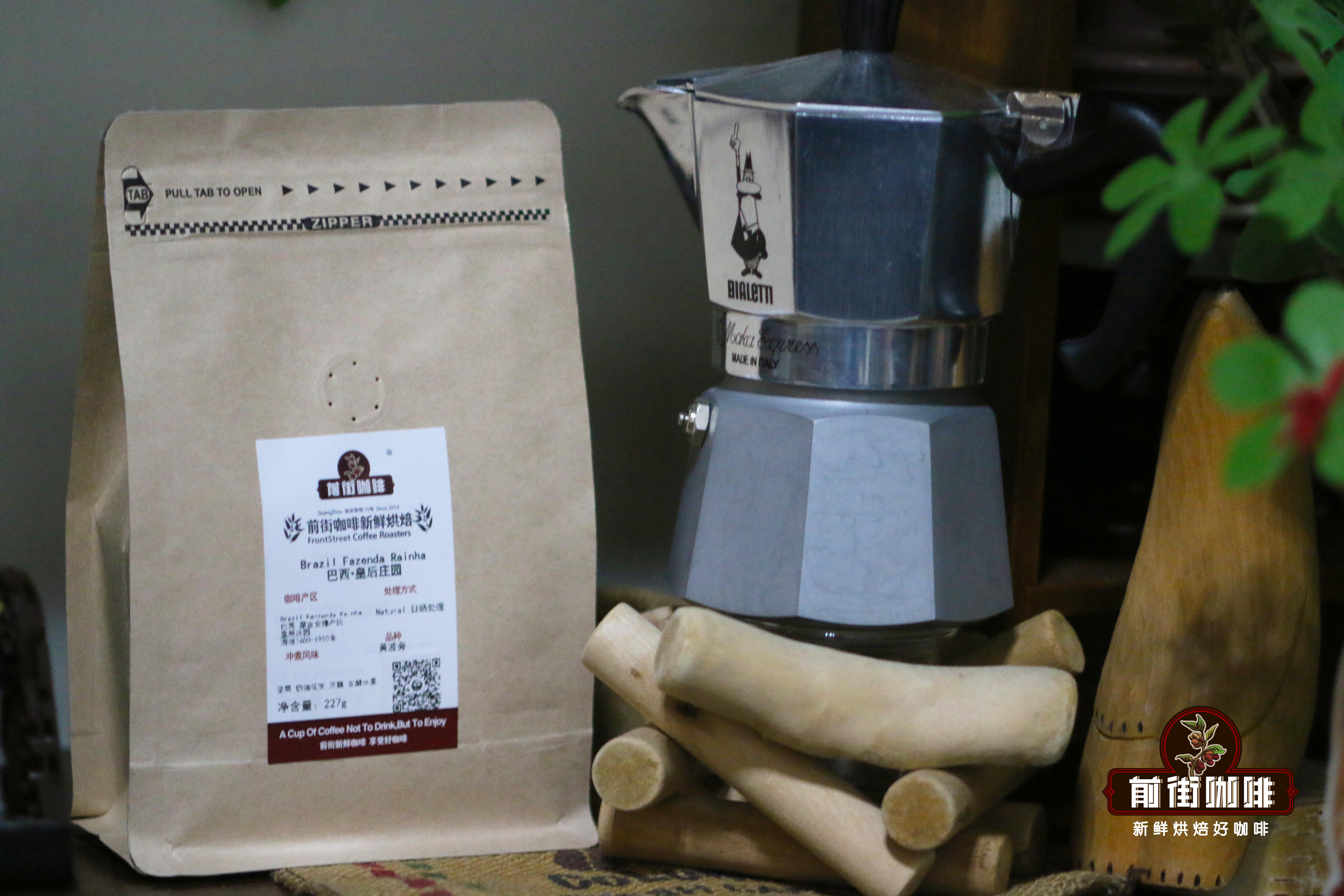
In terms of roasting, since Yellow Bourbon beans accumulate abundant glucose at high altitudes and possess relatively high density, one brand opts for amedium-dark roaststrategy. This level of roast preserves the classic bold and mellow aroma typical of Brazilian coffee while fully highlighting the inherent sweetness of the Bourbon variety. The roasted beans develop a looser internal structure, increasing water absorption after grinding. Therefore, special attention should be paid to parameter adjustments during pour over brewing to avoid over-extraction and undesirable bitterness.
For the medium-dark roasted Yellow Bourbon from Fazenda Rainha, it is recommended to usewater at 87–88°C,aKONO filter cone,andmedium grind size (70% passing rate through a Chinese standard No. 20 sieve).The specific coffee-to-water ratio is1:15,with15 grams of coffee groundsand a total brew water volume of225 grams.The pour over process is suggested in three stages: start with a bloom using twice the coffee weight in water for about 30 seconds; then pour in a small, circular motion from the center outward until reaching 125 grams for the first pour; once the coffee bed has settled halfway down the cone, continue pouring to 225 grams. The entire extraction should take around 2 minutes.
The final brewed Yellow Bourbon coffee exhibits a complex aroma of dark chocolate, cream, peanuts, and nuts. On the palate, it delivers a sugarcane-like clean sweetness, with a balanced body and bright flavors. The aftertaste is long-lasting and memorable. This coffee is not only ideal for those who enjoy pronounced sweetness but also serves as an excellent entry point for exploring high-altitude Brazilian Bourbon varieties.
The above content is compiled by CoffeeHunters, a coffee news website.


