







Introduction:Dive deep into Kenya’s rigorous coffee grading system and uncover the unique flavor profiles of AA and AA TOP grades. This article takes you through bean grading standards, the auction system background, as well as practical hot and iced pour-over parameters and techniques, offering a comprehensive exploration of Kenya coffee’s bright acidity and berry complexity. You’ll also gain professional-level pour-over skills to brew juicy, high-quality Kenyan coffee at home.
Kenyan coffee holds a distinguished place in the global specialty coffee market, thanks to its vibrant acidity and delicate, captivating berry notes. These distinctive flavor characteristics are closely tied to Kenya’s government-regulated, strict grading system. This article will detail the eight-tier grading system of Kenyan coffee beans, from E to MH/ML, offer an in-depth analysis of the flavor profiles of the highly acclaimed AA and AA TOP grades, and combine hands-on pour-over brewing to guide you from hot to iced brewing—fully experiencing Kenya coffee’s signature juiciness and layered complexity.
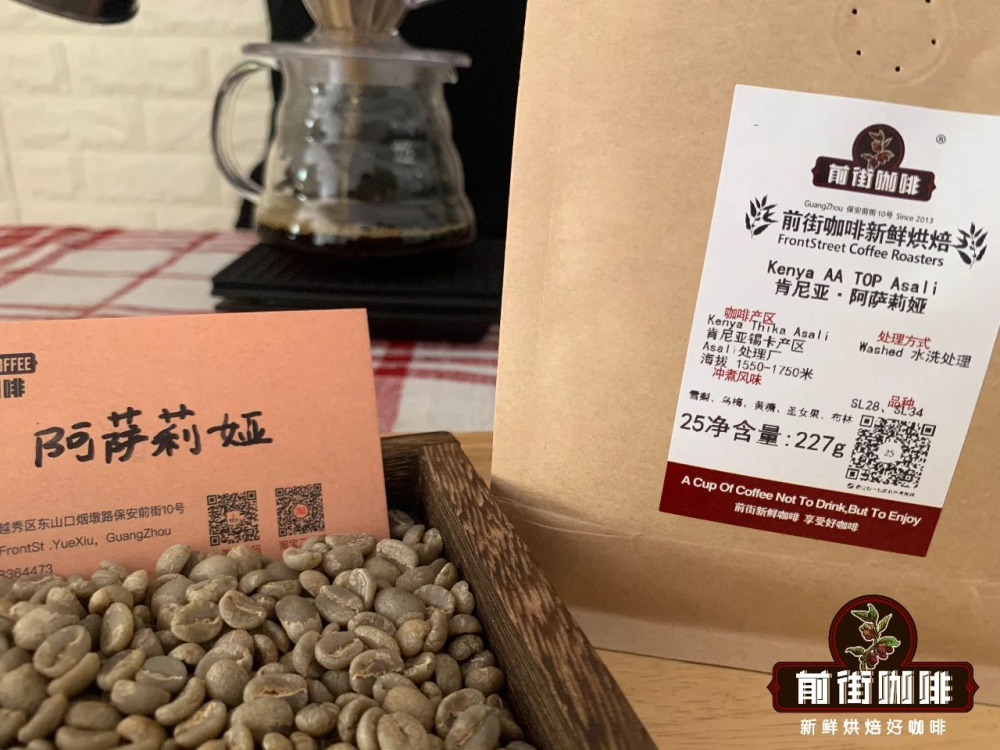
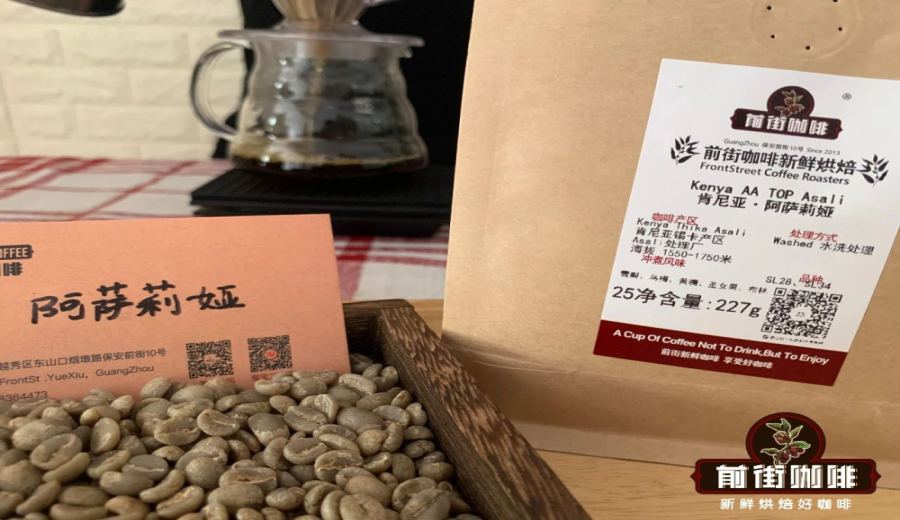
In one brand’s classic product line, the AA grade is regarded as the pinnacle of Kenyan coffee quality, with only the finest of the fine making it into this classification. Among them, the brand has a particular fondness for a Kenyan AA TOP from the Thika region. The term “TOP” is an additional grade designation added by Kenyan coffee traders after cupping, indicating that the batch’s quality surpasses even other AA-grade beans. This coffee is processed using the K72 double anaerobic fermentation method, featuring bright and lively acidity, with delicate berry and red wine layers fully unfolding on the palate—truly impressive. During brewing, rich berry aromas are quickly released, and upon tasting, you can distinctly perceive flavors of cherry tomatoes and black plums. The bright acidity and sweetness linger long on the palate, with the finish offering a creamy, sweet smoothness.
Kenya’s coffee grading system was established under a government-led quality control and farmer support policy. After harvest, the official body “Kenya Coffee Board” (CBK) oversees the entire process. Established in 1933, CBK regularly holds auctions at the Nairobi Coffee Exchange, with the entire system strictly regulated by the government. The grading criteria are primarily based on three factors: “green bean size,” “density/weight,” and “bean shape,” all of which are key indicators influencing auction prices.
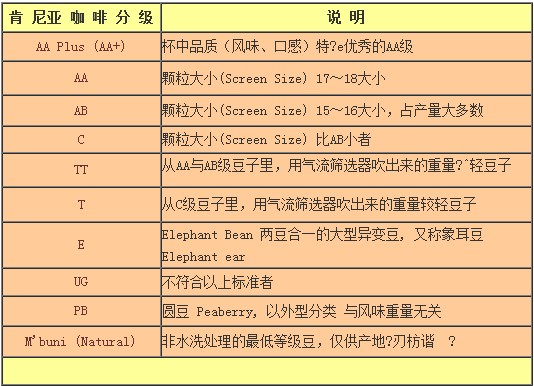
Since beans of similar size roast more evenly, helping improve roast consistency, Kenya’s grading system uses bean size and cupping scores as its main criteria. Based on green bean size, shape, and hardness, the beans are broadly divided into the following eight grades: E, PB, AA, AB, C, TT, T, MH/ML.
Grade E, also known as Elephant Bean, features notably large beans but is relatively rare in the market. PB stands for Peaberry, where instead of the usual two seeds per coffee cherry, only one small, oval-shaped seed develops. AA is Kenya’s most common high-end grade, typically grown at altitudes above 6,600 feet (about 2,000 meters), with bean size at 17/18 mesh, known for stable quality and outstanding flavor. AB is a blend of A and B beans, with bean size at 16/17 mesh. Grades below C show significantly smaller bean sizes, with C being 14 mesh or smaller. TT consists of lighter-density beans sorted from AA, AB, and E via air separation; although lower in density, they still hold specialty potential. T grade beans are small and of poor quality, while MH/ML mostly comprises overripe, low-quality sun-dried beans.
A self-roasted Kenyan Assalya coffee bean from one brand falls under the well-praised AA grade, sourced from the Thika region and processed using Kenya’s unique 72-hour double washed method. The variety is the classic SL28 and SL34—favorites among coffee enthusiasts who love bright acidity. For first-timers, it’s recommended to use a hot pour-over method to brew black coffee, allowing you to directly experience its crisp, bright berry and juice-like flavors.
The brand recommends the following hot pour-over parameters: For lightly roasted, high-altitude coffee beans, to fully highlight floral and fruity aromas, use water at 92–93°C, paired with a fine grind passing 80% through a #20 sieve—roughly the coarseness of fine sugar. It’s important to note that coffee bean freshness greatly impacts extraction; choose beans roasted within five days to ensure full flavor expression.
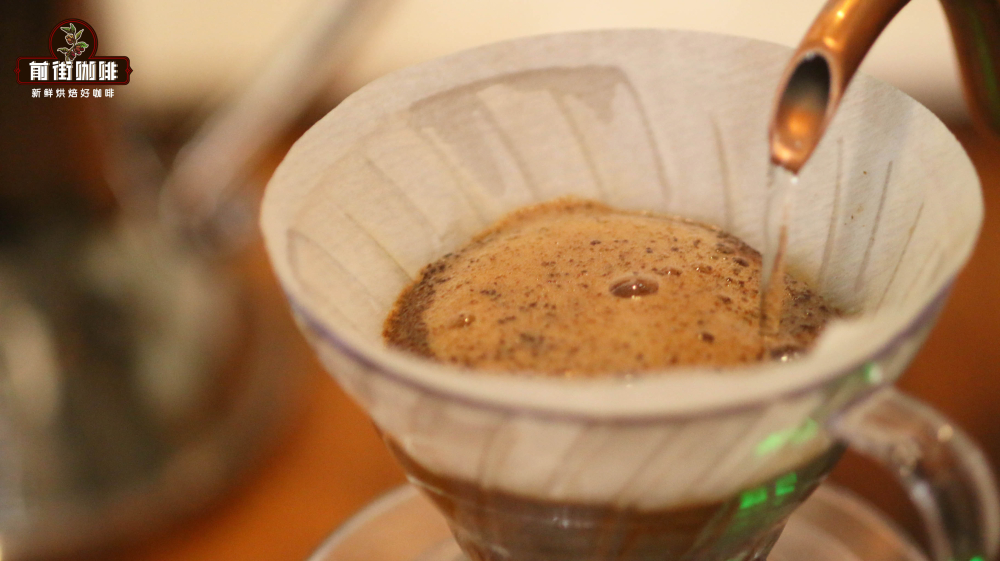
Pour-over recommendation parameters: Use a V60 filter cone, water temperature controlled at 92–93°C, 15g of coffee, a 1:15 coffee-to-water ratio, and a grind size similar to fine sugar (EK43s setting 10, 80% fineness through a #20 sieve). First, pour 30g of hot water for a 30-second bloom. Then add 95g of water to reach a total of 125g, taking about 1 minute. When the water level drops to two-thirds of the coffee bed, add another 100g to reach 225g, taking about 1 minute 35 seconds. Total brew time is around 2 minutes 10 seconds, completing the drip-through.
Flavor profile of hot-poured Kenyan Assalya: During the bloom, you can detect aromas of ripe tomato and flowers. At high temperatures, the cup presents caramel and brown sugar sweetness. As it cools, the acidity of cherry tomatoes and black plums gradually emerges—bright and clear. Body is medium, with abundant juiciness. The overall taste is clean and layered, with excellent sweetness and body, particularly the AA TOP excelling in purity and flavor detail.
Beyond hot brewing, iced pour-over is also an excellent way to experience the sour-sweet juiciness of Kenyan coffee. Many coffee lovers favor its refreshing taste, so iced pour-over techniques are gaining increasing attention. For these medium-light roasted, fruit-acid-forward beans, the brand recommends the “golden ratio” of “coffee grounds (finely ground) + 10x hot water + 5x ice cubes,” along with 91–93°C water temperature, slow circular pouring, and a three-stage extraction method. Total time is kept between 1 minute 50 seconds to 2 minutes to achieve a delicious iced pour-over.
Practical parameter suggestions: Use the brand’s Kenyan Assalya coffee, 15g of coffee, a 1:11 coffee-to-hot water ratio (total 160g hot water), plus 75g of ice. Grind size is fine sugar / EK43s setting 9.5 (similar to C40’s 22nd notch). The V60 filter cone is recommended, using a three-stage pouring technique: First, pour 30g for a 30-second bloom. Then, pour 90g of hot water with a slightly larger stream in a circular motion (total 120g), gently stirring 5 times with a spoon along the inner wall of the filter to promote even extraction. Finally, pour 45g of hot water with a smaller stream and tighter circle. Total brew time is about 1 minute 55 seconds to 2 minutes 5 seconds to complete.
The key to this technique lies in balancing sour and sweet notes: capturing the bright fruit acidity in the early stage while extending the sugary sweetness in the mid-to-late phase, resulting in an iced pour-over experience reminiscent of sipping fruit. Moderate stirring enhances overall extraction uniformity, enriching the layers and completing the mouthfeel.
The above content is compiled by CoffeeHunters, a coffee news website.


