







Introduction:The Yirgacheffe Red Cherry Project is one of the key drivers behind the rise of premium Ethiopian coffee. Through strict quality control and farmer support, it produces sun-dried coffee beans with distinctive flavors. This article delves into the background and operational model of the project, and offers detailed pour over brewing recommendations — including water temperature, grind size, and full instructions — for a particular café’s offering of Red Cherry Natural beans, helping you extract bright acidity and floral-fruity aromas more precisely.
Yirgacheffe has long been known for its unique jasmine-like notes and refreshing citrus acidity, making it an introductory flavor for many newcomers to specialty coffee. For decades, the region primarily relied on washed processing methods, until recently when sun-dried processing regained attention — with the “Red Cherry Project” being a standout example.
Launched in 2007 by Dutch trader Trabocca, this project aims to encourage local farmers to produce higher-quality coffee through financial aid, technical guidance, and rigorous cupping standards. Farmers whose beans score 88 points or above can receive generous returns, significantly boosting their motivation to improve both production and quality control.
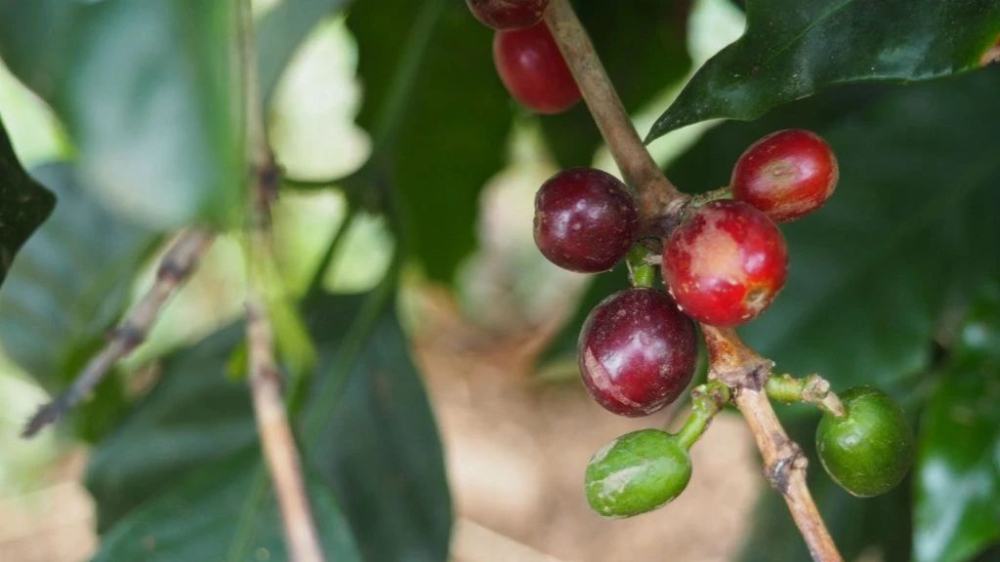
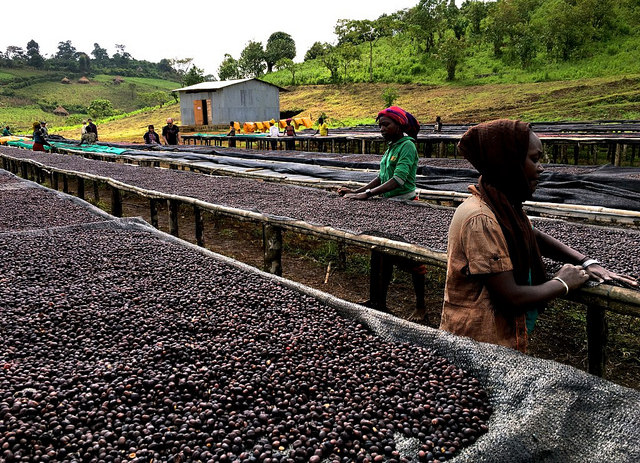
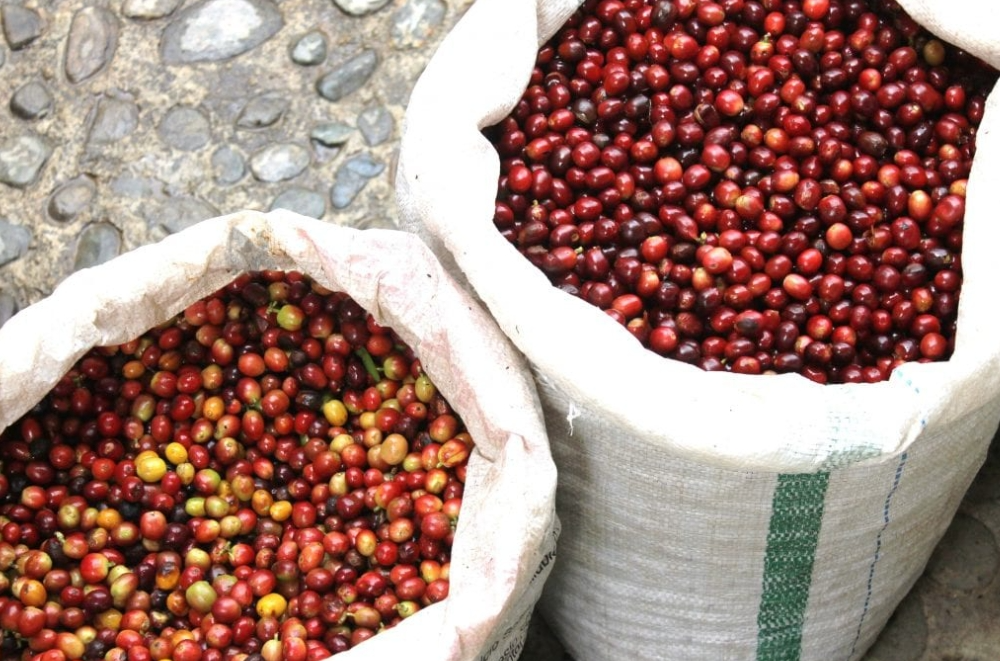
Ethiopia is not only the birthplace of coffee but also one of the world’s most important coffee-producing regions. However, due to economic limitations and poor infrastructure, many coffee farmers have long struggled to earn fair compensation. The Red Cherry Project was born in this context. In partnership with local stakeholders, Trabocca focuses on specific microclimatic zones, requiring farmers to harvest only fully ripe red cherries and limiting single-batch production to approximately 1,500–3,000 kilograms to ensure consistent quality.
In its early stages, the project invested heavily in improving production conditions — including purchasing sun-drying racks in 2008, installing shade nets in 2009, introducing generators in 2010, upgrading transportation roads in 2011, and even establishing a professional cupping lab in 2012 — all of which enhanced overall quality control from harvesting to evaluation.
Beyond hardware, Trabocca also provides interest-free loans to help farmers purchase depulping machines and grading equipment, ensuring more precise sun-drying processes. Ultimately, only batches that pass double cupping in both Addis Ababa and Amsterdam and reach the 88-point threshold are purchased, with farmers rewarded with high prices — creating a positive cycle.
These Red Cherry Project-processed coffee beans are properly stored in GrainPro bags or vacuum-sealed boxes at origin before being exported via the port of Djibouti, ensuring their flavors remain unaffected during transit, ultimately delivering exceptional cleanliness and rich complexity.
The Yirgacheffe Red Cherry Natural beans introduced by a certain café come from the Aletaland Estate, situated at elevations between 1,700 and 2,200 meters. They are made from local heirloom varieties using the sun-dried method, highlighting intense tropical fruit and honey-like profiles. In cupping, these beans exhibit outstanding clarity, with pronounced floral notes, a honeyed sweetness, and a silky-smooth mouthfeel. The acidity is gentle, dominated by cherry and white grapefruit, while the finish lingers with the sweet aromas of hazelnut and honey. Overall, the cup is well-balanced and layered.
Although the Yirgacheffe administrative zone has a relatively small population, nearby sub-regions such as Wenago, Kochere, and Gelena Abaya share similar geography and microclimates, producing coffees with flavors very close to those of central Yirgacheffe. As a result, they are also categorized under the same designation. Compared to neighboring Sidamo, Yirgacheffe coffees often display brighter citrus tones and a silkier body, making them a focal point in the market.
In addition to this Red Cherry Natural, the café’s coffee menu also features classic processed Yirgacheffe offerings such as washed Wolkite, washed Kochere, and washed Guji Gedeb, catering to coffee enthusiasts who enjoy diverse flavor profiles.
For this sun-dried Yirgacheffe Red Cherry, the café recommends using a Hario V60 dripper with a high water temperature of 93°C for pour over brewing, which can efficiently extract floral-fruity aromas and bright acidity. The suggested grind size is 80% passing through a #20 sieve — roughly a medium-fine grind — with a 1:15 coffee-to-water ratio. Use 15 grams of coffee and a total brew water volume of 225 grams.
The specific steps are as follows: First, evenly bloom the coffee grounds with a small amount of hot water (about twice the coffee weight, i.e., 30 grams) for 30 seconds to initiate extraction; then pour water steadily in small streams, moving in a circular motion from the center outward. When the accumulated water reaches 125 grams, perform the first pour break. Once the water level drops below half the filter, continue pouring the remaining 100 grams to complete the final extraction phase. Finally, remove the dripper, gently swirl the coffee in the server, and enjoy a pour over Yirgacheffe with vividly expressive flavors.
Whether you’re new to pour over or already skilled, this Red Cherry Project Yirgacheffe Natural is sure to offer you a uniquely delightful flavor experience — well worth savoring.
The above content is compiled by CoffeeHunters, a coffee news website.


