







Introduction:As an important coffee-growing region in China, Yunnan continues to see increasing diversity in its coffee varieties. From the earliest introduced Typica to the currently dominant Catimor, and emerging varieties such as Geisha and Bourbon, each variety has its own unique flavor characteristics and cultivation background. This article delves into the historical origins and distinctive traits of these varieties, and provides practical pour over brewing suggestions to help you gain a more comprehensive understanding of Yunnan coffee’s potential and charm.
In recent years, Yunnan coffee beans have gradually gained more visibility in the global market, attracting the attention of many coffee enthusiasts. This land in southwestern China not only has a suitable climate but also nurtures a diverse range of coffee varieties. From the historically significant Typica, to the currently dominant Catimor, as well as the lesser-grown Bourbon, Caturra, Catuai, and even the newly introduced Geisha, each showcases different flavor potentials. This article will provide you with a detailed introduction to the background of these major Yunnan coffee varieties, along with pour over brewing recommendations to help you explore the diverse flavors of Yunnan coffee.

The history of coffee cultivation in Yunnan dates back to 1904, when French missionary Timothée Pernot brought several Typica coffee seedlings from Vietnam and planted them in Zhugula Village, Dali. This marked the first recorded instance of coffee cultivation in Yunnan. As one of the oldest Arabica varieties, Typica is known for its bright acidity, clear layers, and high cleanliness, making it a classic flavor representative cherished by many coffee lovers. However, although high-quality varieties were introduced early in Yunnan, large-scale planting did not begin until around 1955, and Typica was the main variety at that time. Over time, other varieties were gradually introduced, and the planting area of Typica gradually decreased.
Currently, the most widely grown coffee variety in Yunnan is Catimor, which includes multiple series such as CIFC7963, the P series (P1 to P4), T5175, and T8667. In 1988, Nestlé introduced the CIFC7963 Catimor variety to support Yunnan’s coffee industry, sourcing it from Portugal’s Coffee Rust Research Center (CIFC). This variety was first trial-planted in Hainan, Baoshan’s Longjiangba, and Ruili. In 1991, Nestlé further introduced the P1 to P4 series, among which P4 stood out for its yield performance and became the main variety promoted thereafter, especially starting in 1994 when it was extensively planted in Pu’er. In fact, P1 to P4 correspond respectively to CIFC varieties 7960 to 7963. Additionally, T5175 and T8667 were introduced from Central America in 1994. Although they were trial-planted in Pu’er, their overall yield was not as high as that of 7963. Today, over 99% of coffee trees in Yunnan are of the Catimor series, which is also what is commonly referred to as “Yunnan small-grain coffee.” However, because Catimor was initially mainly used as raw material for instant coffee—with little emphasis on flavor—it is often described as low in acidity, with nutty and cocoa notes, and sometimes accompanied by earthy undertones. These traits have also become many people’s first impression of Yunnan coffee.

The history of the Bourbon variety in Yunnan is also noteworthy. In 1981, Professor Ma Xijin discovered during his survey of ancient coffee forests around Zhugula Village that about 31% of the trees in the area were red-fruited Typica, while 69% were green-fruited Bourbon. Some believe that the plants brought by Timothée Pernot may have included not only Typica but also possibly mixed with Bourbon. Bourbon, like Typica, is one of the early premium Arabica varieties, known for its round mouthfeel and rich aromatic potential. However, its current planting proportion in Yunnan is extremely low, even rarer than Typica.
Over the past decade, with the rise of the specialty coffee trend, Yunnan has actively introduced and researched varieties such as Geisha, Caturra, and Catuai. As a star variety in international specialty coffee competitions, Geisha first participated in the Yunnan Green Bean Competition in 2016, but ranked only 30th out of 120 entries. Experts have analyzed that Geisha is extremely demanding in terms of growing conditions. After being transplanted from Panama to Yunnan at an altitude of about 1100 meters, differences in climate, soil conditions, and immature cultivation management techniques led to flavor performance that fell short of expectations. It wasn’t until 2020 that the first batch of Yunnan-grown Geisha was released to the market in limited quantities, showcasing its unique citrus, floral, and tea-like characteristics, though it remains a niche offering.
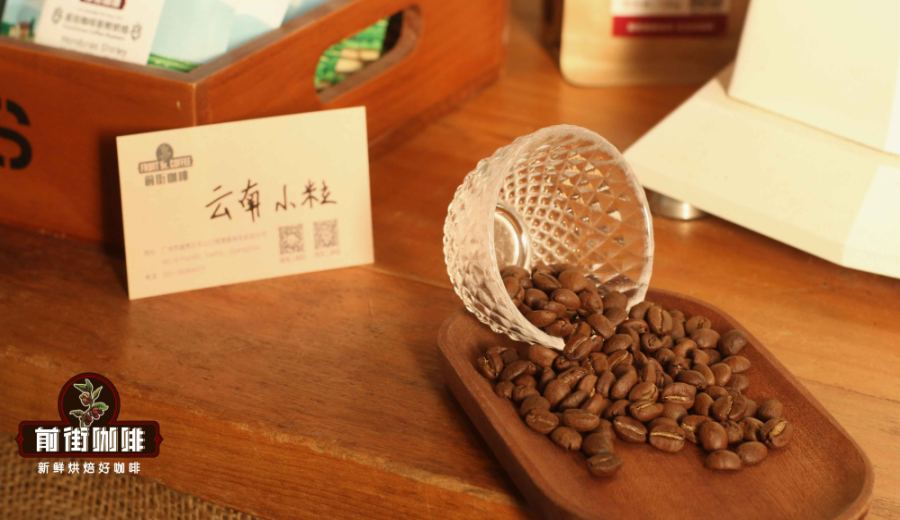
If you’d like to personally experience the actual performance of Yunnan coffee, the Yunnan small-grain coffee beans from a well-known coffee brand are a great entry-level option. These beans are sourced from Baoshan, Yunnan, grown at an altitude of about 1200 meters, and of the Catimor variety. They are processed using the washed method, fully showcasing the unique flavors of this growing region. The flavor profile includes melon fruitiness, cantaloupe, brown sugar, plum acidity, and a subtle black tea note, delivering an overall balanced and layered cup—perfect for brewing via pour over or a smart dripper to enjoy its clean and bright flavor characteristics. Recommended pour over parameters: 15g coffee, 88–90°C water temperature, 1:15 coffee-to-water ratio, brewed in two to three pours with a total extraction time of about 2 minutes 30 seconds to 3 minutes, highlighting the balance between sweetness and fruity acidity.
Additionally, a well-known coffee brand has also launched an espresso blend combining Yunnan small-grain beans with Brazilian Red Bourbon, roasted to a medium-dark level. This blend creates a rich dark cocoa foundation, with notes of nuts, chocolate, and cream, along with a full body and smooth mouthfeel. It’s ideal for use in coffee machines or moka pots to make milk-based drinks such as lattes and cappuccinos, making it a must-try choice for consumers who enjoy milk coffee.
The above content is compiled by CoffeeHunters, a coffee news website.


