







Introduction:The Canet Estate in Costa Rica’s Tarrazú region cultivates Bahía raisin honey-processed coffee beans with small-batch, intensive farming methods, yielding beans rich in intense fruity aromas. This article delves into the details of this coffee—from regional terroir and varietal characteristics to honey processing techniques—and shares professional roasting curves and V60 pour-over practical parameters to help coffee enthusiasts fully grasp the traits of this medium-roast bean with distinct tropical fruit notes, mastering everything from flavor profile to extraction techniques in one go.
Costa Rican coffee is renowned for its full sweetness and layered complexity, with honey processing further amplifying this natural sweetness. This time, we focus on the Bahía raisin honey-processed coffee beans from the Canet Estate in the Tarrazú region, dissecting the secrets behind this popular medium-roast bean among pour-over enthusiasts by examining regional geography, microclimate, varietal genetics, and the interplay of processing methods.
Tarrazú Region: The Perfect Combination of High Altitude and Volcanic Soil
Located south of Costa Rica’s capital, San José, Tarrazú (Tarrazú) is one of the country’s most representative high-altitude coffee regions. This area not only boasts fertile, well-draining volcanic soil but also enjoys cool day-night temperature variations due to its high latitude, providing ideal ripening conditions for coffee cherries.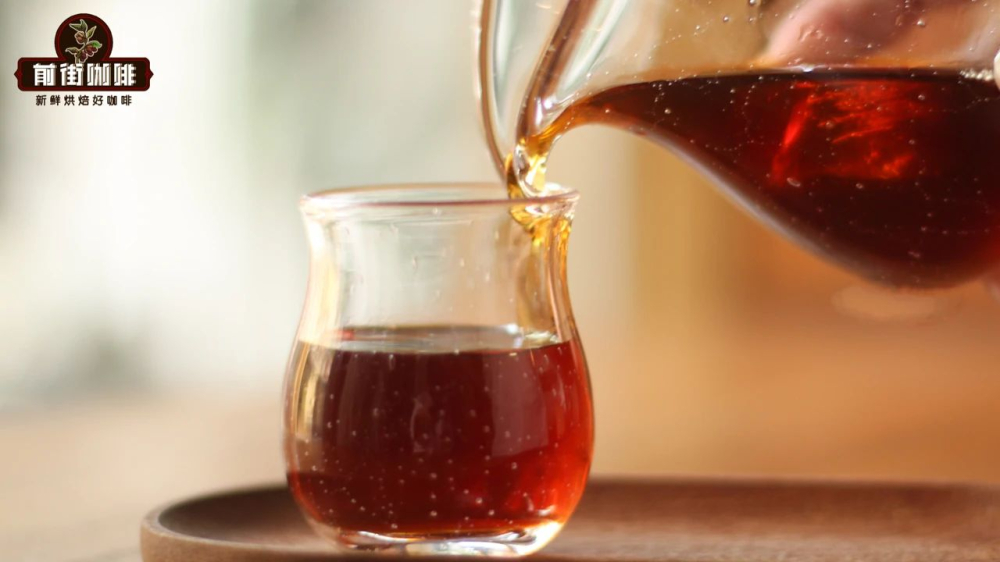
Although not the highest-yielding region, Tarrazú is famed for its consistent and excellent quality, particularly suited for cultivating varieties that can showcase complex flavors. Coffee farmers here often employ red honey, black honey, and yellow honey processing methods, imparting the beans with intense berry sweetness and a full body, with aftertastes often accompanied by notes reminiscent of dried bananas.
Canet Estate: Top-Tier Micro-Lot from Small-Scale Intensive Farming
The Canet Estate (Finca Canet) spans just 5 hectares and is located in the town of San Marcos, operated jointly by the three Robles brothers. This family-run estate focuses on producing small quantities of high-quality green beans, with its own micro-washed processing facility, and specifically chooses to grow coffee at extremely high altitudes, surrounded primarily by passionfruit crops.
The estate only selects fully ripe red cherries for harvesting and processes them in strictly controlled environments to ensure every coffee bean reaches its optimal state. The region’s high altitude and unique microclimate allow the beans to accumulate richer sugars and flavor compounds during ripening.
Varietal Characteristics: Flavor Profiles of Bourbon Variety Caturra and Yellow Catuai
This coffee bean uses two main varieties: the Bourbon variety Caturra (Caturra Bourbon) and Yellow Catuai (Yellow Catuai). As a single-gene mutation of Bourbon, Caturra has strong adaptability and disease resistance. Although it is shorter in stature for easier harvesting, it also inherits the characteristic of “one year of high yield, one year of rest.” Its flavor profile is clear, with bright acidity and more aromatic layers in high-altitude environments.
Yellow Catuai is a hybrid of Mundo Novo and Caturra, with outstanding disease resistance and suitability for growth in high-altitude and windy environments. Both varieties exhibit delicate acidity and clear fruitiness, especially when enhanced by honey processing, which further highlights their tropical fruit and berry notes.
Raisin Honey Processing: The Fermentation Art of Retaining Pulp
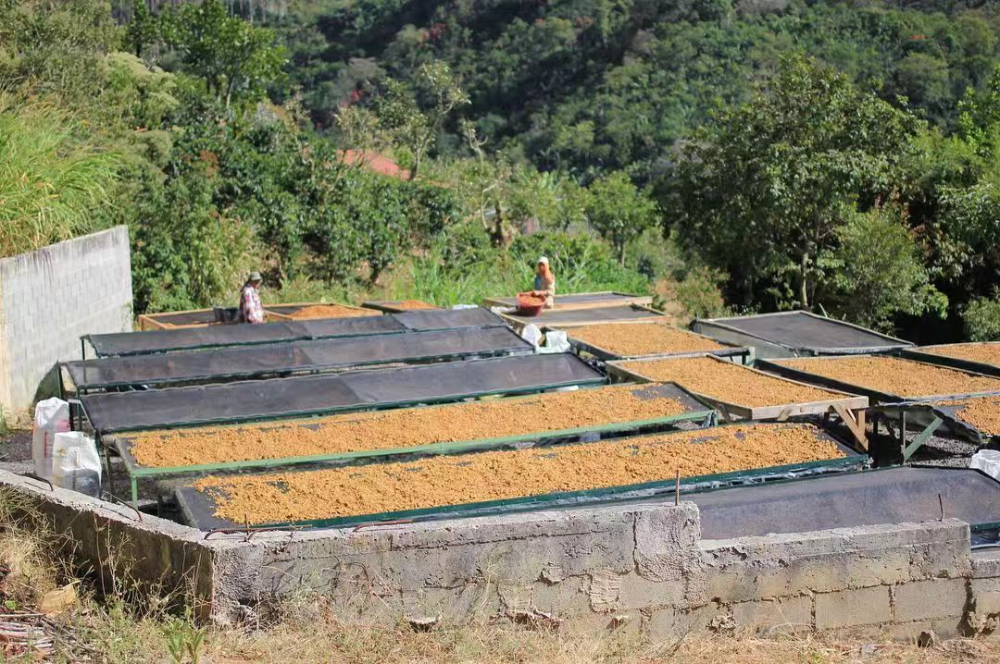
Raisin honey processing is an exceptionally challenging honey processing method, characterized byno washing and retaining 100% of the pulp, allowing the coffee beans to undergo longer fermentation during drying, thereby accumulating intense fruitiness and fermentation aromas. After harvesting, the coffee cherries are first floated to remove unripe or overripe beans, then the coffee fruits with intact pulp are placed on raised beds for at least three days of initial drying before the outer skin is removed, leaving a thick layer of pulp for subsequent slow drying.
This process demands highly precise climate and drying techniques, requiring constant agitation of the beans to ensure even drying, along with strict monitoring of temperature and humidity to avoid over-fermentation or mold. This method imparts the beans with intense sweetness, tropical fruit notes, and a smooth, honey-like mouthfeel.
Roasting Curve and Parameters: Medium Roast Highlights Fruitiness and Fermentation Layers
The roaster used this time is the Taiwanese Yangjia Feima 800N semi-direct-fire model, with a bean inlet temperature set at 180°C, a turning point at 1 minute and 43 seconds at 94.2°C, a yellowing point at 6 minutes and 15 seconds at 151.5°C, first crack starting at 9 minutes and 40 seconds at 183.3°C, with a total roasting time of about 13 minutes, 1 minute and 45 seconds of development after first crack, and an exit temperature of 196°C. Agtron bean color value is 67.7, ground color value is 78, Roast Delta value is 10.3.
Considering that the beans originate from an altitude of 1950 meters, have high moisture content, and are from the 2019 harvest, the roaster chose to gradually reduce the heat and extend the dehydration stage, using a medium roast level to preserve the rich fruitiness and fermentation aromas brought by the honey processing, while ensuring a mellow and balanced mouthfeel.
Cupping Flavor Profile: A Concert of Tropical Fruits and Creamy Sweetness
During cupping, this coffee emits a distinct rice wine fermentation aroma, with the entrance revealing a sweet and sour interplay of ripe tropical fruits and berries, followed by a silky finish of nuts and cream, accompanied by lasting caramel sweetness and subtle floral notes. The overall flavor is well-layered, with sweetness and acidity perfectly balanced, representing the typical performance of high-altitude honey-processed coffee.
V60 Pour-Over Practical Parameters: Step-by-Step Pouring to Restore Details
It is recommended to use a Hario V60 filter, paired with a medium-fine grind size (approximately 70-75% passing through a #20 sieve), with a water-to-coffee ratio set at 1:15 and water temperature controlled at 90°C. First, pour 30 grams of water for a 30-second bloom, then pour in a small circular motion until reaching 125 grams for the first pour, and when the water level is about to expose the coffee bed, continue pouring to 225 grams before stopping. Remove the V60 just before the drainage is complete, with a total extraction time of about 2 minutes and 15 seconds to 2 minutes and 30 seconds.
This parameter setup helps fully extract the sweetness of the pulp and fermentation aromas from the honey-processed coffee while avoiding over-extraction that could lead to bitterness. In practice, it is recommended to fine-tune pouring speed based on actual grind size and water temperature to achieve the best flavor expression.
The above content is compiled by CoffeeHunters, a coffee news website.


