







Introduction:Yirgacheffe is a globally renowned Ethiopian coffee region, famous for its citrus and floral flavor profiles, making it a top choice for many coffee enthusiasts just starting out. This article delves into the regional background of washed Yirgacheffe, the G1 grade standard, the characteristics of native varieties, and the processing methods. It also provides practical pour over parameters and flavor experience descriptions to help you choose the right beans and brew a great cup.
Yirgacheffe is one of the classic regions recognized in the coffee world, producing beans known for their bright acidity, citrus and lemon notes, delicate floral aromas, and clean taste. Coffees from this region often carry the fresh scents of jasmine and white flowers, with rich layers of sweet and sour flavors, making them a popular starting point for many pour over lovers. This article will provide a detailed introduction to the regional characteristics of washed Yirgacheffe, the G1 grading system, the origins of native varieties, and the advantages of washed processing, along with pour over recommendations and actual flavor profiles to help you fully understand this classic coffee.
 Even if you don’t prefer overly acidic coffee, you’ve likely heard of the name “Yirgacheffe.” Coffees from this region are often described as having a refreshing citrus and lemon acidity, complemented by jasmine and white floral fragrances, with a balanced and layered sweet and sour taste. These characteristics are considered part of Ethiopia’s “regional terroir,” which refers to the unique aromatic expressions shaped by the local environment and microclimate. For this reason, washed G1-grade Yirgacheffe has become an ideal choice for many to experience classic coffee flavors.
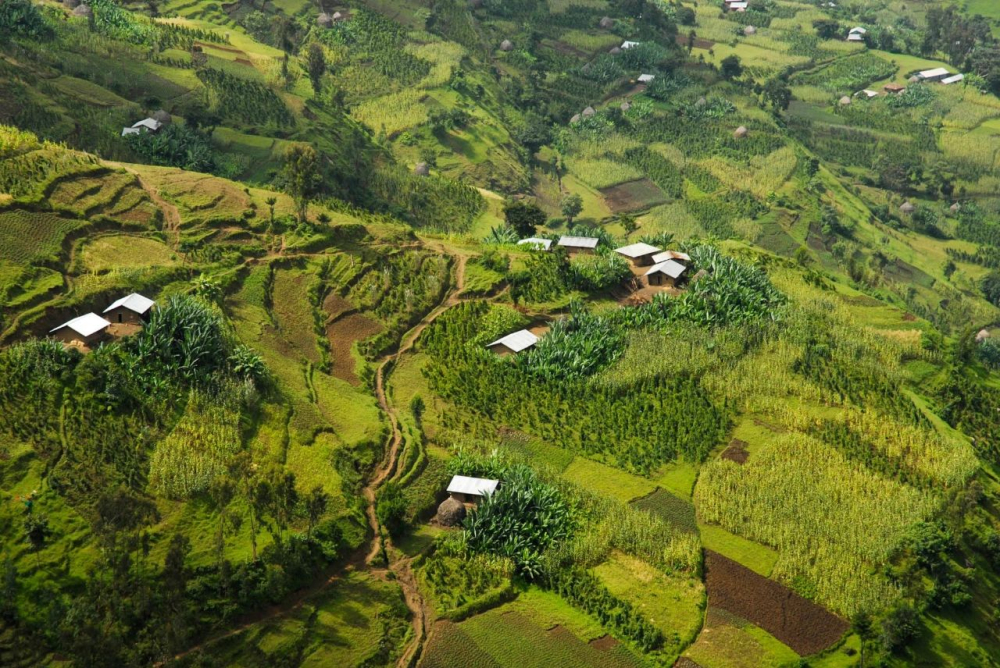
Yirgacheffe coffee beans are primarily grown in the southern and western mountainous areas of Ethiopia. Over 90% of the coffee in the region is cultivated by smallholder farmers, with approximately 1.2 million households relying on it for their livelihoods. The growing models in the region can be divided into four types: forest, semi-forest, garden, and large plantation, with garden coffee being the most common.
Due to the limited cultivation area of smallholder farmers, the region has developed a dense network of cooperatives and processing facilities responsible for consolidating and marketing the scattered coffee harvests. Farmers deliver their freshly picked green beans to nearby processing facilities with access to water, where the beans undergo initial processing before being exported under the facility’s name. Yirgacheffe is one of the most representative regions. Its name originates from the town of Yirgacheffe, situated at an altitude of 1700 to 2100 meters, where the climate is mild and foggy year-round. Coffee farmers often intercrop coffee trees with other crops around their homes.
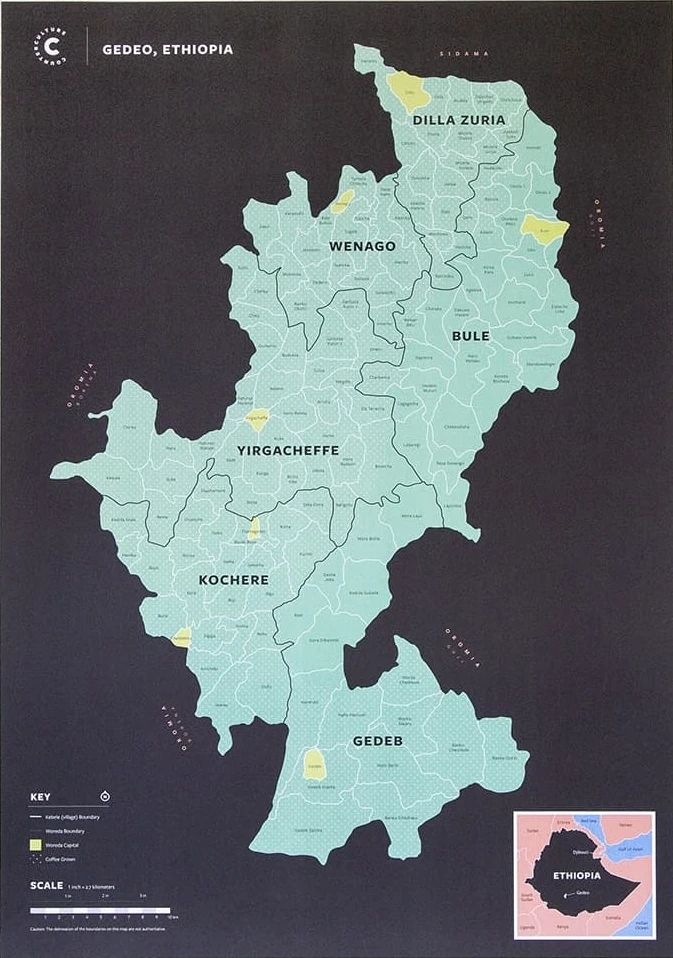
Technically, Yirgacheffe is a sub-region of Ethiopia’s Sidamo province. Due to its location in the northwest of Sidamo and its unique flavor profile, it later separated from the parent region to become its own distinct coffee-growing area. To protect the region’s reputation and quality, the Ethiopian government registered the flavor profiles of three well-known regions, including Yirgacheffe, as trademarks in 2004. In 2008, the Ethiopian Commodity Exchange (ECX) was established to strictly classify and categorize coffee by grade and flavor. Only origins that meet specific flavor characteristics—such as Yirgacheffe, Wenago, Gelena Abaya, and Kochere—are permitted to use the “Yirgacheffe flavor” designation, and they must receive official certification.
What is the G1 grade? In Ethiopia’s coffee grading system, coffees are categorized by processing method into natural (sun-dried) and washed, then evaluated based on defect counts and cupping performance. Among the grades prefixed with G, the lower the number, the higher the quality. The G1 grade allows no more than 3 defective beans per 300 grams of green coffee, while G2 permits 4 to 12. Although the differences in defects become less noticeable after roasting, G1 remains top-tier, whereas G2 is widely favored for its higher cost-performance ratio and still exhibits the distinctive flavor characteristics of Yirgacheffe.
When it comes to “native varieties,” Ethiopia can be considered a genetic treasure trove of Arabica coffee, home to thousands of wild and traditional varieties that have not been genetically modified or commercialized, collectively referred to as Heirloom native varieties. Due to the vast number of varieties and their mostly natural evolution, most cannot be standardized through genetic identification. As a result, the local government uses the term Heirloom to refer to them collectively, both to preserve varietal diversity and prevent genetic outflow. These native varieties often feature delicate floral and fruity acidity profiles, smaller bean sizes, and irregular appearances, but their cupping performances are often astonishing.
 So, why is washed Yirgacheffe particularly favored? This is inseparable from its unique processing method. The washed process relies on stable water sources and processing facilities, making it relatively more costly. During processing, farmers remove the pulp from freshly harvested coffee cherries, ferment them, and then rinse them repeatedly with clean water. The friction between beans and the flow of water help remove the mucilage and impurities, ultimately leaving behind clean and translucent green beans. This process not only effectively reduces the defect rate but also enhances the coffee’s bright and refreshing characteristics.
Washed processing highlights the citrus, lemon acidity, and delicate floral notes of Yirgacheffe, resulting in an overall flavor profile that is brighter, cleaner, and more layered. A certain brand’s washed G1 Yirgacheffe everyday coffee beans are medium-light roasted and suitable for various brewing methods, with pour over especially recommended to fully showcase its refined flavors. The small packaging design also makes it convenient for sampling without waste.
Pour over recommendations are as follows: Use a V60 filter cone, with water temperature controlled at 92-93°C. Suggested coffee dosage is 15 grams, with a coffee-to-water ratio of 1:15, and grind size roughly as coarse as granulated sugar (approximately 78% passing through a 20-mesh sieve). Employ a three-stage pouring method: begin with a bloom using twice the coffee dosage (about 30 grams) of water for 30 seconds, then pour in a small, circular motion from the inside out until reaching 125 grams for the first pour; once the coffee bed descends to the middle of the filter, pour again up to 225 grams to complete extraction, with the entire process taking about 2 minutes.
 The brewed coffee has dry aromas of honey and jasmine; as hot water is poured, berry aromas gradually emerge. The flavor profile clearly presents bright acidity from lemon, citrus, and green tea. As the temperature cools, the aftertaste transitions into soft sweetness from berries, cream, and sugarcane. The overall mouthfeel is clean and refreshing, making it an excellent choice for experiencing the classic flavors of Yirgacheffe.
The above content is compiled by CoffeeHunters, a coffee news website.


