







Introduction:Want to explore the unique charm of Ethiopian Yirgacheffe coffee beans? This article delves into the region’s historical roots, natural conditions, ECX grading system, and the characteristics of the native Heirloom variety, while also providing practical pour over parameters and flavor profiles from multiple cooperatives — helping you master everything from bean selection to brewing in one go.
Yirgacheffe is one of Ethiopia's most iconic specialty coffee regions, renowned for its captivating citrus acidity, delicate floral notes, and refreshing taste. This article will take you through a systematic breakdown of the key knowledge about Yirgacheffe coffee beans — from regional background and geographical conditions, to washed processing methods, and the ECX Commodity Exchange’s grading standards. We've also compiled pour over parameters and actual flavor profiles from several well-known local cooperatives, making it a practical guide for coffee enthusiasts looking to purchase and brew.
In recent years, many small sub-regions and cooperative farms have emerged within the Yirgacheffe area, entering the international market under their own names — showcasing confidence in the quality of their beans and reflecting local producers’ ambition to build brands and cultivate consumer loyalty. Whether washed or natural processed, Yirgacheffe coffee consistently delivers rich aromas and outstanding flavors, which is why it has long been a highlight in the global specialty coffee scene.
The name “Yirgacheffe” originates from the local language, combining “Yərga” (meaning calm or peaceful) and “Č̣äfe” (referring to a swamp or wetland). Literally, it can be understood as “let us settle in this wetland.” The area is actually a sub-region of Ethiopia’s Sidamo state, located in the northwest of the state. Before the mid-20th century, local coffee was mostly traditionally sun-dried processed, with no significant distinction from other areas of Sidamo, and had not yet developed a unique flavor identity.
A turning point came in the 1970s when Yirgacheffe town established the first washed processing station in Sidamo state, introducing washed techniques and equipment originating from Latin America. This move not only elevated the overall quality of green beans but also successfully unlocked the latent citrus and lemon aromas in the coffee, resulting in a cleaner and brighter taste — thereby shaping a distinctly different flavor profile. From then on, Yirgacheffe separated from Sidamo and became an independent entity, gradually evolving into a classic representative in the global specialty coffee market.
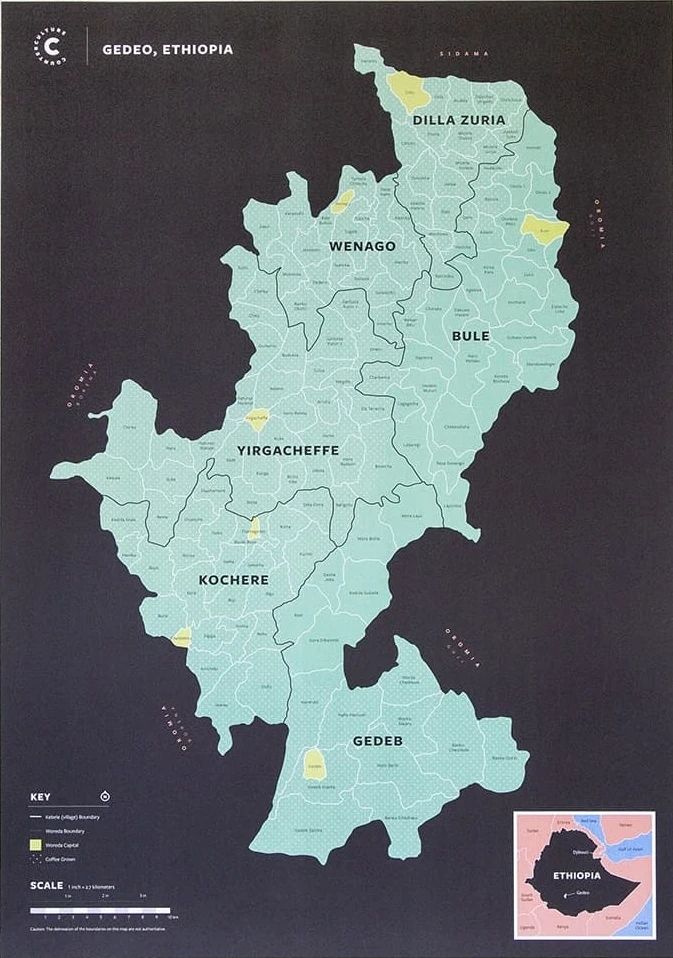
So, what exactly is “Yirgacheffe flavor”? Simply put, it features prominent citrus and lemon tones, complemented by subtle jasmine floral notes, with distinct acidity layers and a clean, refreshing mouthfeel. According to the definition by Ethiopia’s Commodity Exchange (ECX), in addition to Yirgacheffe town itself, surrounding areas such as Wenago in the north, Gelena Abaya in the west, and Kochere in the south also produce coffee that — if it meets specific flavor characteristics — can be classified under the Yirgacheffe flavor profile.
The reason Yirgacheffe can nurture such unique coffee flavors is inseparable from its altitude conditions. The region is one of Ethiopia’s highest-altitude coffee-growing areas, with coffee trees generally planted at elevations between 1900 and 2100 meters. In such high-altitude environments, Arabica coffee beans have a longer growth cycle, which aids in the accumulation of flavor compounds. Additionally, the area is home to bodies of water such as Lake Turkana, Lake Abaya, and Lake Chamo, with year-round fog, cool and humid climates creating a microclimate ideal for coffee cultivation — giving rise to pronounced floral and fruity notes.
Most of Ethiopia’s coffee is grown by smallholder farmers on a family basis, with each household typically managing just around 1 hectare of land and limited yields. As a result, harvested coffee is often sent to cooperatives or town processing facilities for unified post-harvest processing. This model not only helps improve quality control but also provides farmers with more stable income. In the market, we often see Yirgacheffe coffee labeled with cooperative names such as Gotiti, Worka, Konga, and Adado — a reflection of this production and sales structure.
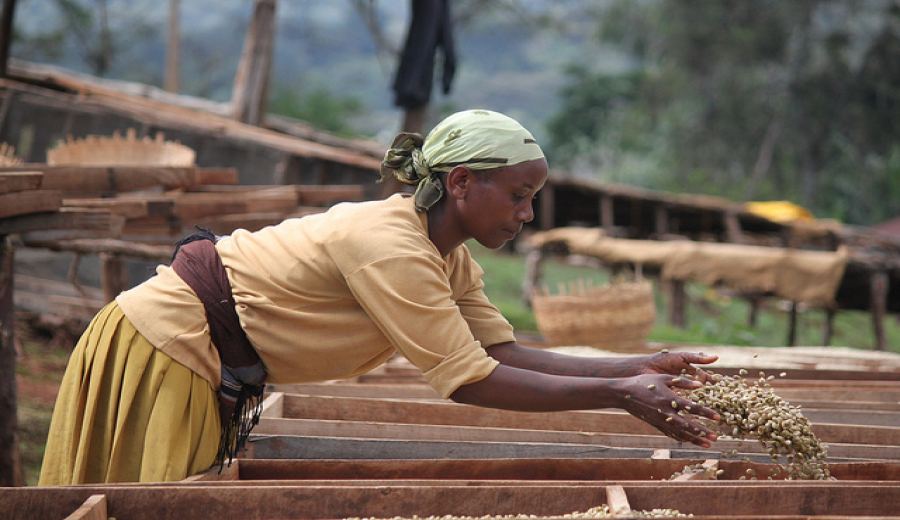
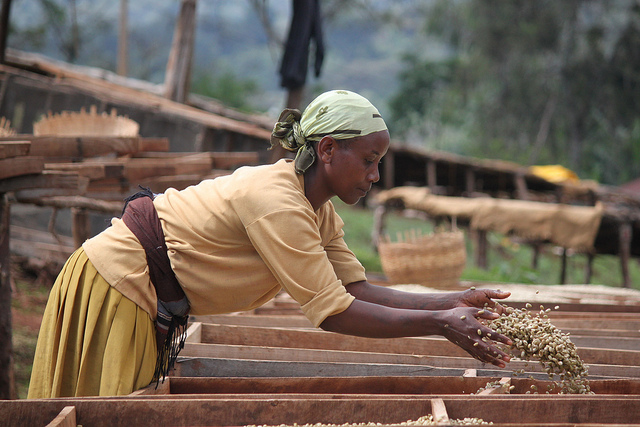
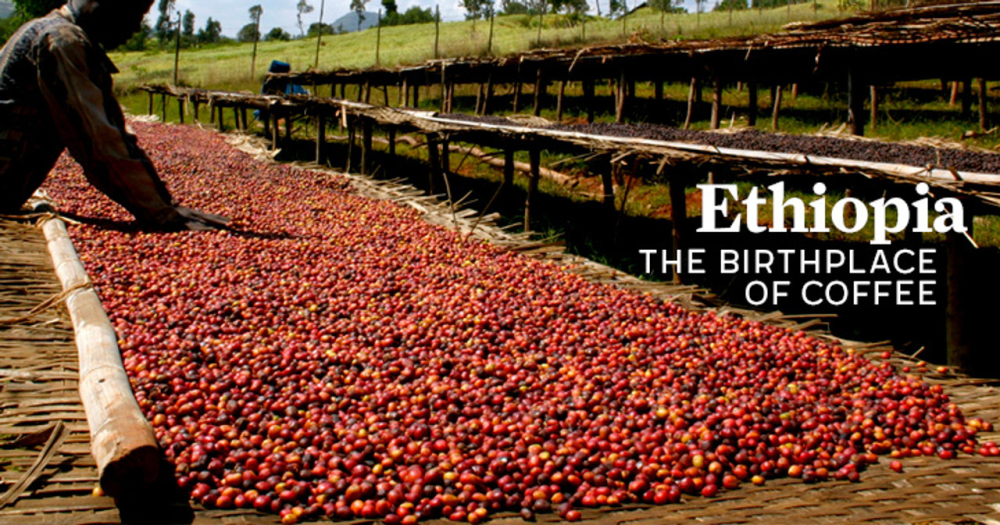
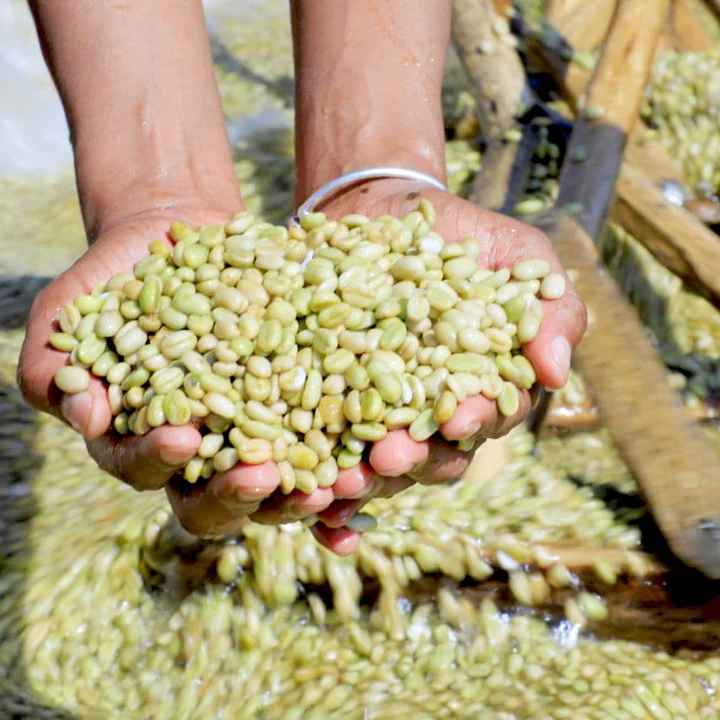
Yirgacheffe coffee is mostly washed processed, with the process including: selecting ripe coffee cherries, using the floatation method to remove unripe ones, then removing the skin and pulp. The beans are left to ferment in tanks for 18 to 36 hours until the mucilage breaks down, after which they are rinsed with clean water and separated by water flow to remove lower-density defective beans. Finally, the parchment-covered beans are placed on African-style raised beds to dry. The multi-step screening process effectively reduces defect rates, resulting in Yirgacheffe coffee’s generally high cleanliness and clear aroma profile.
The main variety planted in Yirgacheffe is Ethiopia’s native Heirloom, a broad term encompassing indigenous, scientifically unclassified wild or hybrid coffee varieties within the country. With Ethiopia possessing thousands of coffee genetic strains, many smallholder farmers grow varieties that may come from ancestral sources, neighbor exchanges, or seeds from different regions — so Heirloom is not a single variety but a collective of multiple strains. This explains why Yirgacheffe coffee often exhibits rich and varied flavor layers.
Another characteristic of Heirloom coffee is that smallholders often interplant different varieties within the same plot, harvesting them together before sending them to cooperatives for unified processing. As a result, a single batch of Yirgacheffe coffee beans may contain dozens or even hundreds of genetically different coffees — one of the reasons for its complex and hard-to-replicate flavors. Additionally, due to the variety diversity, coffee bean size and shape are often inconsistent — a common visual trait of native varieties.
In terms of flavor expression, Yirgacheffe coffee typically showcases bright citrus acidity — such as lemon or orange — accompanied by white or light red floral notes, like jasmine or rose. The taste is refreshing, with balanced acidity and sweetness, and the aftertaste often carries a soft note reminiscent of almonds or tea. This flavor profile makes Yirgacheffe a classic representative of light to medium roasts and is highly suitable for coffee drinkers who enjoy fruity acidity.
According to the ECX’s updated grading standards from March 2022, Yirgacheffe coffee beans are divided into two major categories: “Commercial Grade” and “Specialty Grade.” Commercial Grade is indicated by G1 to G5, with scoring weights of 40% for physical characteristics (including defects, appearance, color, and aroma) and 60% for cupping performance (including cleanliness, body, flavor, and acidity). Among these, G1 is the highest grade, requiring a score of 85 or above; G2 ranges from 75–84; G3 from 63–74; G4 from 47–62; and G5 from 31–46.
Specialty Grade is further selected from G1 and G2, indicated by Q1 and Q2, with scoring criteria following SCA (Specialty Coffee Association) standards — covering more dimensions such as dry fragrance, wet aroma, flavor, acidity, aftertaste, body, balance, cleanliness, uniformity, sweetness, and overall evaluation. Q1 requires a score of 85.0 or above, while Q2 is 80.0–84.75. Only coffee scoring above 80 can be classified as Specialty Grade, with Q1 ranking higher than Q2.
Currently, well-known and consistently high-quality Yirgacheffe coffees on the market — such as those from the “Gotiti Cooperative,” “Kochere Cooperative,” “Konga Cooperative,” and the “Red Cherry Project” — all fall under the G1 grade and have scored at Q1 standard (85.0 or above), making them recommended choices for specialty coffee beans.
To brew a flavorful cup of Yirgacheffe coffee, it’s recommended to use freshly roasted beans, ideally starting grinding and extraction within 5 days post-roast to achieve the best aroma and flavor. Generally, the optimal enjoyment period for fresh beans is within 30 days post-roast.
Since Yirgacheffe beans are mostly grown at high altitudes, their density is relatively high. To preserve their bright acidity, they are usually medium-light roasted. These coffee beans have components that are not easily extracted, so it’s advised to use medium-fine grind (using a Chinese No. 20 standard sieve, with about 80% passing rate) and brew with hot water at 90–91°C via pour over. Using a V60 filter cone (such as #01), with its large holes and spiral ribs, helps enhance extraction layers and flow control — perfectly suited to Yirgacheffe’s characteristics.
Recommended pour over parameters are as follows: 15g of coffee, water temperature 90–91°C, coffee-to-water ratio 1:15, medium-fine grind (20号 sieve, 80% passing rate). Pouring technique: First pour 30g of water for a 30-second bloom, then pour 95g of water (total ~125g) finishing around 1 minute; when the water level drops to 2/3 of the coffee bed, pour another 100g (total ~225g), finishing around 1 minute 35 seconds. Total extraction time should be controlled between 2 minutes 00 seconds and 2 minutes 10 seconds, then remove the filter cone once dripping is complete.
Different cooperative Yirgacheffe coffees also exhibit their own unique profiles after pour over: “Gotiti Cooperative” highlights citrus, tea-like notes, florals, and caramel — with a clean, sweet taste; “Kochere Cooperative” features jasmine floral notes, lemon acidity, and smooth fruit acids; “Konga Cooperative” presents vibrant berry and citrus tones, along with creamy and honey-like sweetness — like drinking fruit juice; “Red Cherry Project” centers on lemon, licorice, berries, and sweet orange — with high sweetness and an aftertaste featuring caramel, cream, and black tea aromas, delivering a rich flavor complexity.
The above content is compiled by CoffeeHunters, a coffee news website.


