







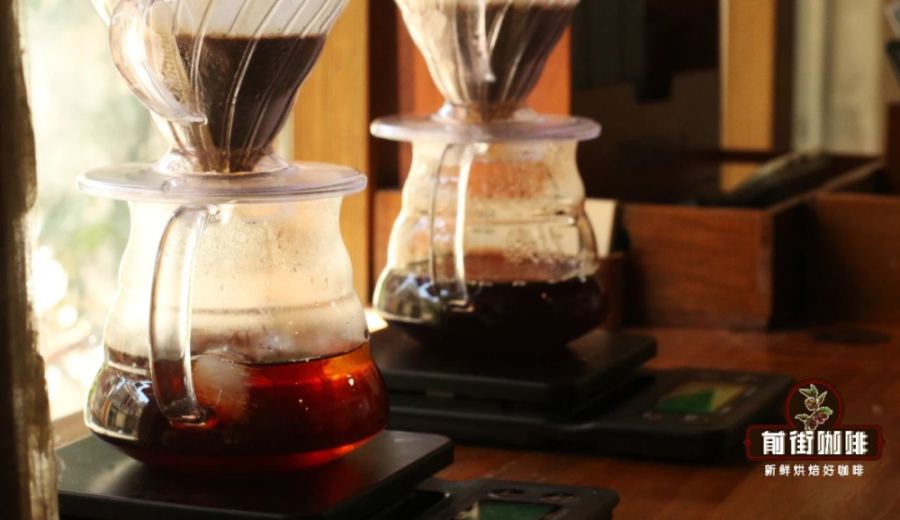
Introduction:Choosing the right pour over kettle not only affects the stability and precision of your pouring but also directly impacts the flavor extraction of your coffee. From temperature control vs. non-temperature control, spout design, kettle capacity, handle comfort, to material and price, this article delves into the key factors of various pour over kettles to help you find the one that best suits your needs. Whether you’re a beginner or an advanced user, you’ll gain practical buying advice here.
When selecting a pour over kettle, many coffee enthusiasts often feel overwhelmed by the wide range of options available on the market. Although most pour over kettles share basic components—spout, body, handle, and lid—different designs can significantly affect the control and stability during pouring.
To choose the right pour over kettle for yourself, you need to consider multiple dimensions, including whether it has temperature control, the type of spout, the kettle’s capacity and center of gravity design, the feel of the handle, overall material, and your budget. This article will systematically break down these key points to help you make an informed decision based on your personal habits and budget.
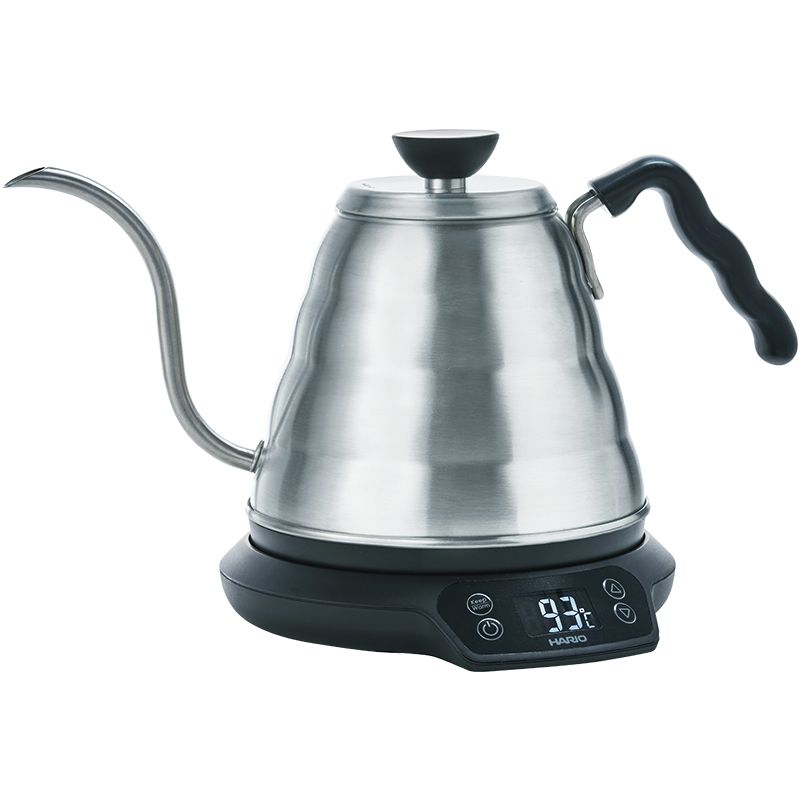
The first step is usually deciding between a temperature-controlled or non-temperature-controlled pour over kettle.The biggest advantage of a temperature-controlled kettle is its ability to automatically maintain water temperature.Some models even come with built-in heating functions, eliminating the hassle of frequently measuring water temperature and keeping the water warm between brews. However, due to the addition of a heating module at the base, these kettles generally have a lower center of gravity and are relatively heavier, making them less nimble than lightweight models,and their prices are usually about three to four hundred yuan higherthan standard versions.
Non-temperature-controlled kettles are the most common type of pour over kettle and the basic model offered by most brands on the market. While they lack automatic temperature control, they offer a wide selection, are lighter in weight, and are ideal for users who value flexible operation and tactile feedback.
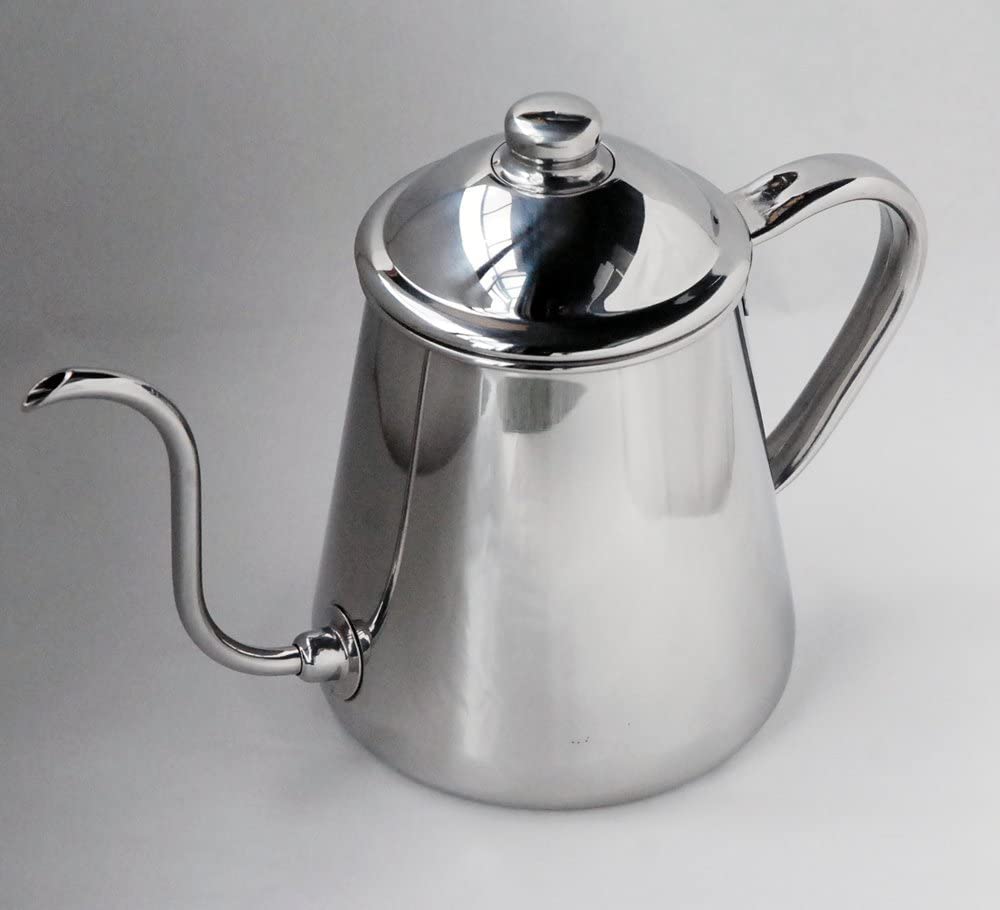
Next is the choice of spout type, which is the most critical factor affecting water flow control. Common spouts can be roughly divided into narrow gooseneck, wide gooseneck, crane spout, flat spout, and eagle beak spout, each offering different water flow characteristics and handling difficulty.
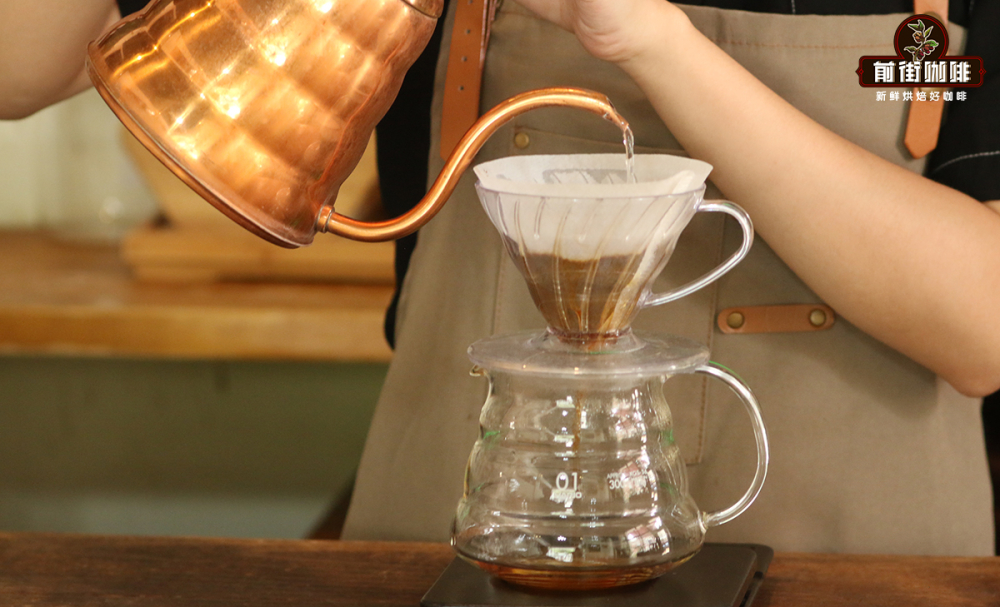
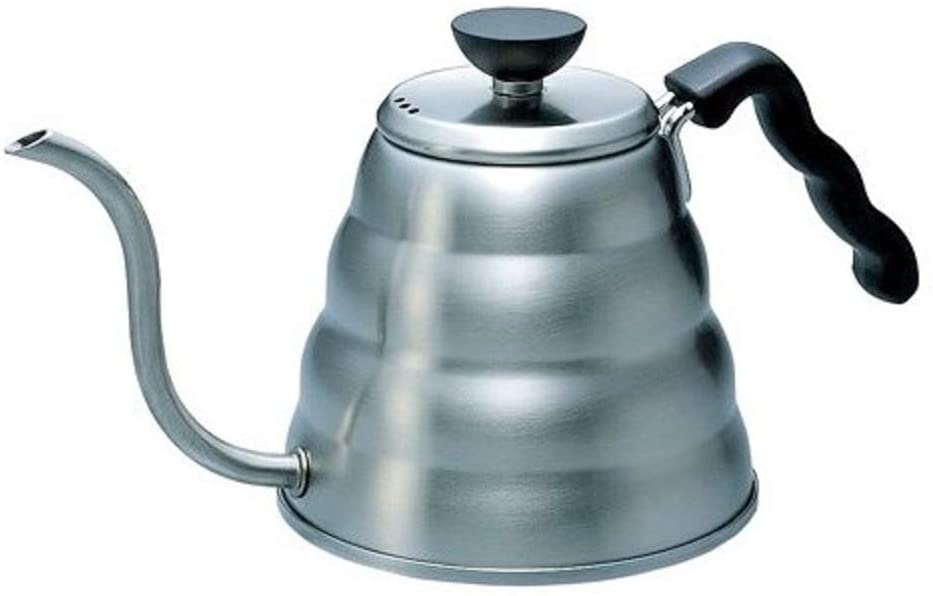
Narrow gooseneck kettles, such as the well-known takahiro Shizuku kettle, have a very small spout opening—usually around 4mm—allowing for more focused pouring and easier control over water flow rate and speed. They are great for beginners to get started quickly, but their adjustability is relatively limited and they are not suitable for high-volume pouring. In contrast, wide gooseneck kettles have a larger spout opening, resulting in greater variation in water flow.Once mastered, they can handle various brewing techniques, including the drip method, though they have a steeper learning curve. For example, the Hario Stainless Steel Cloud Dripper Kettle, commonly referred to as the “water mine kettle,” falls into this category and is suited for more adventurous users.
Crane spout kettles get their name from the crane-like shape of the spout. The opening is typically long and slightly pointed, as seen in the Kalita Chef Kettle and Wave Kettle. The Chef Kettle has a slender spout capable of producing both fine and wide streams, offering strong adaptability; the Wave Kettle’s spout is slightly shorter and wider, delivering more stable water flow during pouring and making it easier to control.
Flat spout kettles have a spout that is nearly parallel to the horizontal plane, lacking any obvious water-guiding structure.Water poured from these tends to arc rather than form a straight vertical stream,but this characteristic makes them an ideal tool for practicing water control. Once mastered, transitioning to other types becomes easier.
Eagle beak kettles represent a newer mainstream design trend in recent years. Their spouts feature a slightly downward-curved guiding structure at the end, which helps create a more stable vertical water stream during pouring,and reduces the risk of backflow that can occur with small water volumes.Most newly released pour over kettles now adopt this design.
As for the kettle body, two main factors should be considered: capacity and shape. The typical capacity of pour over kettles ranges from 0.5 to 1.2 liters. When choosing, consider a weight that you can easily manage. Regarding shape, short and stout kettles have a lower center of gravity when full, making them more stable when placed, but they can be harder to lift. Tall and slim kettles have a higher center of gravity and are more prone to tipping when less full, so it’s advisable to use more water with these.
Additionally, there are some uniquely shaped kettles on the market, such as the palace-style kettle, which resembles a traditional oil lamp. While visually interesting with a retro charm, it doesn’t offer significant practical advantages, so selection can be based on personal preference.
Although the handle may seem like a simple component, it greatly affects the user experience. An ergonomic, comfortable handle allows for better control of the kettle’s center of gravity during pouring, thereby improving overall brewing fluidity. Many new pour over kettles emphasize ergonomic and labor-saving handle designs, so when selecting, try holding the kettle to see if it fits your hand shape and usage habits.
Furthermore, different brewing styles also influence the design of the pour over kettle. For example, traditional Japanese pour over methods often use a tall, slender kettle body paired with a ring-shaped handle, which is more suitable for slow, meticulous pouring.
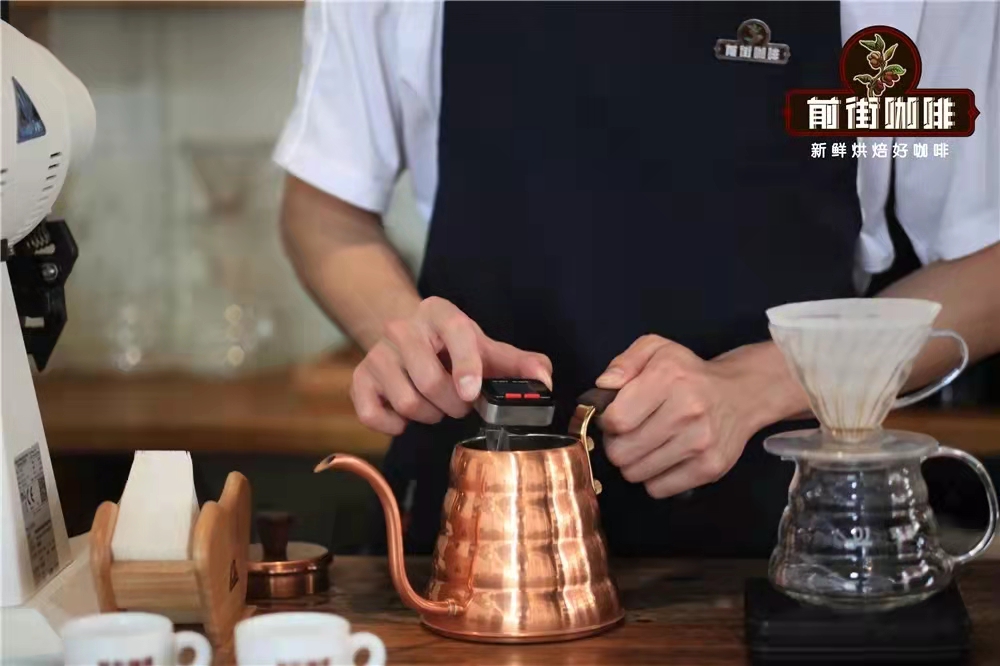
In terms of materials, common options include stainless steel, copper, enamel, and glass. For insulation and aesthetics, copper kettles are undoubtedly the top choice, but they are more expensive. For cost-performance, stainless steel models are ideal—they are durable and economical. Enamel kettles have an elegant, artistic appearance but are relatively fragile and can get hot easily, making them better suited for those who prioritize aesthetics and are careful during use.
Finally, there's the price. Pour over kettles range from just a few dozen yuan to over a thousand yuan,but more expensive doesn't necessarily mean better.With the right technique, even a budget-friendly kettle can produce excellent coffee. When purchasing, it’s best to consider a combination of spout design, kettle shape, handle comfort, and your personal budget, rather than basing your decision solely on price or brand.
Also, be cautious of pour over kettles found online that look exquisite but are priced unusually low. These are often imitation products. Although they may resemble the real ones, they can differ in detail craftsmanship, materials, and user experience. Be sure to evaluate carefully before buying to avoid negatively impacting your brewing experience—or even your passion for learning.
The above content is compiled by CoffeeHunters, a coffee news website.


