








Introduction:Colombian coffee is renowned for its diverse flavor profiles, ranging from bright fruity notes to rich chocolatey finishes. This article delves into the cultivation advantages of volcanic soil regions in southern Colombia such as Huila and Cauca, introduces the unique flavor profiles of Gesha double anaerobic natural and Huila washed beans, and provides a practical pour over guide — including grind size, water temperature, brew ratio, and three-stage pouring techniques — to help you easily brew a layered Colombian cup.
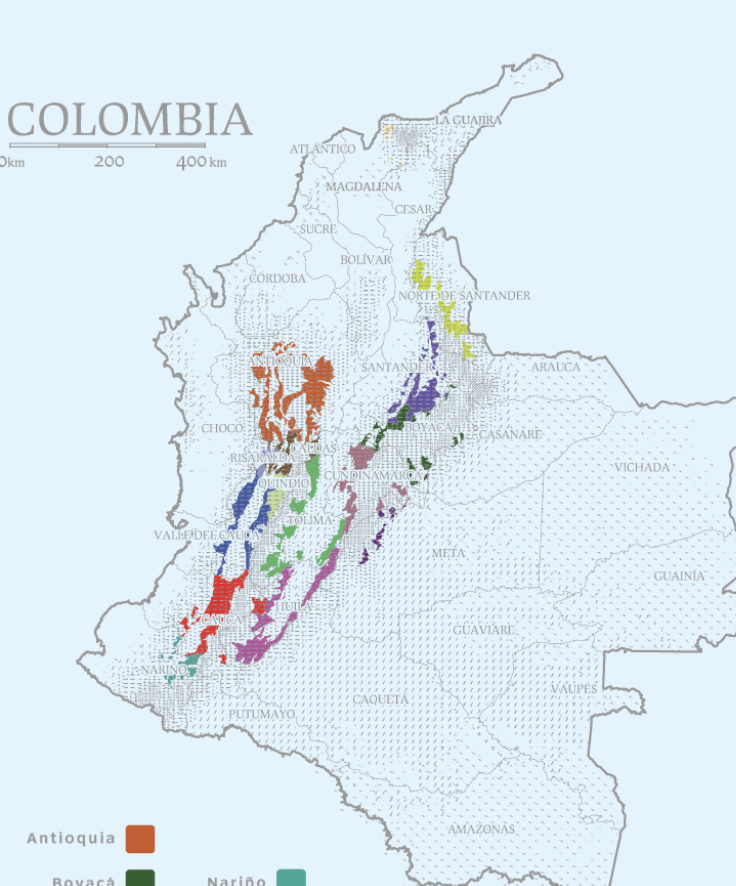
The flavor spectrum of Colombian coffee is extremely diverse, featuring both bright and refreshing acidity as well as classic profiles that are smooth, full-bodied, and finish with sweet chocolate notes. This striking range of flavors has secured its place in the specialty coffee market. This article will focus on key southern Colombian regions such as Huila, Cauca, Nariño, and Tolima — areas nourished by high altitudes and volcanic soils, producing specialty beans with vibrant acidity and prominent berry aromas. It also details the flavor characteristics and roasting approaches of two popular bean varieties: Huila washed and Gesha double anaerobic natural.

Although Colombia has long been the world’s third-largest coffee producer, its presence in the specialty coffee scene was relatively low until the 2008 volcanic eruption in southern Huila Province. Since then, the region’s coffee has gained attention for its distinctive flavors, with many farms achieving accolades in international competitions. Volcanic soil, formed through the weathering of lava and volcanic ash, is rich in minerals such as iron, calcium, magnesium, and potassium, providing ample nutrients for coffee plants and aiding in the accumulation of flavor compounds. Especially in regions above 1,500 meters altitude — such as San Augustín in Huila, Popayán in Cauca, Nariño, and Tolima — combined with equatorial sunlight and significant day-night temperature variations, these conditions produce high-quality coffees with lively acidity and pronounced sweetness.
In terms of cupping performance, coffees from these regions generally exhibit refined fruit acidity and berry sweetness, along with a caramel-like smooth finish. Whether processed using traditional washed methods or modern anaerobic techniques, they consistently reflect their regional characteristics. Currently, the medium-roasted Colombian beans commonly found on the market aim to balance body with sweet and acidic notes while preserving the coffee’s freshness. It is recommended to brew them within 5 days post-roast for optimal flavor.
Among them, Huila washed beans are primarily of the Caturra variety, grown at elevations between 1,500–1,800 meters. The washed process gives them a clean and crisp profile, characterized by gentle fruit acidity, nutty aromas, dark chocolate, and caramel sweetness — making them well-suited for those who prefer balanced flavors.Gesha double anaerobic natural beans come from the Frontera Farm in the Huila region, cultivated at an altitude of 1,700 meters. Through anaerobic fermentation, they develop intense passion fruit and grape aromas, accompanied by dried fruit sweetness and bright acidity reminiscent of Yuzu, finishing with the soft lingering notes of almonds — making it a choice with particularly vivid flavor expression..
To brew a fully flavored Colombian pour over coffee at home, here are some practical parameters and steps: First, prepare freshly roasted coffee beans (preferably medium roast), a coffee grinder, a V60 filter cone, filter paper, a pour over kettle, a thermometer, an electric kettle, a scale with timer function, filtered water, and a server.
Step 1: Fold the filter paper and place it in the V60 cone. Pour hot water to evenly saturate the filter, which helps remove paper odors and preheat your equipment.This step significantly impacts flavor purity and must not be skipped..
Step 2: Weigh15 grams of coffee beans. Based on the characteristics of medium roast, it is recommended to use a grind size similar tomedium-granulated sugar (approximately 75% passing through a Chinese No. 20 sieve, slightly coarser than white sugar). This grind size allows for optimal extraction of soluble coffee compounds while avoiding over- or under-extraction.
Step 3: Place the ground coffee into the filter cone and gently shake it to level the coffee bed, ensuring even water flow during brewing.
Step 4: Heat the water to near boiling, then let it cool down to90-91°C], a range that balances flavor extraction and acidity expression. It is recommended to use a1:15 brew ratio (15 grams of coffee to 225 grams of water), which delivers a rich layering and moderate intensity.
Step 5: Start the timer, and begin with a bloom using twice the weight of the coffee grounds (about 30 grams) of water. Pour gently to allow the coffee to expand fully and form a dome. The bloom time should be about30 seconds. Then, pour in small circles from the center outward using a gentle stream. When the total water volume reaches125 grams, pause and wait for the coffee bed to sink to about half its height. Continue pouring with the same fine stream until you reach225 grams. The entire brewing process should take about2 minutes, ensuring full flavor release.
Step 6: After brewing, gently swirl the server to mix the coffee evenly, then pour into a preheated cup. Enjoy a distinctly flavorful Colombian pour over. Based on personal preference, you may add sugar or milk to adjust the taste.
The above content is compiled by CoffeeHunters, a coffee news website.


