







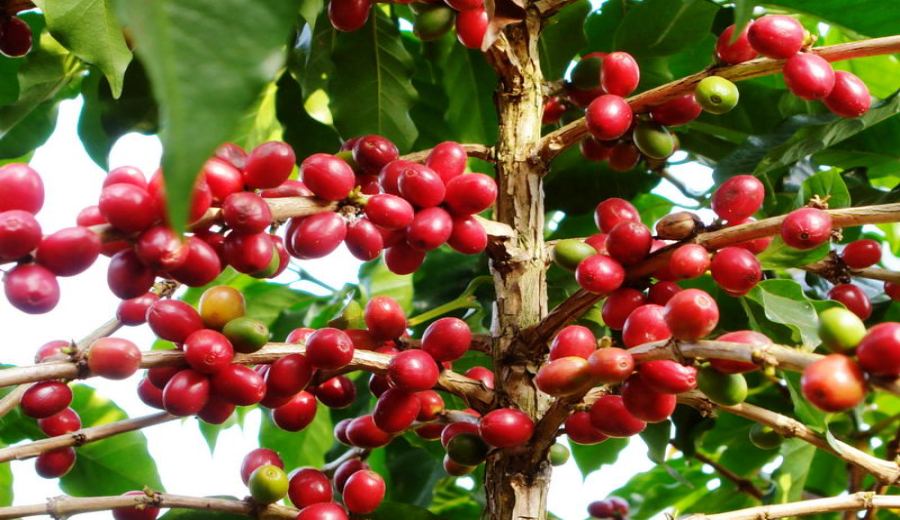
Introduction:Kenyan coffee is renowned for its intense tomato-like acidity and delicate floral and fruity notes, making it one of the most distinctive specialty coffees from the African continent. This article delves into the geographic environments of Kenya’s six major coffee-growing regions, explores the origins and characteristics of the SL28 and SL34 varieties, and details how Kenya’s unique K72 washed processing method contributes to its vivid flavor profile. It also provides pour over parameters and a three-stage pouring technique, as well as three cold brew methods — iced pour over, cold drip, and cold brew — to help you fully showcase the berry-like acidity and clean mouthfeel of Kenyan beans.
When it comes to African specialty coffee, many people first think of Ethiopia, but Kenyan coffee also demonstrates exceptional potential. Compared to the bright and crisp profile of Ethiopian coffee, Kenyan coffee features a richer and more pronounced acidity with distinctive tomato and berry tones. Especially for those who appreciate clearly defined layers of sweet and sour flavors with a clean and bright mouthfeel, Kenyan coffee often delivers delightful surprises.
The outstanding flavors of Kenyan coffee stem from its exceptional geographic environment. The country is located in East Africa, with the equator running through its center and the East African Rift Valley stretching from north to south. Most of the land consists of highland terrain with an average altitude of about 1,500 meters, offering a cool climate and significant day-night temperature variation. The areas around the capital Nairobi and the Kenyan mountain regions are particularly prime for coffee cultivation. Here, coffee has two harvest seasons each year: the main season from October to December (accounting for 60% of production), and the secondary season from June to August (40%), with the rest being the dry season. Annual rainfall decreases from southwest to northeast. The ample rainfall and high-altitude conditions cause coffee cherries to ripen slowly, allowing flavor compounds to accumulate and resulting in Kenyan coffee’s characteristic bright acidity and full body.
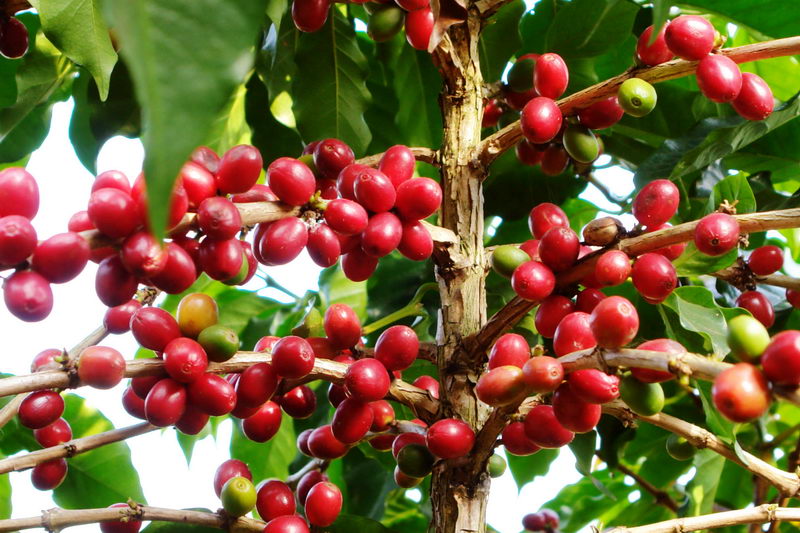
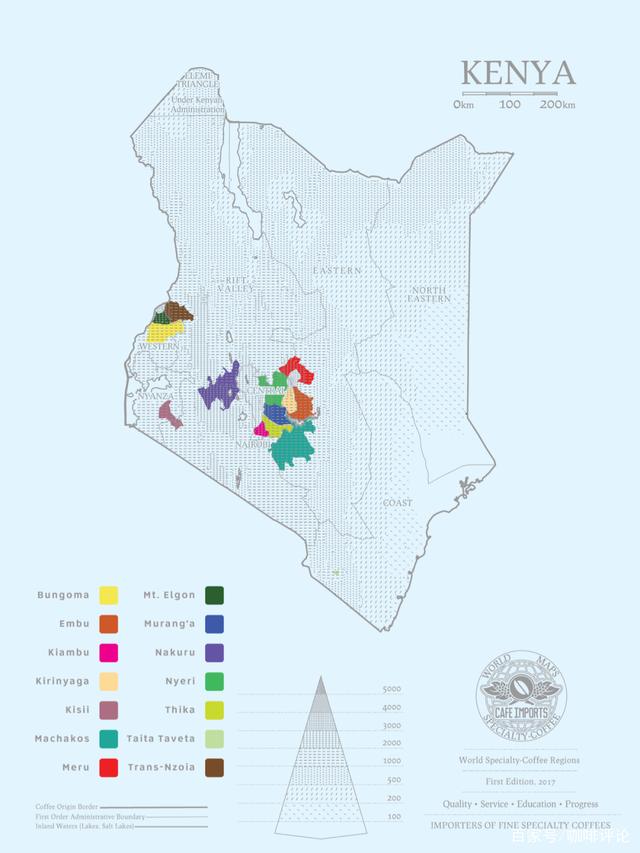
Kenyan coffee cultivation is primarily concentrated in six regions located along a volcanic soil belt between Nairobi and the Kenyan mountains, at elevations ranging from 1,600 to 2,100 meters. These regions include: Thika, Kirinyaga, Mt. Kenya West, Nyeri, Kiambu, and Muranga. Among them, coffee from the Thika region is known for its bright fruit acidity, rich berry character, and honey-like sweetness, making it one of the most recommended sources of Kenyan beans by many coffee shops.
In terms of variety, Kenyan coffee stands apart from other regions, as its main varieties are not the commonly seen Typica, Bourbon, or Caturra, but rather the distinctive SL28, SL34, Batian, and Ruiru11. Among these, SL28 and SL34 are the most famous and are considered by many coffee enthusiasts to be the representative flavors of Kenyan coffee.
SL28 SL28 was developed by the Scott Laboratories (abbreviated as SL) in the 1930s, originating from the Bourbon variety. It features broad copper-colored leaf tips and short, round beans. Its flavor profile is distinguished by bright acidity and pronounced sweetness, often exhibiting distinct fruity notes, especially citrus and berries. This variety thrives in medium to high-altitude environments, and although it shows good drought resistance, it still requires careful management against diseases.
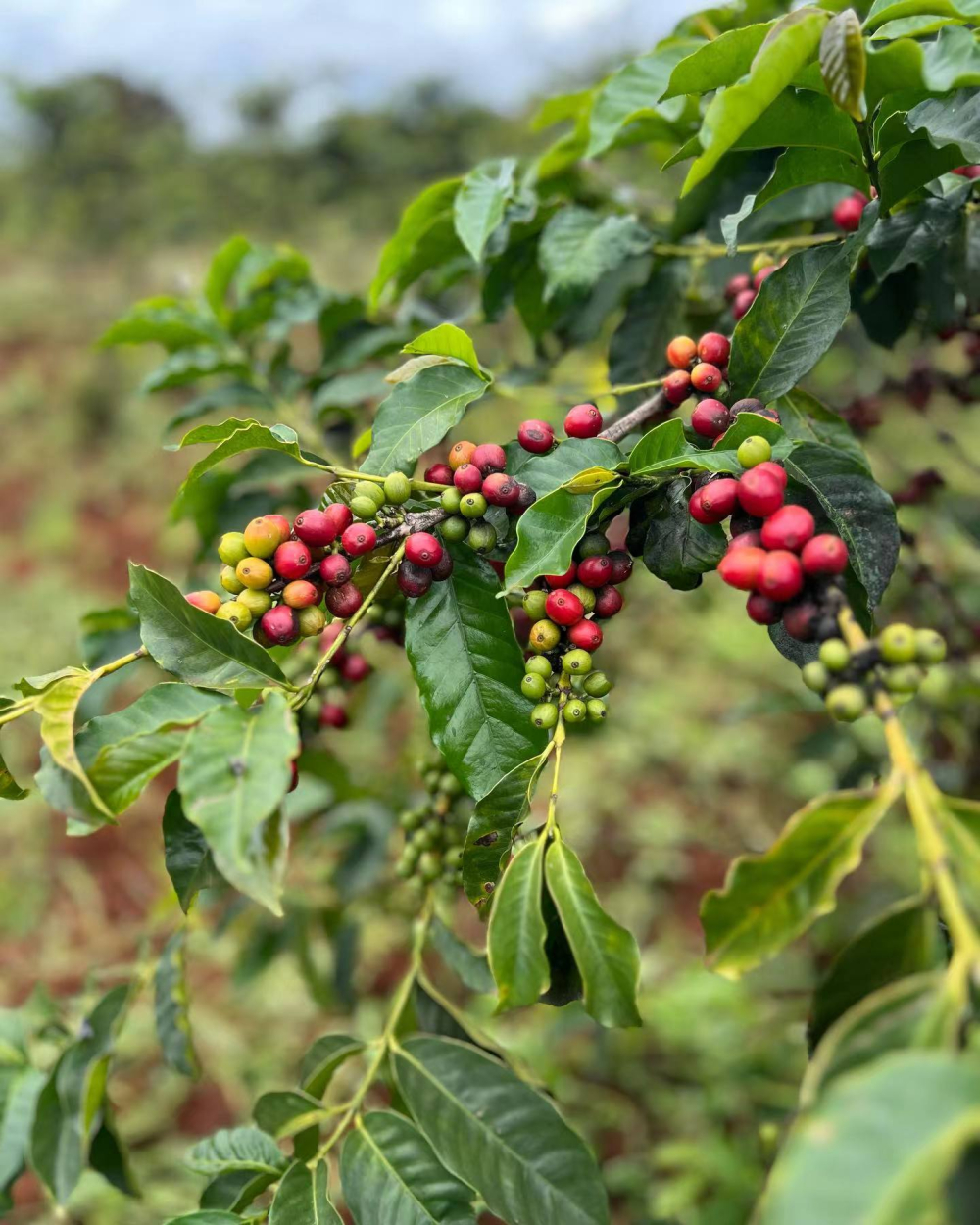
SL34 SL34 is a mutation of French Mission Bourbon, with wide leaves and dark brown leaf tips. It grows well in high-altitude, rain-rich environments. Compared to SL28, SL34 offers even more complex acidity and a richer mouthfeel. Both varieties are capable of showcasing the bright fruit acidity and balanced complexity that are hallmarks of Kenyan coffee.
What Kenyan coffee is most known for is undoubtedly its iconic K72 washed processing method. This processing approach is markedly different from traditional washed methods, characterized by prolonged, multiple fermentation stages to enhance the clarity and fullness of flavors. After harvesting, coffee cherries are immediately depulped and then undergo the first 24-hour fermentation, followed by thorough washing and a second 24-hour fermentation. This cycle is repeated until the total fermentation time reaches 72 hours. This low-temperature, extended fermentation process fully draws out the coffee’s fruity and acidic notes while maintaining a clean and layered flavor profile, representing a key craft that sets Kenyan coffee apart globally.
How can you brew Kenyan coffee to highlight its characteristics? Since Kenyan beans typically have pronounced acidity and berry-forward flavor profiles, pour over is one of the best methods to directly showcase their personality. It is recommended to use a V60 filter cone, with a water temperature of 90°C, a coffee-to-water ratio of 1:15, 15 grams of coffee, and a medium-fine grind (80% passing through a 20-mesh Chinese sieve). Use the classic three-stage pouring technique: start with a 30-gram bloom for 30 seconds, then pour in a circular motion up to 125 grams, wait for the water level to drop, and continue pouring up to 225 grams, with a total extraction time of about 2 minutes. This method brings out Kenyan beans’ unique tomato and dark plum acidity, with a full sweetness and aftertaste that carries notes of berries and green tea.
If you want to further explore the diverse expressions of Kenyan coffee, iced pour over, cold drip, and cold brew are all great options. Below are practical recommendations for three common cold brewing methods:
Iced Pour Over: This method uses a low extraction ratio followed by ice dilution. Use 15 grams of coffee, a coffee-to-water ratio of 1:10, and a water temperature of 90°C, with a slightly coarser grind (80% passing through a 0.85 mm sieve). First extract a highly concentrated coffee liquid, then pour it over 100 grams of pre-chilled ice, allowing the ice to gradually melt and dilute, producing a rich yet refreshingly clean flavor.
Cold Drip: Use 60 grams of coffee, a coffee-to-water ratio of 1:10, aiming to extract 600 milliliters of coffee. Control the dripping rate at 3 drops per 10 seconds, and it is recommended to use a mixture of ice and water as the water source. The entire process takes approximately 8 hours. After extraction, it is advisable to let the coffee sit in the refrigerator for 48 hours to allow the flavors to meld further.
Cold Brew: Combine 50 grams of coffee with 600 grams of ice water mixture (including 200 grams of hard ice), using a coffee-to-water ratio of 1:10. Stir well, seal, and refrigerate for 8 to 12 hours, then filter with paper and let it sit in the refrigerator for another 32 hours to achieve a smoother, rounded flavor.
No matter which method you choose,the freshness of the coffee beansis key to flavor performance. It is recommended to use coffee beans roasted within 5 days, and allow the beans to degas for 4 to 7 days to reach peak flavor. If purchasing pre-ground coffee, it is best to use it as soon as possible to avoid oxidation affecting aroma and taste. Freshly grinding and brewing will truly allow you to experience the subtlety and depth of Kenyan coffee.

The above content is compiled by CoffeeHunters, a coffee news website.


