







Introduction:Jamaica Blue Mountain coffee has long been hailed as the pinnacle of the coffee world, but its high price and limited production often leave consumers questioning its authenticity and value. This article delves into the definition of Blue Mountain coffee, the characteristics of its growing region, the CIB grading system, explores the current state of its importation in China, and provides a reasonable price range, along with practical tips for identifying genuine beans to help you buy with confidence and enjoy with peace of mind.
Blue Mountain coffee, often referred to as the "Hermès" of the coffee world, has long been a dream for many coffee enthusiasts. However, there are numerous misconceptions about its origin, price, and even authenticity. For instance, some insist that Japan monopolizes the Blue Mountain market, making it nearly impossible to find genuine Grade 1 beans in China, or even claim that a single cup of authentic Blue Mountain Grade 1 costs no less than 200 RMB. But is this really the case? This article will comprehensively analyze all aspects of Blue Mountain coffee—from its definition and growing environment, to the rigorous CIB grading system, the history of its importation into China, and the reasonableness of market prices—and teach you how to distinguish real from fake, helping you build an accurate understanding.
Recently, many coffee lovers have actively discussed their experiences purchasing Blue Mountain coffee and how to judge its price on social media, with seasoned enthusiasts sharing their “authentication tips.” However, some of these notions seem to be stuck in the last century. For example, some mention that “Blue Mountain coffee is almost entirely bought up by Japan, making it hard to find genuine product in the Chinese market,” citing older data that shows Jamaica exported as much as 688 tons of Blue Mountain coffee to Japan, compared to just 75 tons to the U.S. and 59 tons to the U.K., with the rest of the world receiving less than 10% of the yield. Some consumers also claim that “a genuine cup of Blue Mountain Grade 1 cannot cost less than 300 RMB, and if sold domestically for around 200 RMB, it’s likely just Grade 3, or you might not even be getting Grade 1 at all; whereas in the Japanese market, Grade 1 beans cost over 3,500 RMB per pound (about 454 grams).” Although these statements come from experienced enthusiasts, the information is clearly outdated.
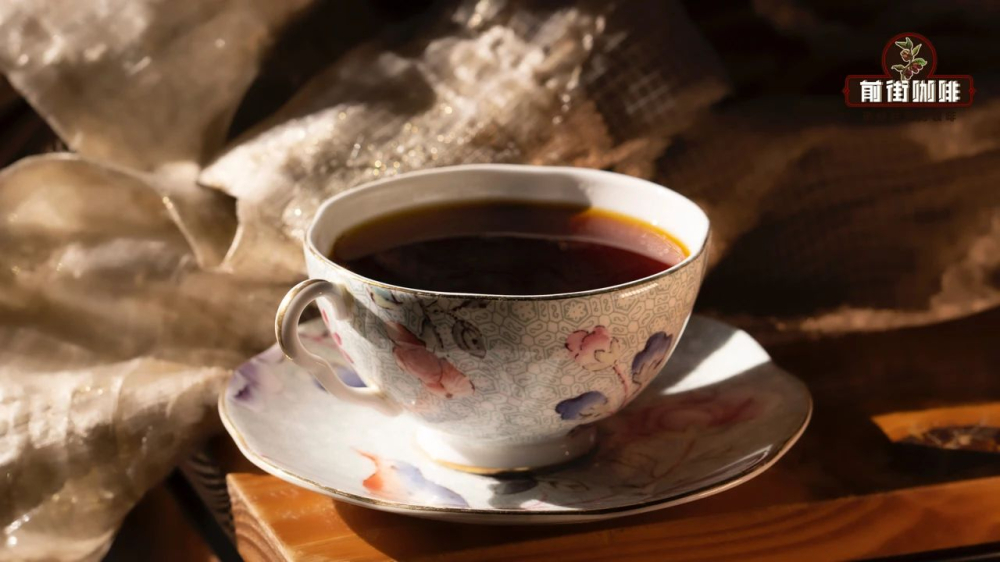
So, what exactly qualifies as genuine Blue Mountain coffee? The fame of Blue Mountain coffee stems not only from its rarity but also from the long-term strict quality control and meticulous management by Jamaican coffee growers. The Blue Mountains are surrounded by the sea, featuring a typical island-type tropical rainforest climate with concentrated yet well-drained rainfall during the rainy season, plus fertile volcanic soil. Under such natural conditions, coffee trees require almost no additional fertilization or irrigation. The area enjoys abundant sunshine and is often shrouded in light mist, with cool temperatures at high altitudes—perfect for coffee cultivation. Local farmers often intercrop coffee trees with banana trees on the slopes, which helps maintain humidity and provide shade.
According to the definition by the Jamaica Coffee Industry Board (CIB), only coffee of the Typica variety grown within the designated areas of the Blue Mountain mountain range can be called “Blue Mountain coffee”; coffee produced in other regions is collectively referred to as “High Mountain coffee.” The CIB restricts the cultivation of Blue Mountain coffee to elevations between 910 and 1700 meters, primarily distributed across the parishes of St. Thomas, St. Mary, St. Andrew, and Portland, covering a total area of about 6,000 hectares—just one-third of the entire plantable area of the Blue Mountains.
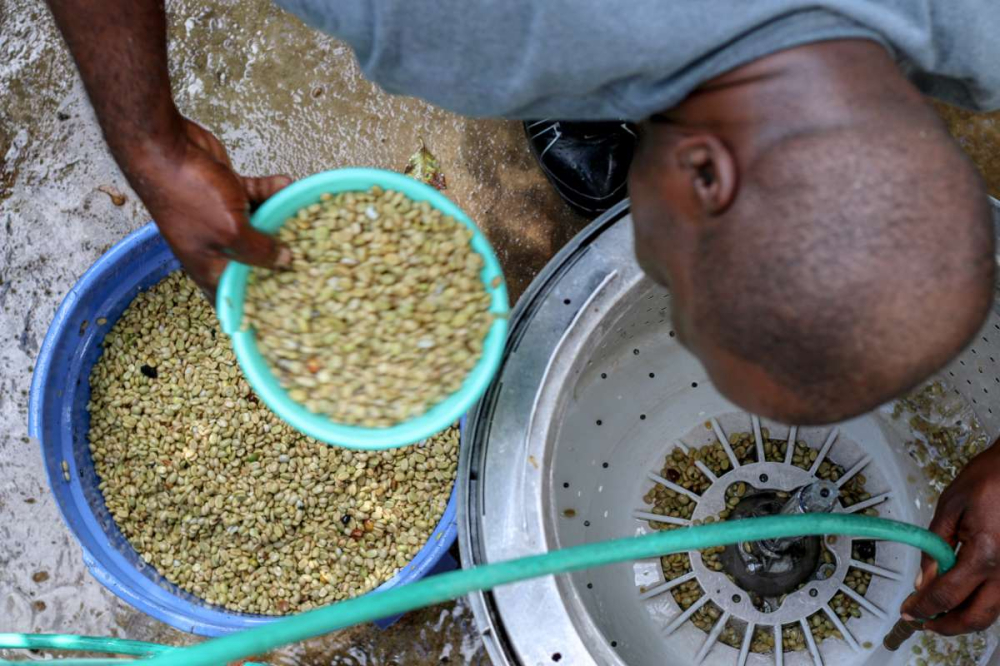
It’s worth noting that Blue Mountain coffee thrives at higher altitudes. As elevation increases, the flavor profile of the Typica variety becomes more pronounced, with an excellent balance of acidity, sweetness, and bitterness, often accompanied by rich and lingering notes of chocolate and roasted hazelnuts. The taste is full-bodied and layered. However, the Typica variety is inherently weak in disease resistance and has low yield per unit. Coupled with the rugged terrain of high-altitude regions, harvesting is difficult and demands highly skilled labor—all of which contribute to the extremely limited production of Blue Mountain coffee. Statistics show that in recent years, only about 15% of Jamaica’s annual coffee output, roughly 900 tons, meets the Blue Mountain standard and is approved to be labeled as such. After harvest, the coffee cherries are quickly transported to processing facilities, where they undergo the washed method to remove the pulp, followed by careful drying.
When it comes to whether genuine Blue Mountain coffee can be purchased in China, many veteran coffee enthusiasts still cite old data, believing that the Chinese market has almost no access to Grade 1 Blue Mountain. In fact, although Japan has long been the primary importer of Blue Mountain coffee, official data shows that China is now the world’s fourth-largest importer of Blue Mountain coffee, following Japan, the U.S., and the U.K. As early as 2011, China officially established its own independent import channel for Blue Mountain coffee. This dates back to the 2008 financial crisis, when Japan’s priority purchasing rights expired and the Jamaican government sought to collaborate with China. In 2010, the Hangzhou Coffee and Western Food Industry Association was invited to visit Jamaica and signed a preliminary cooperation intention to become the general agent for Eastern Europe and China for Blue Mountain coffee, led by the then association president (now a Weibo user known as “Lou Boeing”).
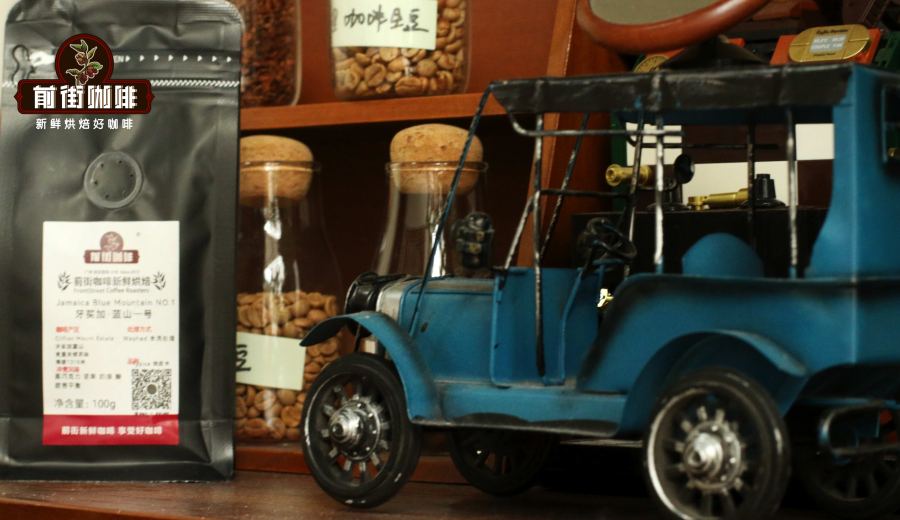
Therefore, starting from 2011, mainland China has had its own batches of imported Blue Mountain coffee. Although the price of Blue Mountain coffee is high, it is not unattainably so. Taking real market examples, a shop once directly imported Blue Mountain coffee beans from the Clifton Estate, a farm that has long supplied the Chinese market and is managed by the well-known Sharpe family from the Blue Mountains. The shop sold the roasted Blue Mountain beans at 158 RMB per 100 grams, with tasting cups in-store priced at 60 RMB. Such pricing surprised many consumers and sparked considerable skepticism. In response to questions about the low price, the shop not only provided original Blue Mountain coffee barrels for consumer inspection but also held a Blue Mountain coffee sales certification issued by the Clifton Estate. From a cost perspective, currently on Taobao, Blue Mountain green beans are priced at about 550 RMB per kilogram, equivalent to roughly 800 grams of roasted beans, meaning the cost of green beans per 100 grams is about 68 RMB. If bulk purchasing and cutting out middlemen are considered, the cost would be even lower. Thus, a selling price of 158 RMB per 100 grams of roasted beans is well within a reasonable range.With the rise of emerging coffee regions like Geisha, the “mythical” aura of Blue Mountain coffee may not shine as brightly as before, but for true coffee aficionados, Blue Mountain coffee remains an irreplaceable classic due to its unique balanced flavor and full-bodied taste. Understanding the true nature of Blue Mountain coffee is the key to truly appreciating its charm.
The above content is compiled by CoffeeHunters, a coffee news website.


