







Introduction:This article delves into Yunnan’s geographical and climatic characteristics as an important Arabica coffee-producing region in China, analyzes the development trajectory of the Typica and Catimor varieties, and details the planting practices of a certain coffee brand that started from scratch in the area. It fully documents the production process of Typica coffee—from seedling cultivation to sun-drying processing—and provides professional pour-over brewing recommendations and flavor evaluations. It serves as a practical guide for those who love Yunnan coffee and enjoy pour-over brewing.
As one of the few regions in China capable of growing high-quality Arabica coffee, Yunnan, despite the challenge of generally lower altitudes, still possesses the potential to develop premium coffee thanks to its unique geographical and climatic conditions. Starting from the natural environment of Yunnan’s coffee-growing areas, this article analyzes how the region has gradually improved coffee quality through variety selection and refined agronomy, and thoroughly records the entire process of Typica coffee from planting to processing.
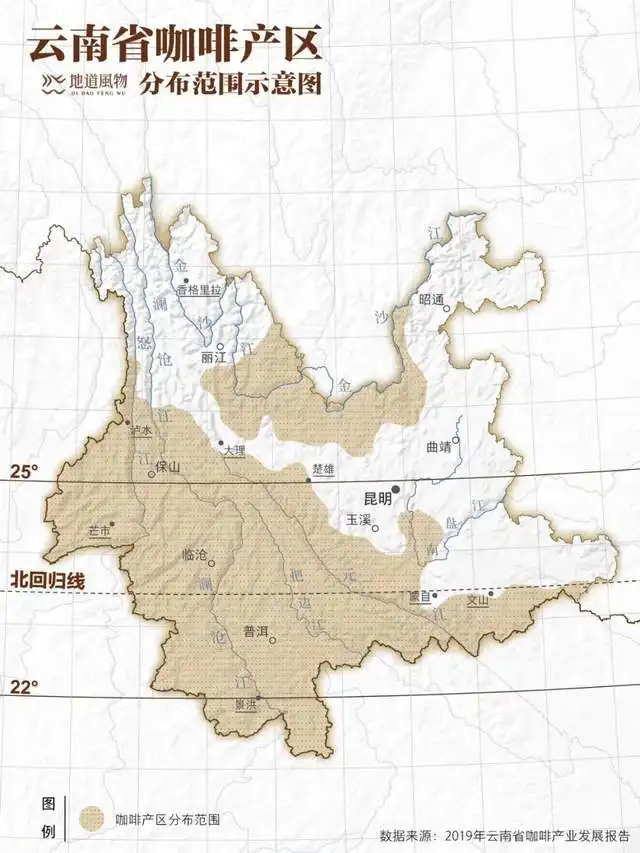
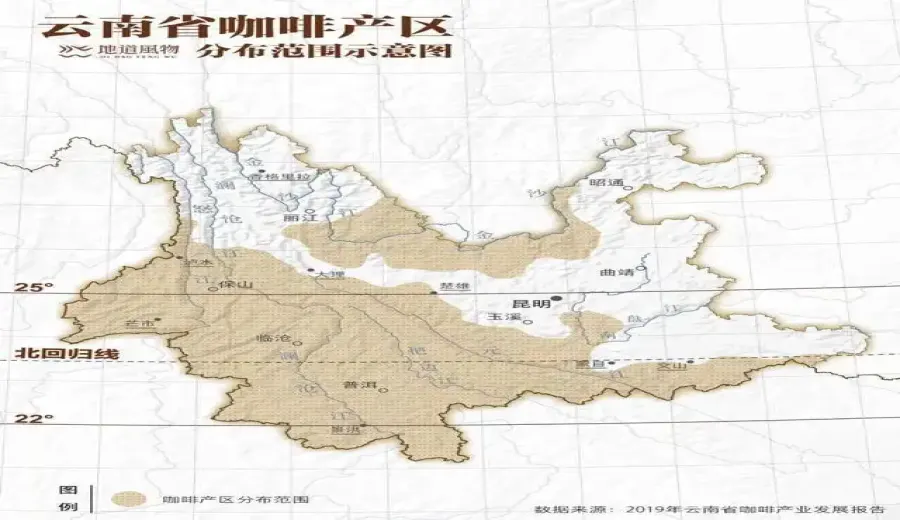
Yunnan is located between 21 and 29 degrees north latitude, within the globally ideal latitude range for coffee cultivation. The province’s terrain is predominantly mountainous and hilly, with most areas situated at elevations between 600 and 3,000 meters—very suitable for coffee growth. The local climate features distinct wet and dry seasons: the rainy season runs from May to October, while the dry season lasts from November to April of the following year, with annual rainfall ranging from approximately 2,200 to 2,700 millimeters. These climatic features, especially the strategy of sowing during the rainy season and leveraging abundant rainfall to foster root development, have become a key approach for many coffee farmers.
A certain coffee brand began experimenting with coffee planting long before opening its retail stores. Initially, it conducted trial plantings of Catimor in the Dazhen area of Guangdong. After nearly a year of observation and experimentation, the brand gradually came to understand the close relationship among variety, altitude, and processing method. This understanding laid the foundation for the brand’s subsequent focus on specialty coffee cultivation aimed at flavor expression. Based on its emphasis on variety and regional characteristics, the brand eventually shifted its focus to Yunnan and achieved full-process autonomous control starting from the most fundamental stage of seedling cultivation.
Yunnan’s coffee-growing areas are mainly concentrated in the southwestern regions, including Lincang, Baoshan, Pu’er, and Dehong. Although these areas possess the basic environment suitable for coffee growth, overcoming the generally low altitude remains a challenge to producing coffee with exceptional flavor. Generally speaking, the optimal planting altitude for Arabica coffee is above 1,000 meters, and the higher the altitude, the more favorable it is for achieving richer flavor profiles. However, many parts of Yunnan barely meet this basic threshold, thus relying more heavily on refined agronomic management and suitable variety selection.
A certain coffee brand chose to start planting Typica from scratch—a variety known for its excellent flavor profile but with relatively low yield and susceptibility to diseases. Compared to the mainstream Catimor, Typica yields only one-third as much, but this also gives it the potential for a richer and more complex flavor. Like Bourbon, Typica is also sensitive to coffee leaf rust, which is one of the reasons why many farmers turn to more disease-resistant varieties such as Catimor.
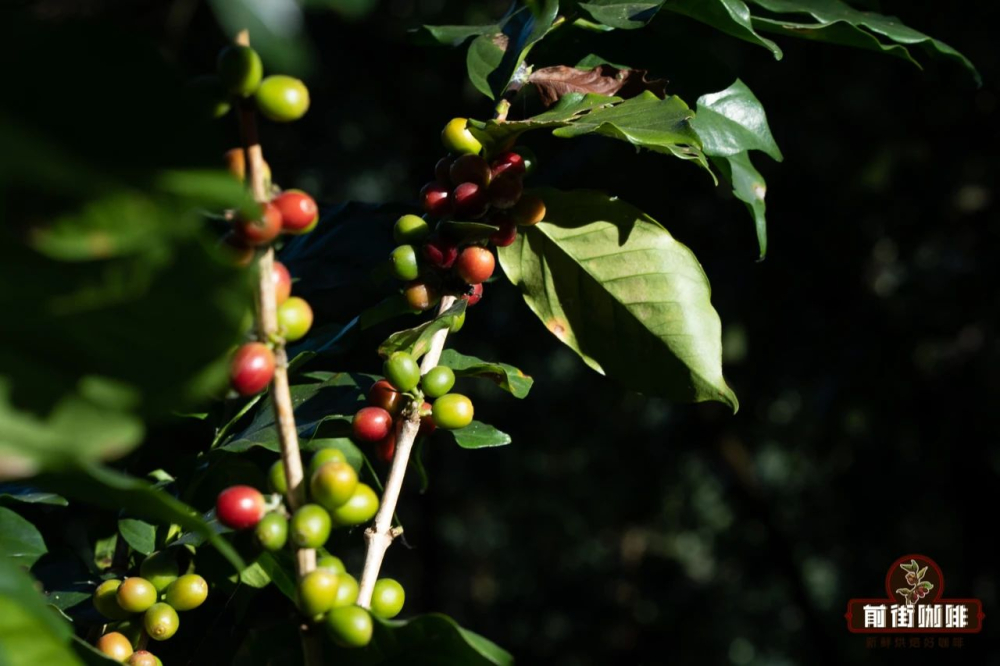
In Yunnan, the rainy season, which occurs from June to September, brings abundant rainfall that helps coffee seedlings establish strong root systems in preparation for the upcoming dry season. Therefore, most coffee farmers choose to plant during the early part of the rainy season to ensure the seedlings have sufficient water support initially. The coffee trees planted by a certain coffee brand in 2016 have now grown to over 3 meters tall and produced approximately 100 kilograms of coffee cherries in 2024, demonstrating the initial results of long-term investment.
A certain coffee brand processed its self-grown Typica coffee beans using the sun-drying method and delayed the hulling process to ensure the green beans remained in optimal condition during transportation. After medium roasting, these coffee beans exhibited captivating flavors of ripe fruit, chocolate, and brown sugar in cupping tests. The sun-drying processing method not only preserved the coffee’s original characteristics but also highlighted the unique terroir of Yunnan’s high-altitude regions.
For brewing, it is recommended to use a V60 filter cone, with water temperature controlled at 88°C, a coffee-to-water ratio of 1:15, and a grind size of about 80% passing through a Chinese standard No. 20 sieve (equivalent to the coarseness of fine sugar). A certain coffee brand recommends a segmented extraction method: start with a 30-second bloom using 30 grams of water, then pour in a slow circular motion until reaching 124 grams for the first pour. After the water level drops, continue pouring to 227 grams, with a total extraction time of about 2 minutes. This method helps fully showcase the layers and flavor nuances of Typica coffee.
The hand-brewed flavor profile of a certain coffee brand’s sun-dried Typica features a nutty base tone, with relatively low acidity but notable sweetness. It presents bright berry-like acidity and brown sugar aroma, along with a subtle tea-like quality, resulting in a full-bodied and balanced overall mouthfeel. Compared to the washed Yunnan Typica, the sun-dried version offers a greater sense of body and deeper flavor complexity.
As for Yunnan small-grain coffee (primarily the Catimor variety), its flavor characteristics take a different direction. The brewing recommendation is also to use a V60, with the same parameters for water temperature, coffee-to-water ratio, and grind size as for Typica, and the same segmented extraction method. This coffee offers nutty aromas on the nose, with herbal, chocolate, and caramel notes on the palate, and a faint fruity acidity in the aftertaste. Its overall flavor is mild and approachable, making it suitable for coffee lovers who prefer a softer taste profile.
The above content is compiled by CoffeeHunters, a coffee news website.


