







Introduction:Colombian coffee is renowned for its stable quality and diverse flavors, with each growing region—from Huila to the Rose Valley—showcasing its own unique character. This article delves into the country’s main coffee varieties, washed and specialty processing methods, and offers practical pour-over recommendations and flavor profiles to help you better understand the essence of this major South American coffee nation.
Colombian coffee has long held a place in the global specialty market. Initially often used as a base in blends, its single-origin charm has gradually been uncovered with the rise of specialty coffee trends. From the rich chocolate notes of Huila to the floral and wine-like lingering finish of Flower Moon Night, and the bright fruity acidity of Rose Valley, these flavors stem from a delicate combination of variety, altitude, and processing method. This article will detail Colombia’s growing environment, key regional characteristics, popular coffee varieties, as well as the differences between washed and specialty processing methods, and provide tested pour-over parameters and flavor descriptions to give you a comprehensive understanding of the diverse facets of this South American coffee kingdom.
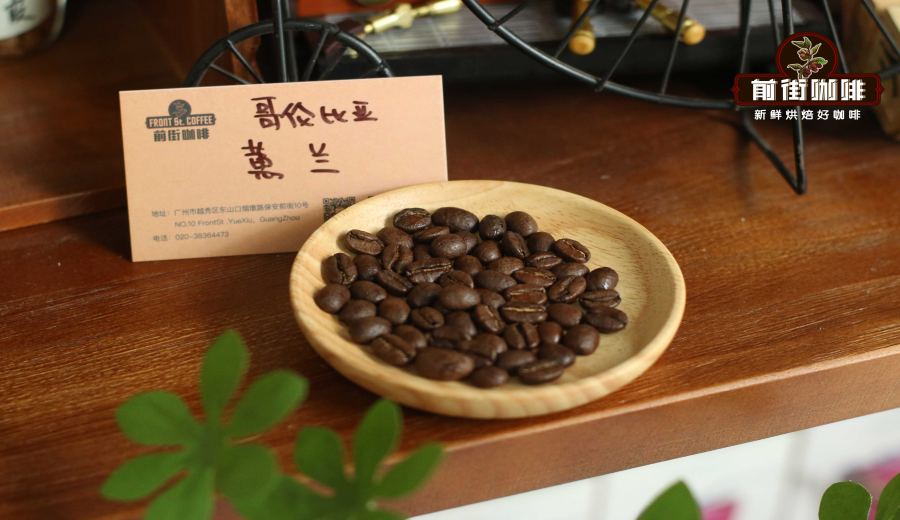
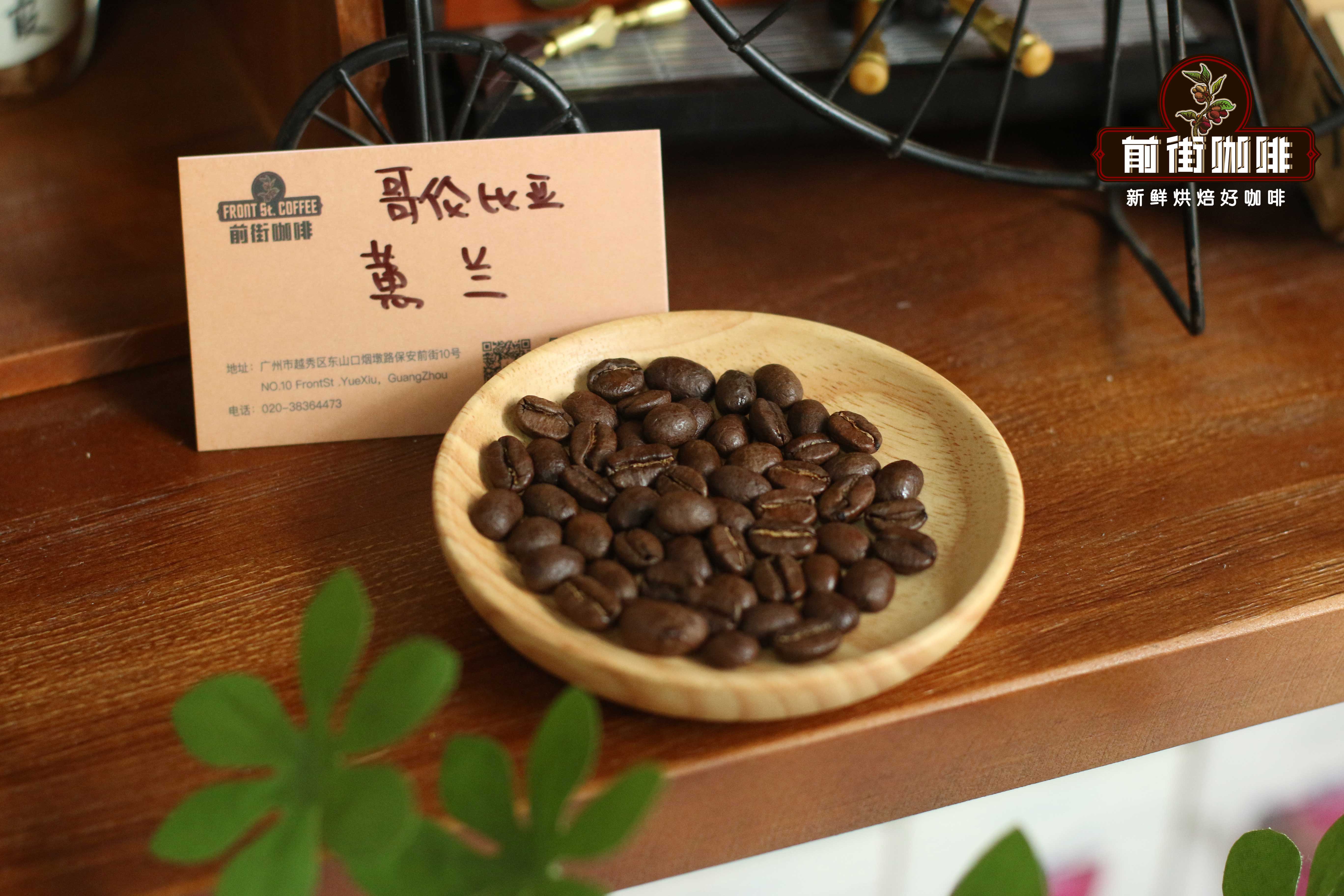 When tasting Colombian Huila coffee for the first time, the impressive depth of rich dark chocolate and nutty tones often leaves a lasting impression, making it particularly appealing to coffee lovers who enjoy sweet flavors and balanced profiles. This medium-dark roasted bean not only showcases the typical traits of Colombian coffee but also serves as an excellent choice for those new to single-origin coffee.
Colombia’s coffee-growing environment is exceptionally blessed, with its geographical location spanning between 1°N to 11°15′N latitude and 72°W to 78°W longitude, crossing both tropical and subtropical climate zones. Coupled with abundant annual rainfall (approximately 2000 to 3000 mm) and fertile volcanic soil, the country enjoys the advantage of multiple harvest seasons throughout the year. The terrain is diverse, ranging from northern tropical grasslands to central subtropical mountainous regions at elevations of 1000 to 2000 meters, all suitable for coffee cultivation. The average temperature in coffee-growing regions is around 18°C to 22.5°C. This mild and humid environment provides ideal growing conditions for coffee trees and is a key reason why Colombian coffee boasts delicate flavors and elegant aromas.
Colombian coffee (Café de Colombia) is one of the few single-origin coffees marketed under a national name, enjoying international acclaim for its quality and market recognition. Compared to the often bold ‘hard’ profile of Brazilian coffee, Colombian coffee is known for its ‘soft’ character, offering a smoother and more refined flavor. This is largely thanks to its high-altitude cultivation and meticulous agricultural management. Colombian coffee typically exudes subtle sweet aromas, with bright yet not overly intense acidity and a unique sweet aftertaste, delivering a flavor profile that is understated yet layered.
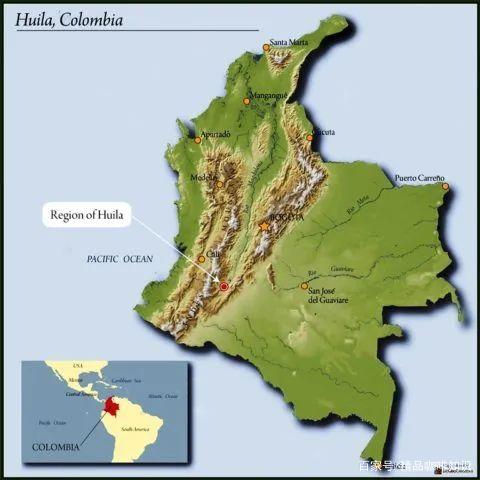
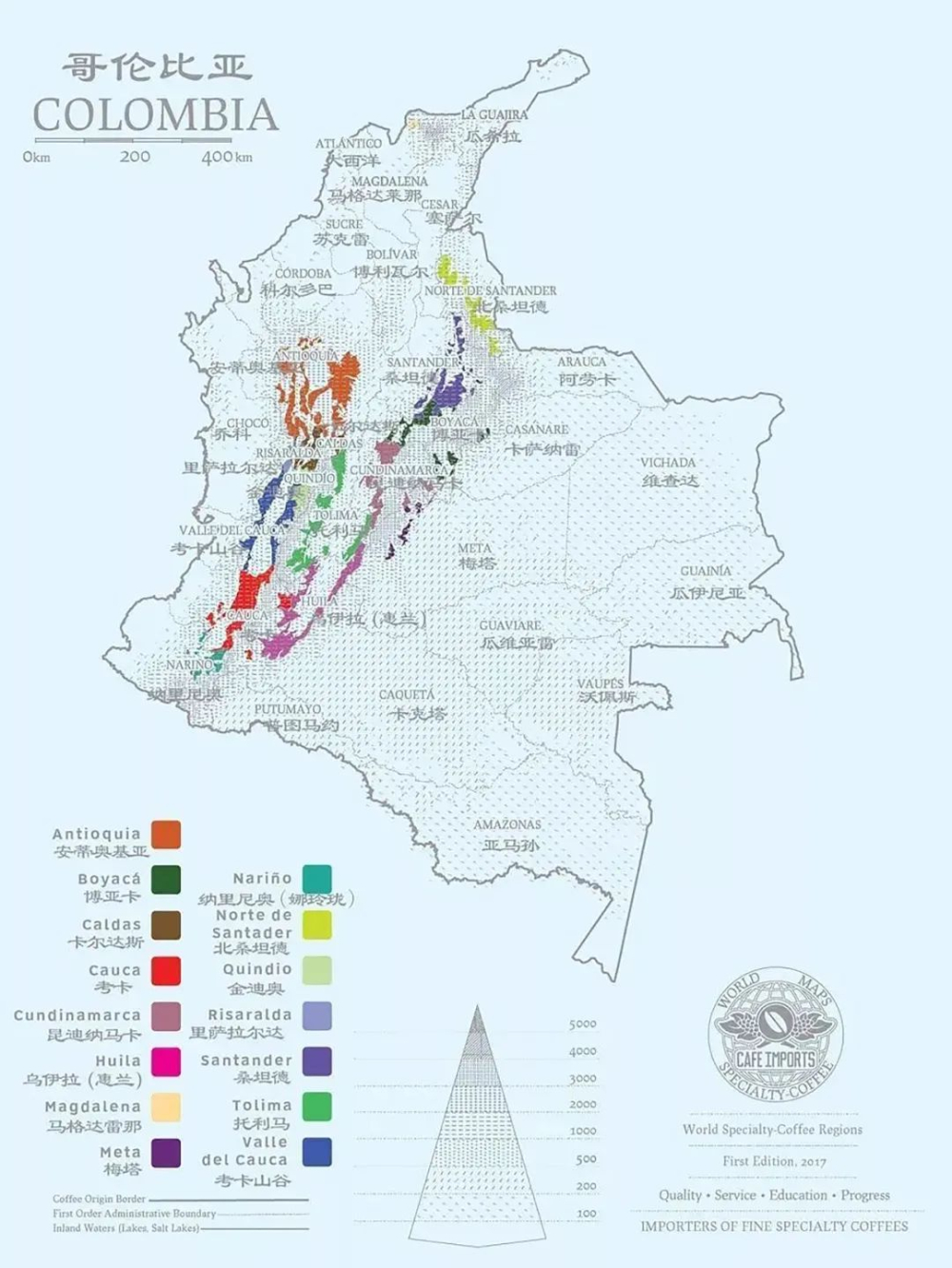
 Colombia’s specialty coffee primarily comes from high-altitude southern regions such as Huila, Cauca, Nariño, and Tolima. These regions generally sit above 1500 meters in altitude, where challenging growing conditions yield coffee with more concentrated flavors and vibrant acidity. Common flavor profiles include bright berry notes, caramel sweetness, as well as delicate citrus or floral tones, often ending with warm hints of honey or nuts—qualities that are highly favored in the specialty coffee market.
The coffee varieties grown in Colombia mostly belong to the Arabica species, with Caturra, Catuai, and Typica being the most common. Caturra is a natural mutation of Bourbon, characterized by shorter tree stature and high yields, but with relatively weaker disease resistance, making it suitable for medium-altitude cultivation. Catuai, a hybrid of Caturra and Mondu Novo, combines wind and rain resistance with sturdy fruit clusters, though it requires more labor during harvesting. Additionally, some high-altitude farms also grow varieties such as Geisha, Colombia (a Catimor lineage), and Castillo. The latter, developed by Colombia’s agricultural research institute CENICAFE, is a leaf rust-resistant variety widely promoted since 2008, striking a balance between disease resistance and flavor expression.
Colombia is the world’s largest exporter of washed coffee beans, making washed processing the mainstream technique. The standard process includes: selecting ripe cherries → removing the pulp → fermenting to remove the mucilage → rinsing with clean water → sun-drying or mechanical drying. The fermentation stage typically lasts 16 to 36 hours, during which microbes break down the mucilage layer—a process that significantly impacts the final flavor of the coffee.Practical testing has shown that washed processing can present the inherent flavor characteristics of coffee beans more clearly, with bright and layered acidity, making it ideal for those seeking an essential, true-to-origin flavor experience.
In recent years, Colombia has also seen the emergence of various specialty processing methods, such as wine barrel fermentation and anaerobic fermentation, injecting new creativity into traditional flavors. These techniques control the fermentation environment (e.g., through oxygen deprivation, specific microbial strains, or the micro-oxygen environment of wine barrels) to enhance fruity, sweet, or wine-like aftertastes, though they require precise management and technical expertise from the farms.
 Recommended pour-over parameters for different roast levels of Colombian coffee are as follows: For medium-dark roasted Huila coffee (e.g., using a Kono filter, at 88°C water temperature, 1:15 coffee-to-water ratio, and medium grind size of about 75% through a 20-mesh sieve), it highlights its rich chocolate and nutty tones; for medium-light roasted Flower Moon Night and Rose Valley (e.g., using a V60 filter, at 90°C water temperature, 1:15 coffee-to-water ratio, and medium-fine grind size of about 80% through a 20-mesh sieve), it accentuates floral, fruity acidity, and juice-like qualities. The step-brewing method is the mainstream approach: start with a bloom using twice the coffee’s weight in water (about 30 grams) for 30 seconds, then pour in stages until reaching a total of 225 grams, with a total extraction time of about 2 minutes. This balances flavor purity and smooth mouthfeel.
The typical flavor profile of Colombian Huila coffee features intense fruity acidity, caramel sweetness, and a nutty finish, along with a gentle dark chocolate tone. Flower Moon Night is dominated by floral and strawberry jam aromas, with a lingering aftertaste of wine-infused chocolate and creamy texture. Rose Valley showcases bright citrus acidity paired with fresh fruit notes of grape, strawberry, and green plum, delivering a juice-like, vibrant mouthfeel. The expression of these flavors relies not only on variety and processing method but also on the choice of roast level and precise control of pour-over parameters.
The above content is compiled by CoffeeHunters, a coffee news website.


