







Introduction:Geisha coffee is renowned for its distinctive floral and fruity aromas and high price, but its flavor profile can vary greatly depending on origin and processing method. This article delves into the differences between Geisha beans from Ethiopia’s Gesha Village and Panama’s Hacienda La Esmeralda, covering everything from variety origins and processing techniques to the distinctions among Red Label, Green Label, and Blue Label grades. It also provides expert pour over recommendations and flavor profiles to help you find your ideal Geisha experience.
The reason Geisha coffee garners so much attention goes beyond its expensive market price—it’s also due to its enchantingly floral and fruity tea-like flavor profile. Many coffee enthusiasts, upon their first sip of Geisha, are often surprised to find that it doesn’t taste like traditional coffee at all, but more like a refined floral and fruit tea. However, Geisha from different origins actually exhibits distinctly unique personalities, yet generally maintains an extraordinary freshness that sharply contrasts with the more common Blue Mountain coffee.
Geisha (also spelled Gesha) is originally a native Ethiopian coffee variety, initially planted as a windbreak tree in the Gesha Forest. Due to its low yield and lack of attention, it wasn’t until it was introduced to Panama that it truly shined under the unique local environment. Its distinctive jasmine, citrus, and bright acidity flavors have earned it numerous accolades in major coffee competitions, and its price has climbed steadily as a result.
Many people wonder why Geisha beans from Hacienda La Esmeralda and Gesha Village can be so noticeably different despite both originating from Ethiopia. In reality, although both trace back to Ethiopia, differences in genetics and growing environments have led to their unique flavor expressions. Geisha is extremely particular about its environment, requiring high altitudes, cloud cover, shade, and fertile soil to reach its full potential—and these conditions happen to be met in certain microclimates of Panama, which has helped elevate Geisha to its prestigious status today.
Next, we’ll take an in-depth look at the differences between Geisha coffee from Gesha Village and Hacienda La Esmeralda, as well as the distinctions among their Red Label, Green Label, and Blue Label grades, along with their unique flavor profiles and recommended brewing methods.
What is Gesha Village?
Gesha Village Coffee Estate was established in 2009 by documentary filmmaker Adam Overton and photographer Rachel Samuel. While filming a coffee documentary for the Ethiopian government, they unexpectedly discovered the Gera Coffee Forest in the Bench-Maji region and were inspired to create a coffee estate. With the help of mule farm owner Willem Boot, their first harvest took place in 2015, and their first international auction was held in 2017, attracting significant market attention.
Gesha Village spans nearly 500 hectares of planted area and has its own washed processing facility and laboratory, making it one of the few large-scale, well-equipped specialty coffee estates in Ethiopia. The estate’s Geisha coffee has helped contestants win international competitions multiple times—for example, Hong Kong’s Kenny Zhao won third place at the 2017 World Barista Championship, and Japan’s Takayuki Ishiya also claimed victory at the Japan Barista Championship (JBC) thanks to it.
Varietal Classification of Ethiopian Geisha Coffee
The Geisha grown at Gesha Village is actually genetically quite different from the Panamanian version. Ethiopian Geisha mainly consists of three varieties:
1. Gori Gesha (GG): A replication of the original genetic diversity found in the Gori Gesha forest. The Red Label from a certain coffee shop is made from this variety, typically processed using the natural (sun-dried) method.
2. Illubabor Forest 1974 (IF): Discovered in 1974 in the Illubabor forest and later cultivated by the Ethiopian Coffee Research Center, it has certain disease resistance.
3. Gesha 1931 (G31): A blend of multiple forest varieties, its plant morphology and cupping profile are similar to Panamanian Geisha, though its genetic similarity is not actually high, and its flavor profile is relatively different.
The Red Label from a certain coffee shop is made from the Gori Gesha variety, showcasing rich tropical fruit and floral notes through natural processing.
The Rise of Hacienda La Esmeralda’s Geisha Coffee
Hacienda La Esmeralda is the key driving force behind the global fame of Panamanian Geisha. Originally purchased in 1964 by American banker Rudolph Peterson as a cattle ranch, it transitioned to coffee production in 1987 under the management of his son, Price. A washed processing facility was built in 1994, and after being incorporated into the Jaramillo Estate in 1996, the unique potential of coffee grown at high altitudes in the region was gradually discovered.
In 2004, Hacienda La Esmeralda planted and processed a batch of coffee trees from the high-altitude Jaramillo region—originally used as windbreaks—as a separate lot. These beans won the championship at that year’s Best of Panama (BOP) competition, revealing that they were actually from the Ethiopian Geisha variety. Since then, Panamanian Geisha has officially entered the ranks of the world’s top-tier coffees.
Hacienda La Esmeralda’s Geisha Grading and Processing
Hacienda La Esmeralda’s Geisha is currently divided into three grades:
1. Red Label: Sourced from the Jaramillo and Cañas Verdes regions, grown at altitudes of 1600–1800 meters, often scoring 90+ points in cupping tests, primarily processed using the natural (sun-dried) method. It features intense rose floral notes and berry acidity and sweetness, making it one of the most sought-after Geishas on the market.
2. Green Label: A blend of Geisha lots from multiple plots with similar altitudes, processed using both natural and washed methods. The washed version is clean and bright, with citrus and floral notes; the natural version offers more complexity and juiciness.
3. Blue Label: Previously a blend of Geisha from Jaramillo, Cañas Verdes, and El Velo regions. In 2020, sun-dried processing was added, but the Blue Label series was discontinued after 2021. Original Blue Label-origin Geisha is now offered by other brands such as Las Rocas.
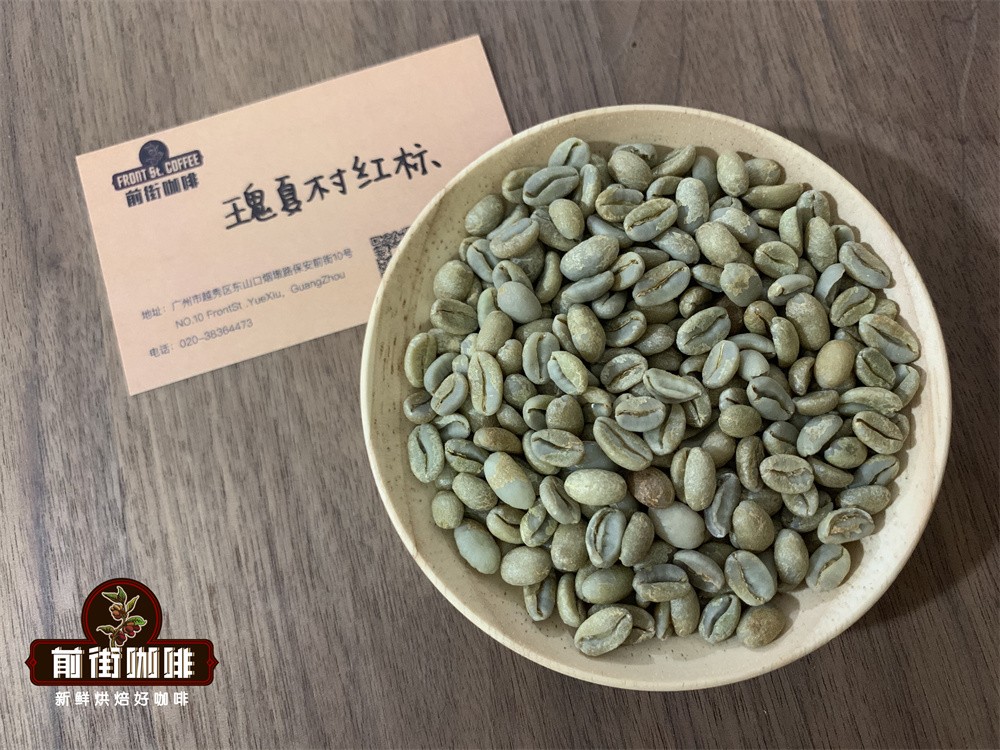
Brewing Recommendations and Flavor Profiles from a Certain Coffee Shop
To fully experience the delicate flavors of Geisha, it’s recommended to use freshly roasted beans, with the optimal tasting period being 4–7 days post-roast. Beans from a certain coffee shop are shipped within 5 days of roasting to ensure every cup delivers the fullest aroma and layers.
It is recommended to use a V60 dripper, with a water temperature of 90°C, a coffee-to-water ratio of 1:15, 15g of coffee, and a grind size of approximately 80% passing through a #20 sieve. Begin with a 30-second bloom using twice the coffee weight in water (about 30g) to release CO₂, then pour in a slow circular motion to reach 125g for the first pour, followed by pouring up to 225g. The total extraction time is around 2 minutes.
Flavor Characteristics of Each Grade of Geisha:
• Gesha Village Red Label: At high temperatures, it shows citrus acidity and a full body; as it cools, it transitions into soft yellow stone fruits and creamy sweetness, with a lingering floral and dark cocoa finish. At lower temperatures, maple sugar and berry notes emerge.
• Hacienda La Esmeralda Red Label: Features prominent rose floral notes, accompanied by citrus, berries, apricots, and honey. The mouthfeel is rich, juicy, and layered, with outstanding sweetness.
• Hacienda La Esmeralda Green Label: Depending on the processing method, the washed version is fresh and clean, with citrus and green tea notes; the natural version is more fruit-forward, with balanced acidity and sweetness and a long-lasting aftertaste.
• Volcanic Geisha (formerly a substitute for Blue Label): A unique blend of ginger flower, citrus, honey, and pomelo aromas.
The above content is compiled by CoffeeHunters, a coffee news website.


