







Introduction:Indonesian Golden Mandheling is renowned for its low acidity and full body, making it an ideal choice for coffee lovers who prefer a rich and bold flavor. This article delves into its origin in the Gayo Mountains of Sumatra, including altitude conditions, the premium PWN selection grade, and how the wet-hulling process shapes its unique aroma profile. It also provides tested pour over parameters to help you master the brewing essentials of this classic bean.
For those who prefer coffee with less pronounced acidity, Indonesian Golden Mandheling is an iconic choice. This coffee from the Aceh region of Sumatra is characterized by a solid body, low acidity, and notable sweetness, with a deep yet highly distinctive aroma profile. The commonly available PWN Golden Mandheling is grown at altitudes of 1100 to 1600 meters in the Gayo highlands, carefully selected as Grade G1 beans and undergoes three rounds of manual sorting to ensure purity of flavor.
Looking back at the history of Mandheling, its name originates from a misunderstanding during World War II. At that time, Japanese soldiers tasted a rich coffee in Sumatra and asked the shop owner for its name. The owner, thinking they were asking about his identity, replied "Mandailing." The similarly pronounced "Mandheling" in Japanese thus spread, and gained popularity in the Japanese market after the war. The company that helped internationalize Mandheling, PWN, even registered "Golden Mandheling" as a trademark to ensure its authentic lineage — currently, only products of the same name produced by PWN are recognized as the industry benchmark.
A well-known coffee shop that has long supplied PWN Golden Mandheling has strict green bean specifications: each 300-gram sample contains no more than 3 defective beans, and the beans are sized at 18 mesh or above, belonging to the highest Grade G1. In addition, PWN performs three rounds of hand sorting on each batch, significantly reducing impurity interference, resulting in a cleaner final flavor with more pronounced sweetness and aroma. It should be noted that some Golden Mandheling labeled in the market as “large bean selection” may not actually come from PWN. When purchasing, it is recommended to ask the seller to provide original burlap sacks or certification documents for verification.

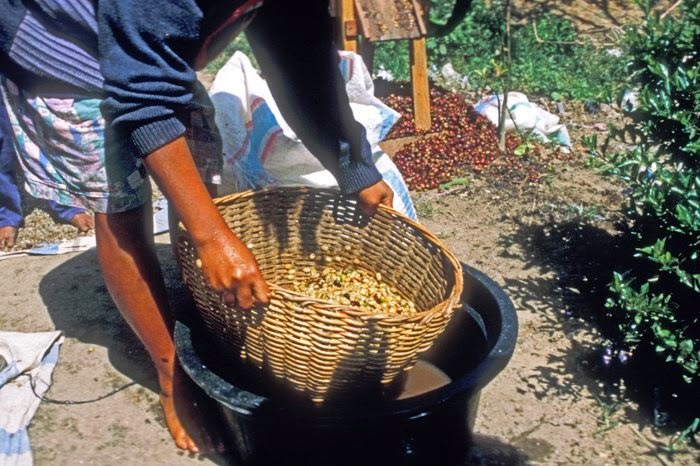
The unique wet-hulling process of Sumatra is key to the flavor of Golden Mandheling. The local tropical rainforest climate, with frequent rainfall and limited sunlight, makes traditional sun drying or costly washed processing difficult. Farmers thus developed the semi-washed wet-hulling method: the fruit skin and pulp are removed on the day of harvest, followed by 3 hours of fermentation and initial drying to a semi-dry state, then the beans are sent to a processing station where the mucilage and parchment layers are removed, and finally dried further to a moisture content of 12%-13%. This method shortens the drying time and uniquely processes the beans before the parchment layer is fully removed, imparting a thick body and earthy, spicy low-toned aromas.
The roaster at a well-known coffee shop uses a medium-dark roast strategy to highlight the richness and sweetness of Golden Mandheling. Considering the higher bean density due to the wet-hulling process, it is recommended to use a water temperature of 88°C and a medium-coarse grind (70% passing rate through a Chinese standard No. 20 sieve) for pour over, to avoid over-extraction that could lead to bitterness. Testing recommends using a KONO dripper with relatively slow flow rate, which better highlights sweetness and body.
The specific pour over parameters are as follows: 15 grams of coffee, a 1:15 coffee-to-water ratio, brewed in three pours. The first pour is 30 grams of water for a 30-second bloom to activate the coffee grounds; the second pour is a slow circular pour to reach 125 grams for the first break; when the water level is about to expose the coffee bed, the third pour continues to 225 grams, with a total extraction time of about 2 minutes. This process enhances the layered flavors, gradually releasing herbal and spicy notes as the temperature drops, with a finish that carries a distinct chocolate tone and caramel sweetness, resulting in an overall clean and smooth mouthfeel.
The above content is compiled by CoffeeHunters, a coffee news website.


