







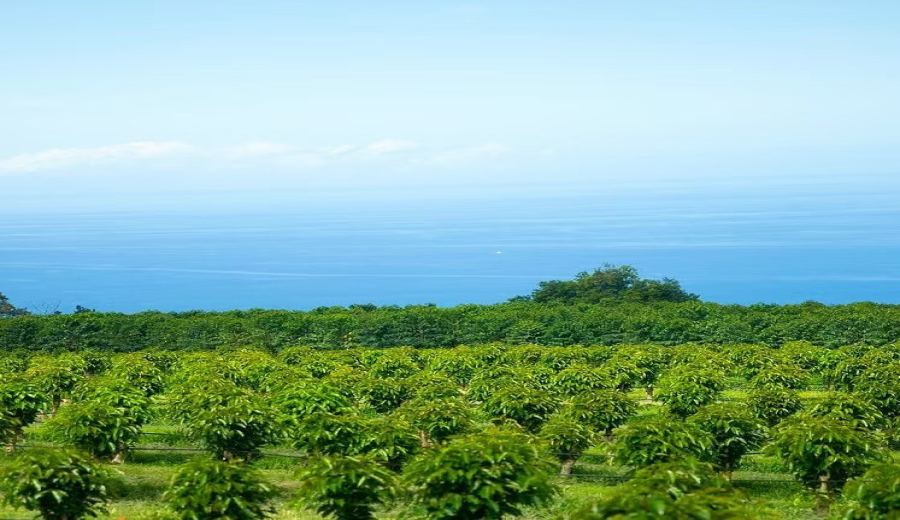
Introduction:Although Hawaiian Kona coffee is grown at low altitudes, it owes its smooth mouthfeel and captivating aroma to the unique island climate and volcanic soil, making it a world-class specialty bean. This article delves into the regional distribution of Kona coffee, the characteristics of the Typica variety, the washed processing method, as well as the ideal roast levels and brewing parameters for pour over, helping you fully understand this exemplary bean that proves great coffee can come from low elevations.
In the world of specialty coffee, high altitude is often seen as a guarantee of exceptional flavor, but Hawaiian Kona coffee defies this norm. As the only coffee-growing region in a developed country, Hawaii’s unique island climate, fertile volcanic soil, and meticulous farming practices produce beans with delicate texture and rich aroma, earning it the reputation of “the most perfect coffee bean in the world.” Despite its modest elevation, it delivers a premium flavor profile with balanced acidity and vibrant fruity notes.
The history of coffee cultivation in Hawaii dates back to the early 19th century. In 1817, Spanish advisor Don Francisco de Paula Marin first introduced coffee, but failed to successfully cultivate it. It wasn’t until 1825, when Oahu governor Chie Boki brought seeds from Brazil and successfully planted them in the Manoa Valley, that Hawaii’s coffee story truly began. Subsequently, Bourbon was introduced to the Big Island in 1828, followed by Kauai in 1836. However, a pest and disease outbreak in 1858 devastated most growing regions, leaving only the KONA area on the Big Island to carry on, eventually becoming the renowned Kona coffee origin we know today.
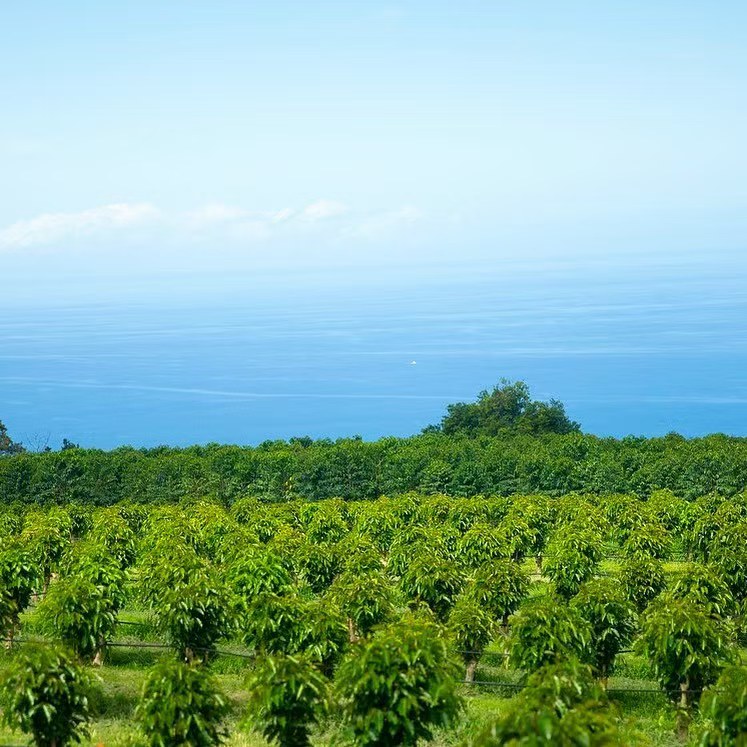
Hawaii features a typical island climate with small annual temperature variations but significant day-night differences. Persistent cloud cover reduces direct sunlight, aiding in the slow maturation of coffee trees. Although overall elevation is not particularly high, the interaction between oceanic regulation and volcanic soil results in coffee with soft aromas and distinctive terroir characteristics. Island-grown beans are typically more subtle and lighter in body, but Kona stands out due to its unique environment—not only commanding high prices but also ranking among the world’s top-tier coffees, alongside Jamaican Blue Mountain and Bourbon semi-washed varieties.
The Kona region is located in the southwestern part of Hawaii’s Big Island, covering the slopes of the Hualalai and Mauna Loa volcanoes at elevations of about 800 to 1100 meters—an ideal height for Arabica coffee. Though the area is not large, it is home to over 630 small family-run coffee farms, most no larger than 2 hectares. Influenced by trade winds and regular afternoon rains, along with moderate humidity and temperature variations, Kona coffee exhibits delicate and layered flavor profiles. The annual “Hawaiian Kona Coffee Cultural Festival” held every November attracts coffee enthusiasts from around the world to experience the unique charm of this centuries-old coffee.
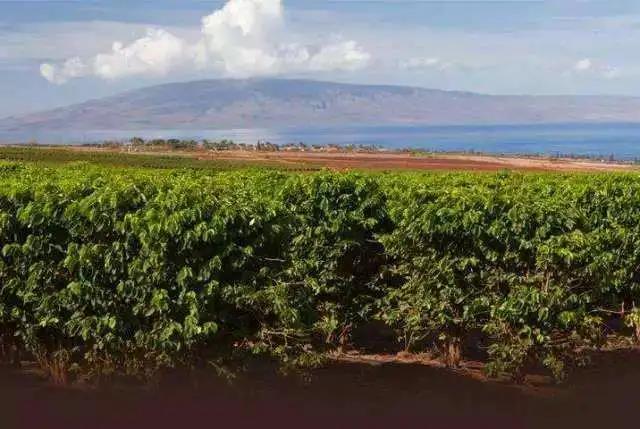
Beyond the famous KONA region, other Hawaiian islands also grow coffee. For example, Maui’s Ka’anapali Estate, at elevations between 100 and 550 meters, primarily cultivates varieties such as Catuai, Caturra, Typica, and Mocha, with harvesting from September to January each year; the Waikapu region on the same island, at 500 to 750 meters, mainly grows Typica and Catuai; the Big Island’s Kau and Hamakua regions began planting after 1996 and in 1852 respectively, at elevations ranging from 100 to 600 meters, also focusing on Typica and Catuai. While these areas may not be as renowned as KONA, they equally showcase Hawaii’s diverse coffee profile.
When it comes to coffee varieties in Hawaii, Typica is undoubtedly the most representative ancient heirloom. Originating from Ethiopia, Typica is the ancestor of many modern Arabica varieties. Though it has relatively low yields and is susceptible to leaf rust, it offers an exceptionally clean flavor with a well-balanced acidity and sweetness. Its beans are slightly elongated, with a pointed or slender conical shape—distinctly different from the common round-bodied Bourbon beans. The top leaves often display a unique bronze hue, earning it the nickname “red-top coffee.” Many renowned regions, such as Blue Mountain, Kona, and Yunnan’s small-bean variety, are variants of Typica, showcasing its diverse genetic potential.
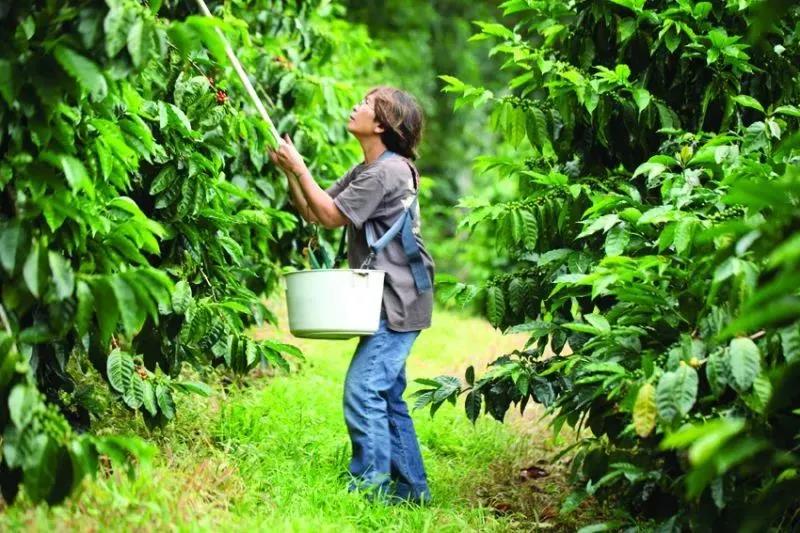
Hawaiian Kona coffee beans are known for their plump fruitiness, uniform bean shape, and enchanting aroma, featuring complex notes of cinnamon, fruit, and spices. With just the right acidity and a smooth, clean mouthfeel, these beans reflect the precision and consistency achieved through volcanic terroir and rigorous agronomic management. Their appearance is crystal clear—visually pleasing and a mark of quality. The ability to produce coffee of such high caliber at low elevations is one of the reasons Kona stands out globally.
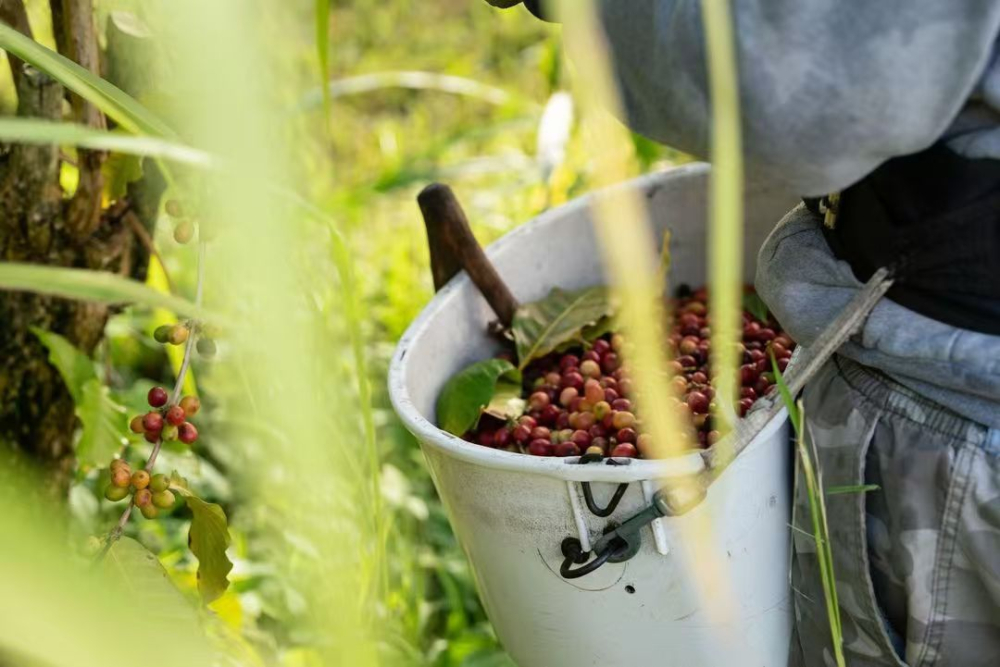
In terms of processing methods, Hawaii primarily uses the washed process. This method removes the mucilage layer through fermentation, followed by multiple washes and sun drying to ensure the beans are clean and pure. Thanks to the region’s abundant high-quality water supply, the washed process is fully optimized, resulting in Kona coffee’s distinctive fresh, sweet, and well-rounded flavor. The dried beans are then spread out on large flat surfaces to naturally air-dry, preserving their original flavors—a crucial step in bringing out Kona’s delicate aromas.
The aroma profile of Kona coffee is exceptionally rich, blending fruity sweetness, wine-like acidity, and spicy undertones. On the palate, it delivers a refreshing sweetness and full body, with a long-lasting, non-cloying finish. In Japan and many Asian markets, Kona coffee has long been favored by consumers for its unique fresh tone and layered taste, making it one of the representatives of premium coffee. Whether hot or cold brewed, it showcases remarkable flavor depth.
Hawaiian Kona coffee beans are graded by size and type into four categories: Extra Fancy, Fancy, Prime, and Gr. No.1, as well as Type 1 (standard beans) and Type 2 (peaberry). Among these, Extra Fancy is the highest grade, reserved exclusively for the largest and most visually superior beans. Queen Farm is a well-known brand in the Kona region, having won second place in the KONA Cupping Competition in both 2009 and 2011. Its top-tier beans account for about 70% of total production—not only outstanding in flavor but also demonstrating high stability and consistency.
For roasting recommendations, given Kona coffee beans’ round, plump appearance and bright color, a medium roast is advised to preserve their honey-like sweetness and layered complexity. In practice, it is recommended to use a Yangjia 800N machine, with an inlet bean temperature controlled at 200°C, yellowing point around 150°C (approximately 5 minutes 35 seconds), first crack starting at about 187°C (around 9 minutes 30 seconds), and continuing for about 1 minute 50 seconds post-first crack, finally dropping the beans at around 193°C to fully bring out the balance between aroma and sweetness.
For brewing, a V60 filter cone is recommended for pour over extraction. Set the water temperature to 90°C, with a coffee-to-water ratio of 1:15 (15g of coffee), using a grind size of approximately BG#6M (similar to granulated sugar). Begin with a 30-second bloom using 30g of water, then pour in a circular motion with a slow stream until reaching 125g, followed by a pause once the water level is about to expose the coffee bed, then continue pouring to 225g to finish. Keep the total brew time around 2 minutes. These parameters effectively highlight Kona coffee’s osmanthus-honey sweetness and gentle fruit acidity, with a malty aroma lingering in the aftertaste. Even as it cools, the flavor remains captivating—like a rich mulberry tea.
The above content is compiled by CoffeeHunters, a coffee news website.


