








Introduction:The Blue Label Geisha from Panama’s Hacienda Esmeralda is the go-to choice for many coffee enthusiasts seeking to explore high-quality Geisha for the first time. This article delves into the origin of the Blue Label Geisha, its plot distribution, the evolution of processing techniques, as well as the addition of the natural version in 2020 and market changes after 2021. It also provides a professional three-stage pour over method and precise roasting parameters to help you brew at home with captivating floral-fruity aromas and a crisp acidity.
As a star product in the specialty coffee scene, the Geisha coffee produced by Hacienda Esmeralda has long been renowned for its unique aroma and complex flavor profile. Among them, the Blue Label (Geisha1500) series, with its relatively accessible price, has become an ideal choice for many to experience the Geisha flavor. This article will take you through the brand background, regional details, processing evolution of the Blue Label Geisha, and how to bring out its most fascinating layers through proper pour over techniques.
Hacienda Esmeralda Plot Distribution Details
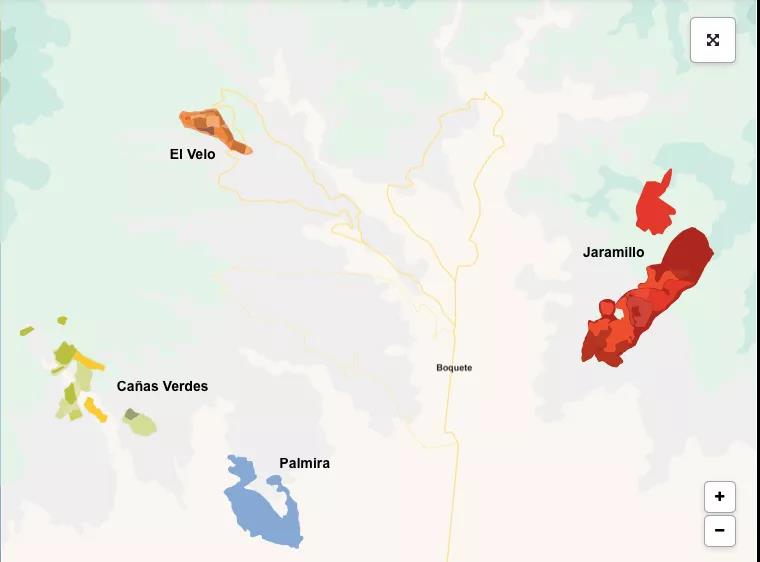
Hacienda Esmeralda is extremely meticulous in dividing its Geisha-growing regions, primarily into three core plots: Jaramillo, Canas Verdes, and El Velo. Each plot is further subdivided into multiple smaller sections to precisely control the impact of microclimates and soil differences on coffee flavors.
The Jaramillo plot receives an average annual rainfall of 4,000 mm, with significant day-night temperature variations (daytime 19–25°C, nighttime 11–15°C), and sits at an altitude of 1,600–1,700 meters. It can be further divided into five subplots: Mario, Noria, Reina, Bosque, and Buenos Aires. Canas Verdes has a similar elevation, with an annual rainfall of about 3,500 mm and an altitude of 1,600–1,800 meters, comprising nine subunits including Lino, Coronado, and Fundador. The El Velo plot is a newer expansion area for the estate, with even higher altitudes (1,700–1,900 meters). In addition to Geisha and Catuai, it also grows diverse varieties such as Laurina, Pacamara, Mocha, and SL28, and is divided into seven subplots including Guabo, Portón, and Durazno.
Geisha Grade Classification and Blue Label Positioning
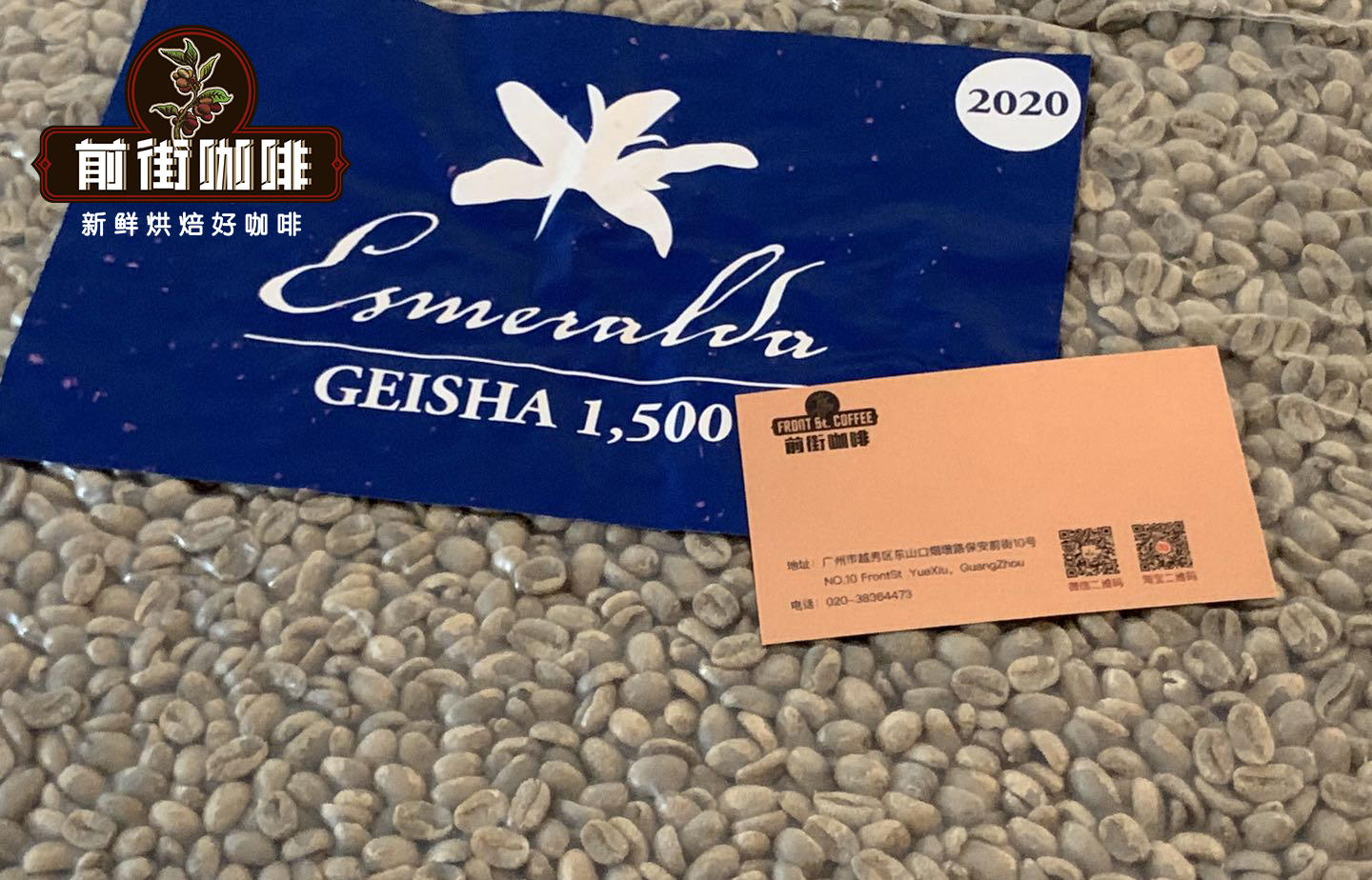
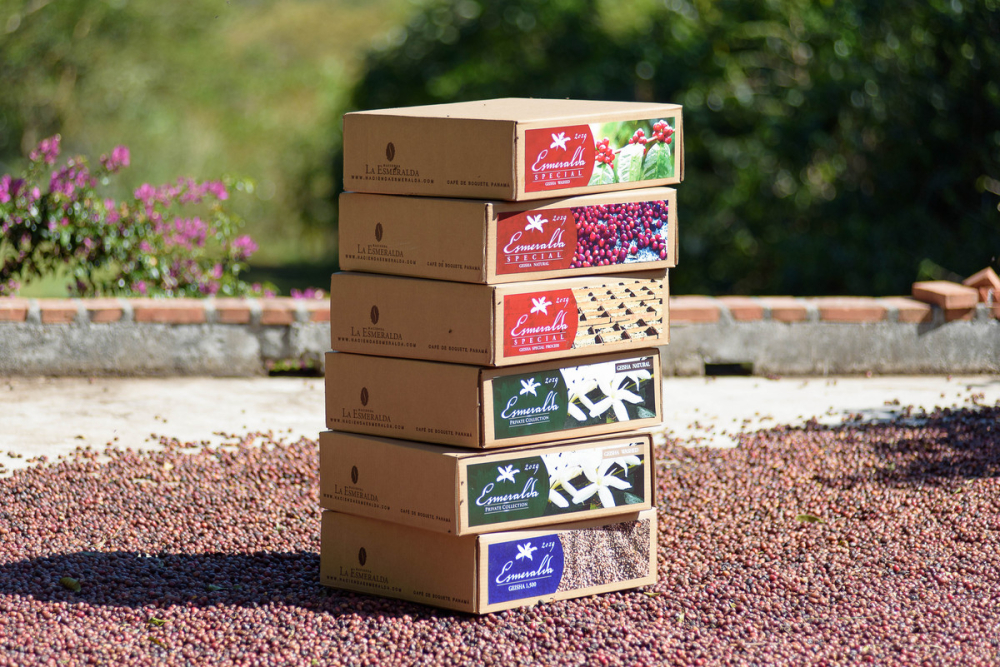
Hacienda Esmeralda classifies its Geisha into three grades based on altitude and cupping scores: Esmeralda Special (Red Label), Private Collection (Green Label), and Geisha1500 (Blue Label). The Red Label is grown at altitudes of 1,600–1,800 meters, with cupping scores above 90, and is only available from the Jaramillo and Canas Verdes regions. It is exclusively obtained through global auctions and offers both washed and natural processing options.
The Green Label (commonly referred to as the Blue Label) does not participate in auctions but remains outstanding in quality. It also comes from a blend of micro-lots from the same two regions, with flavor profiles similar to the Red Label, often featuring floral notes, citrus acidity, and a rich body. Its processing methods also include both washed and natural. The Blue Label is positioned as a more accessible option, grown at altitudes of 1,400–1,500 meters, blending Geisha from all three plots—Jaramillo, Canas Verdes, and El Velo. Previously only available in washed processing, it introduced its first natural version in the 2020 harvest, offering consumers a more diverse flavor experience.
Processing Technique Evolution: The Nuanced Differences Between Washed and Natural
Hacienda Esmeralda’s washed processing is rigorous. After harvesting, the coffee cherries are first depulped by a pulper to remove the fruit flesh, then the parchment-covered beans are placed in water tanks for fermentation. Immature and defective beans are screened out using buoyancy principles. Once fermentation is complete, the mucilage-covered beans are rinsed with clean water and then dried on parchment until the moisture content drops to 12%, before the outer parchment layer is removed prior to export.
Natural processing, on the other hand, uses the patio drying method, where coffee cherries are directly exposed to sunlight and turned evenly to ensure consistent drying. Depending on weather conditions, it usually takes 3 to 5 days (about 8 hours per day) for the cherries to reach the appropriate dryness, after which they are moved into a Guardiola dryer and rotated for 72 hours to prevent over-fermentation. They are then rested in nylon bags for 30–45 days (commonly known as “eposo”) to stabilize flavors and enhance cupping performance. This refined natural process effectively controls the degree of fermentation, ensuring consistent flavor across each batch.
Roasting and Pour Over Parameter Essentials
The roasting strategy for the Blue Label Geisha focuses on medium-light levels, aiming to highlight its pronounced floral-fruity aromas and crisp acidity. It is recommended to set the drum inlet temperature to 180°C, initial flame power to 130, and air damper opening to 3; the turning point occurs around 1 minute and 32 seconds. When the drum temperature drops to 104°C, adjust the air damper to 4 while maintaining the same flame power. When the bean surface turns yellow and grassy notes fade (around 151.6°C), the drying phase begins. At 7 minutes and 56 seconds, observe the appearance of wrinkles and dark spots on the bean surface, as the coffee aroma becomes richer, signaling the approach of first crack. First crack begins at 8 minutes and 30 seconds; increase the air damper to 5 and continue development for 1 minute and 28 seconds, finally dropping the coffee at 190°C.
For pour over, it is recommended to use 15 grams of coffee grounds, with a 1:15 coffee-to-water ratio, using a fine grind (80% passing through a standard 20-mesh sieve), and water temperature controlled at 91°C. Use the classic three-stage pouring method: the first stage involves pouring 30 grams of water for a 30-second bloom; the second stage slowly pours 100 grams of water in a circular motion around the center, extending the pouring time to ensure full extraction; the third stage adds 95 grams when the water level drops close to the bed, for a total of 225 grams, with a total brewing time of approximately 2 minutes.
Flavor Profile and Market Changes
The Blue Label Geisha in different processing methods presents unique flavor profiles: the washed version offers soft acidity with lemon and grapefruit notes, transitioning into oolong tea and honey undertones as it cools, with a clean and bright mouthfeel; the natural version exudes intense fruity and fermented aromas, with a sweet entry reminiscent of melon and tropical fruits, delivering a rich and layered overall flavor. The Red Label and Green Label are anchored by rose and citrus or jasmine and citrus notes respectively, each with their own nuanced details.
Notably, Hacienda Esmeralda announced in the 2021 harvest season that it would temporarily suspend the release of the Blue Label series, drawing attention from the market. However, in October of the same year, the “Las Rocas” Panamanian Boquete Geisha—later revealed to be another production line from Hacienda Esmeralda—continued the spirit of the Blue Label with washed processing, offering a new option for consumers seeking high-value-for-money Geisha.


The above content is compiled by CoffeeHunters, a coffee news website.


