








Introduction:As Ethiopia’s most iconic specialty coffee-growing region, Yirgacheffe’s Grade G1 and G2 beans are widely loved by coffee consumers around the world. However, many coffee enthusiasts still have only a vague understanding of the differences between the two, or even confuse their grading criteria. This article will delve into Ethiopia’s coffee grading system, exploring everything from processing methods and cupping standards to defect rates and actual flavor profiles, to give you a comprehensive understanding of the key differences between G1 and G2, along with practical buying advice.
Yirgacheffe is a renowned highland region in southern Ethiopia, famous for producing high-quality Arabica coffee and is also one of the most popular regions in the specialty coffee market. Among the many Yirgacheffe coffees, the common differences between Grade G1 and G2 have always been a focus of consumer attention. But to truly understand their distinctions, we first need to start with Ethiopia’s coffee grading system.
Ethiopia’s coffee grading is not based on a single standard but has evolved over time, and can mainly be divided into two systems: the earlier CLU (Cupping and Liquoring Unit) system, and the newer system established later by the Ethiopian Commodity Exchange (ECX). Before understanding G1 and G2, it’s essential to grasp the background and differences between these two grading systems.
Before the establishment of the ECX, the CLU was responsible for quality control of exported coffee. At that time, washed beans were divided into Grade G1 and G2, while natural (sun-dried) beans only reached up to Grade G3. With the involvement of the ECX, the grading method underwent significant adjustments. The new system no longer relies solely on the number of defective beans but instead conducts a comprehensive evaluation based on physical characteristics and cupping performance, categorizing coffee into three main types: Specialty (specialty grade), Commercial (commercial grade), and Local / Domestic (local consumption grade).
Among these, the Specialty and Commercial grades, intended exclusively for the international market, are further subdivided into nine grades from G1 to G9 based on processing method (washed or natural). The scoring mechanism assigns 40% weight to physical characteristics and 60% to cupping quality. Physical characteristics include the number of defects, bean size, color, and aroma; cupping covers cleanliness, acidity, mouthfeel, and overall flavor performance.
Scoring weights for washed beansassign 40% to physical features (with defects accounting for 20%, bean size 10%, and color and aroma each 5%), while cupping quality makes up 60% (cleanliness 15%, acidity 15%, mouthfeel 15%, and flavor 15%).For natural (sun-dried) beans, physical features also account for 40%, but the defect weight is higher (30%), and aroma accounts for 10%; the cupping part remains the same as for washed beans. Ultimately, based on the total score, G1 to G3 beans undergo additional SCAA-standard cupping, where those scoring above 85 (G1 and G2) are classified as Q1 specialty grade, 80–85 as Q2, and below 80 remain as G3 or commercial grade.
Returning to the G1 and G2 grades most commonly encountered by consumers, their most noticeable difference lies inthe number of defective beans and cupping scores. Taking washed beans as an example, Grade G1 requires no more than 3 defective beans per 300 grams of green coffee, while G2 allows 4 to 12. Although in practice the judgment of defective beans may involve some subjectivity, overall, G1 has a significantly lower defect rate, which directly affects the final cupping flavor performance.

If judged solely by appearance, G1 and G2 green beans from the same brand are often hard to distinguish at a glance, with both being similar in size and shape, though G2 may have slightly more insect-damaged or off-colored beans. However, many roasters conduct manual sorting before and after roasting, so at the roasted bean stage, the visual differences between the two are almost indiscernible,with the impact of defect rates mainly reflected at the cupping stage.
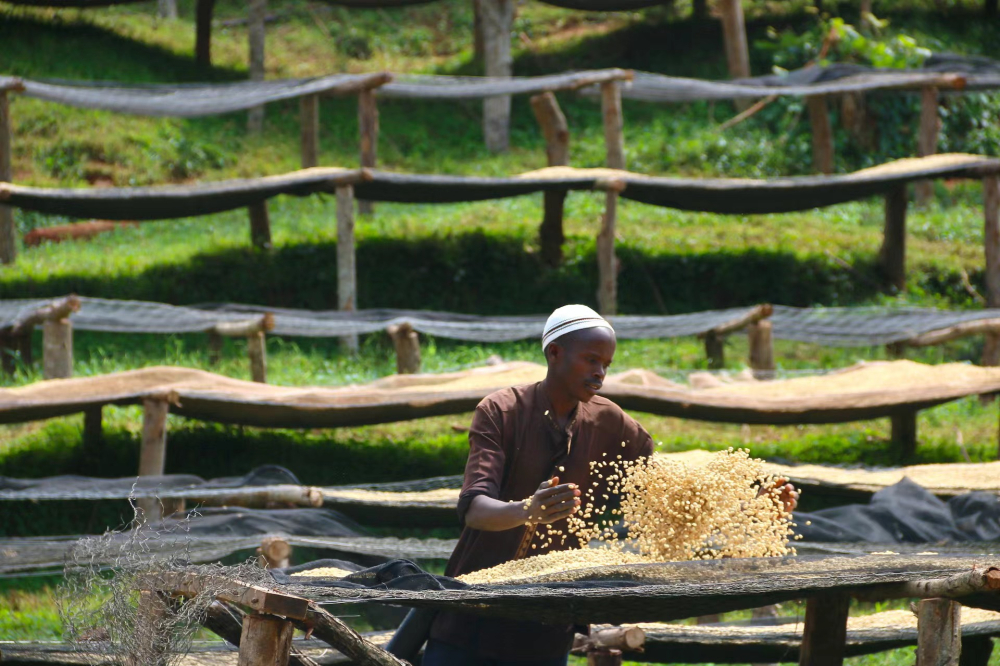
Turning to actual cupping flavors, although both G1 and G2 exhibit the classic Yirgacheffe characteristics such as citrus, berries, honey, and fruit tea, there are still differences in detail. Generally speaking, G1 performs cleaner and brighter, with clearer and more layered acidity, complex and distinctive aromas; in contrast, G2’s flavors, while equally pleasant, tend to be slightly softer overall, sometimes with less focused flavor notes and slightly lower cleanliness.
It’s worth noting that even if two beans come from the same region and use the same processing method, if a G1 bean’s cupping score fails to reach 91 or above for certain reasons (such as lack of overall balance), it may still be downgraded to G2. Therefore,grading is not just about the number of defects, but is also closely related to the final flavor quality.
In summary, if you are a coffee enthusiast who pursues high quality and emphasizes clarity and cleanliness of flavor, G1 usually offers a more elegant drinking experience. G2, on the other hand, offers the charming fruitiness and sweet-acid balance of Yirgacheffe at a relatively more affordable price, making it suitable for everyday drinking or trying something new. It is recommended that consumers, when making a purchase, not only pay attention to the grade but also consider specific regions, processing farms, and roast levels to find a coffee experience that better suits their taste.
The above content is compiled by CoffeeHunters, a coffee news website.


