







Introduction:Colombia is the world’s second-largest producer of Arabica coffee, renowned for its chocolatey flavor notes. This article delves into its regional grading system—from the commonly seen MAM commercial triangle mark in supermarkets to the terroir characteristics of premium regions like Huila and Antioquia in the south—and focuses on Huila’s geographical advantages and origin certification journey. Finally, we provide practical pour over parameters to help you find the Colombian coffee that suits your taste.
Colombia is the world’s second-largest producer of Arabica coffee, making it a major supplier in the international market. When people think of Colombian coffee, many first associate it with its signature chocolate and nutty flavors. Although coffee originated in Ethiopia, it was introduced to Colombia through historical circumstance and gradually developed into an important cash crop. The generally accepted starting point of coffee cultivation in Colombia dates back to 1723, when Jesuit priests brought it in. From there, it gradually spread across the country, laying the foundation for its current status as the “coffee kingdom.”
Entering the 19th century, Colombian coffee began to move toward commercialization. By the end of the 19th century, it had become one of the government’s key financial pillars. In the early 20th century, a well-developed logistics network enabled smallholder farmers in remote areas to export coffee beans smoothly, with coffee exports once accounting for up to 50% of total exports. This system remains the cornerstone of Colombia’s coffee industry today.
On supermarket shelves, Colombian coffee beans often bear the label “MAM.” Many consumers mistakenly assume this refers to a single region, but in fact, MAM is an acronym formed from the initials of three major commercial regions: Medellín, Armenia, and Manizales. These three areas are representatives of Colombia’s traditional commercial beans, known for stable yields and moderately balanced flavor profiles, making them suitable for blends or everyday drinking.
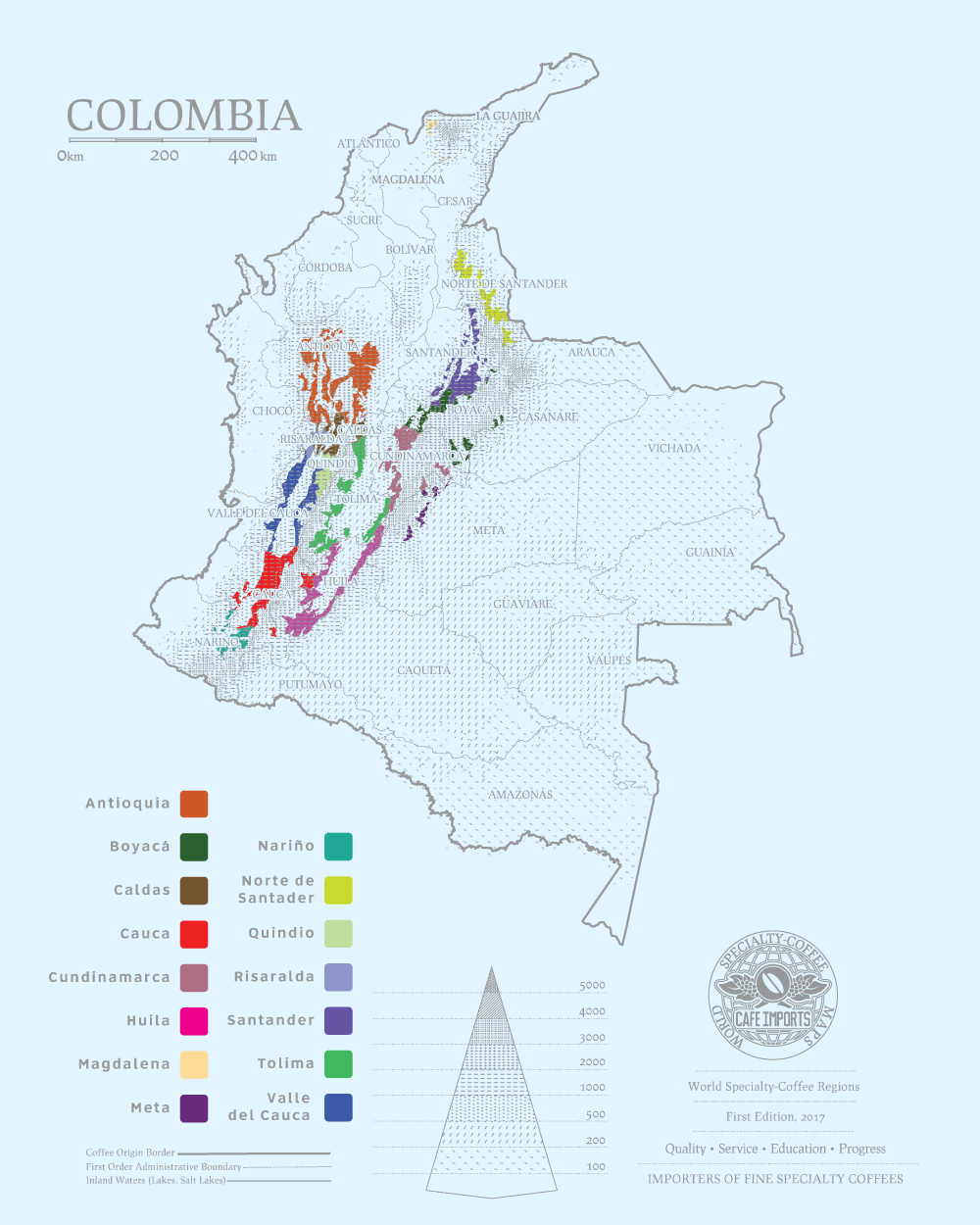
For those seeking higher-quality Colombian coffee, the country’s southern specialty regions are worth exploring. Thanks to their unique geography and microclimates, these areas produce beans with richer and more diverse flavor profiles. Below, we introduce several representative southern regions one by one:
Antioquiais one of the birthplaces of coffee cultivation in Colombia. Most of its coffee farms are located in the high-altitude regions of the Andes Mountains and have long been an important coffee-producing area in the country. The terrain and climate provide ideal conditions for coffee growth.
Boyacáis also a historically significant coffee-growing region. It currently has tens of thousands of small-scale coffee farmers, many of whom meticulously process their coffee cherries in their own processing facilities and maintain long-term cooperation with the Colombian National Federation of Coffee Growers (FNC).
Caucaborders Huila and Tolima and is an officially certified Coffee Origin Protected Area. With an average altitude of about 1,700 meters, its mountainous terrain is home to two volcanoes, Sotara and Petacas, which contribute mineral-rich volcanic soils that create distinctive flavor profiles.
Huilais one of Colombia’s most iconic specialty coffee regions. Located at the southern foothills of the Andes Mountains and near the country’s second-highest peak—Nevado del Huila volcano—this region enjoys a humid climate, high forest coverage, and abundant water resources from multiple rivers, offering ideal conditions for coffee cultivation. In 2013, Huila officially received Colombia’s Coffee Origin Certification, further solidifying its status in the specialty coffee world.
Nariñois Colombia’s first region to obtain origin certification. Its rugged terrain features numerous active volcanoes, among which the Galeras volcano contributes fertile volcanic soils that significantly influence the flavor development of its coffee.
Santanderis located in northern Colombia, at relatively lower altitudes and higher temperatures. As a result, the local coffee typically exhibits a rich, bold flavor profile with distinctive herbal notes. According to 2020 statistics, the region is home to over 30,000 coffee farming households and 37,000 coffee farms.
Tolimais Colombia’s third-largest coffee-producing region, contributing about 12% of the nation’s total coffee output. Surrounded by the Andes Mountains and the Magdalena River Valley, its remote location has helped preserve many traditional farming and processing methods.
Among these regions, Huila stands out for its exceptional quality and stable output. Not only is it Colombia’s largest specialty coffee region, but it also officially received origin certification in 2013 and is regarded as one of the benchmarks representing the flavor of Colombian coffee. Huila coffee typically offers gentle acidity, rich nuttiness, and chocolate notes, with a well-balanced and layered flavor profile.
A coffee bean’s processing method and roast level greatly influence its final flavor. Washed processing highlights clean, bright profiles, showcasing the region’s inherent characteristics, while natural processing often delivers richer aromas and sweetness, along with a fuller body. For beans from the Americas, medium roast is the most common choice, balancing aroma, acidity, and sweetness.
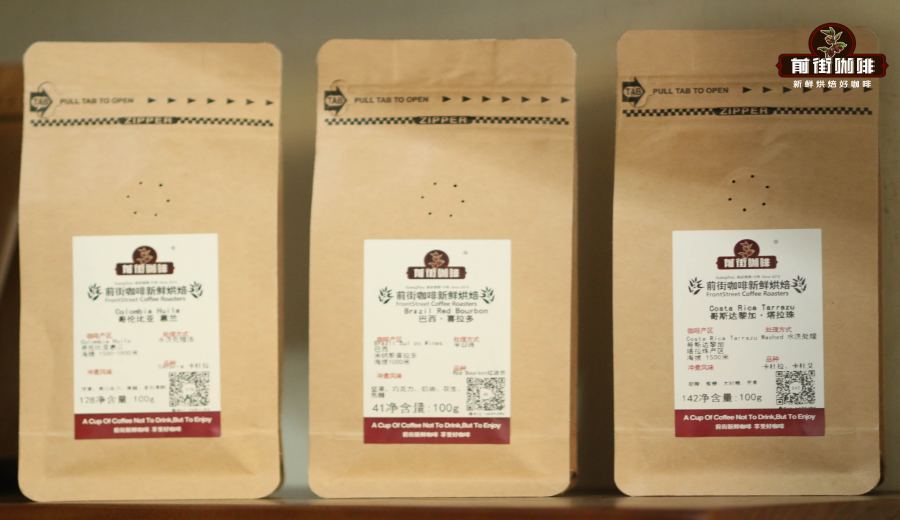
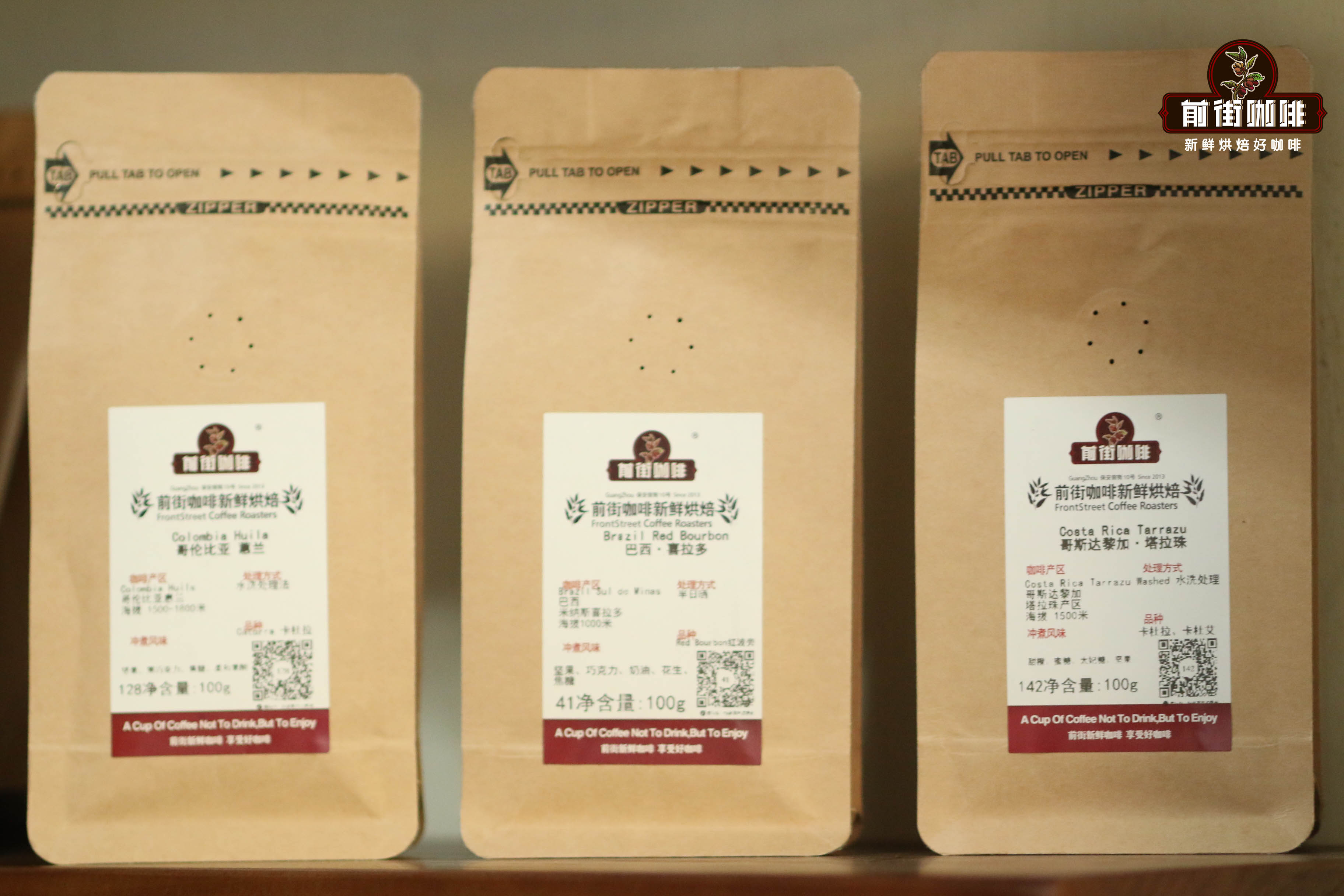
This Colombian Huila coffee bean is made from the Caturra variety grown at altitudes of 1,500 to 1,800 meters, processed using the washed method. To enhance its nutty and chocolatey notes and amplify caramel-like sweetness, the roaster opted for a medium roast, resulting in a rounder, more enjoyable overall flavor.
For actual pour over brewing, we recommend using 90°C water to fully highlight the aroma and selecting a fast-flow Hario V60 filter cone to avoid over-extraction. Employing a three-pour technique allows better control of extraction timing and brings out a layered flavor experience.
Equipment suggestions:Hario V60
Water temperature:90°C
Coffee dose:15 grams
Coffee-to-water ratio:1:15
Grind size:Approximately 80% passing through a #20 mesh sieve (medium-fine grind)
Pour over steps:
1. Start with a 30g bloom pour for 30 seconds to activate the coffee grounds’ aroma.
2. Then, pour in a small circular motion until you reach a total of 125g, when the water level in the filter cone has dropped by half.
3. For the third pour, add 95g for a total of 225g, continuing until fully dripped through. The total extraction time should be around 2 minutes.
The above content is compiled by CoffeeHunters, a coffee news website.


